Tenant Background Check Service for Landlords in 2026
Learn what a tenant background check service reveals, how to read reports, stay FCRA compliant, and pick the right screening vendor for your rentals.


It's Tuesday evening, and two rental applications are spread across your kitchen table. One applicant has a strong-looking credit profile but little rental history. The other has a longer rental record, yet the report contains an eviction filing with no clear outcome. You need to decide who qualifies, but you also need to make a decision you can explain consistently if an applicant challenges it.
A tenant background check service can organize that work, but it can't replace judgment. The useful question isn't whether a report contains a record. It's whether the service identifies the right person, shows what happened, separates relevant facts from ambiguous data, and supports a fair decision process.
What a Tenant Background Check Service Actually Does
A tenant background check service is best understood as a structured investigation, not a magic approval score. The applicant provides identifying information and authorization. The service searches relevant data sources, matches records to that applicant, organizes the results, and gives the landlord information to evaluate against written rental criteria.
That distinction matters. A database may return a court record, but the record still needs interpretation. A score may summarize risk, but it won't tell you whether an eviction entry was dismissed, whether a criminal record belongs to the applicant, or whether an outdated item should be corrected.
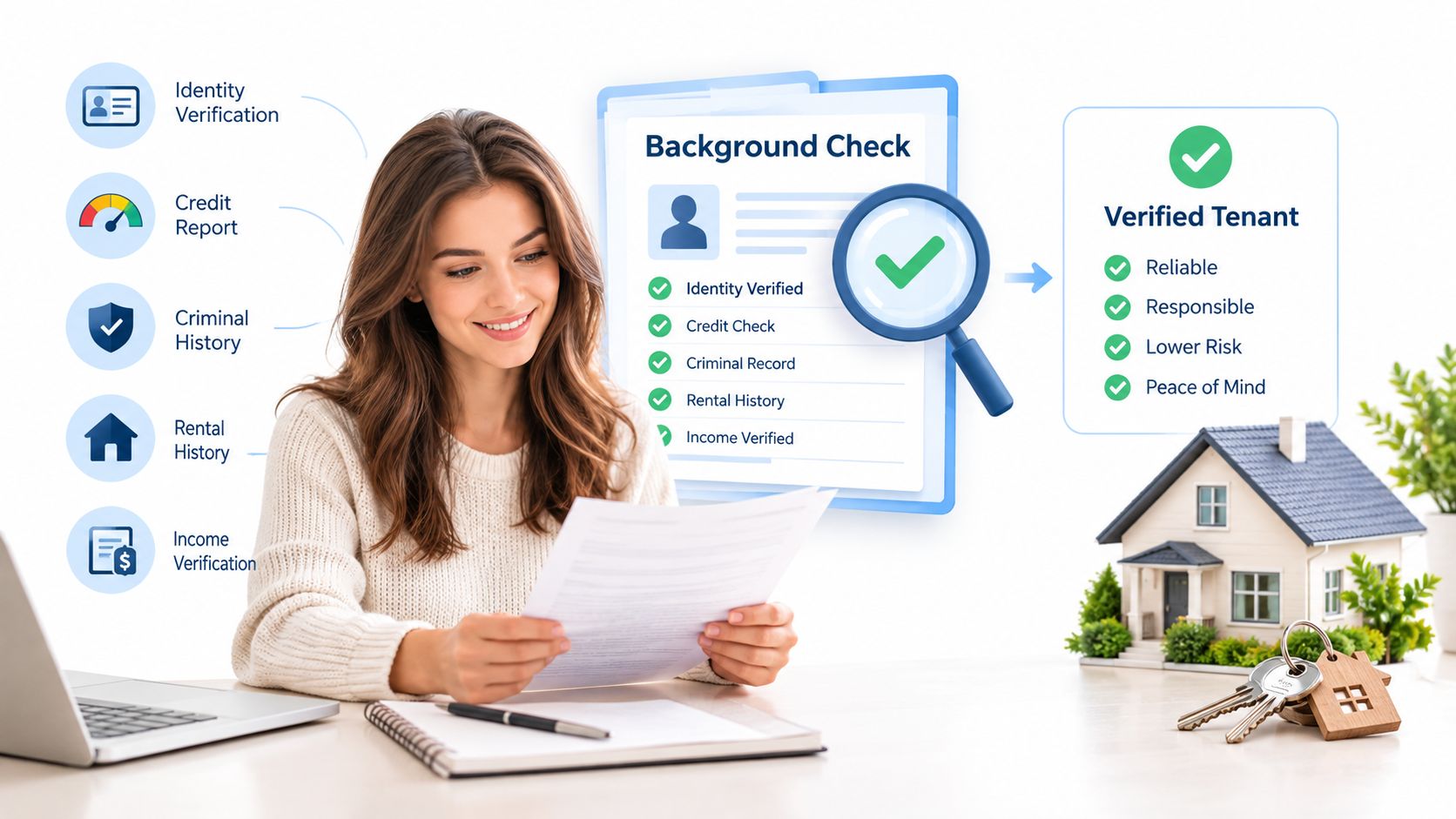
The report is an input, not a verdict
A reliable workflow has four stages:
- Collect: Obtain the application, identity details, authorization, and relevant supporting information.
- Search: Review permitted sources such as credit data and court records.
- Validate: Confirm that records belong to the applicant and identify dates, jurisdictions, and outcomes.
- Decide: Apply the same written standards, document the reasoning, and send any required notice.
The U.S. Government Accountability Office reported in 2025 that screening tools commonly combine credit history, criminal records, employment and income verification, rental-payment data, and eviction history into a report or suitability assessment. The agency also warned that inaccurate information can cause unjustified application denials. The GAO report makes the central lesson clear: more records don't automatically create a better decision.
A service earns trust through data quality, source transparency, identity matching, correction procedures, and compliance controls. Speed is helpful, especially when a vacant unit needs a prompt answer, but a fast inaccurate report creates work and legal exposure later.
The Four Data Layers Inside Every Screening Report
Think of a screening report as a four-panel window. Each panel shows a different part of the applicant's situation, and none should be mistaken for the entire view.
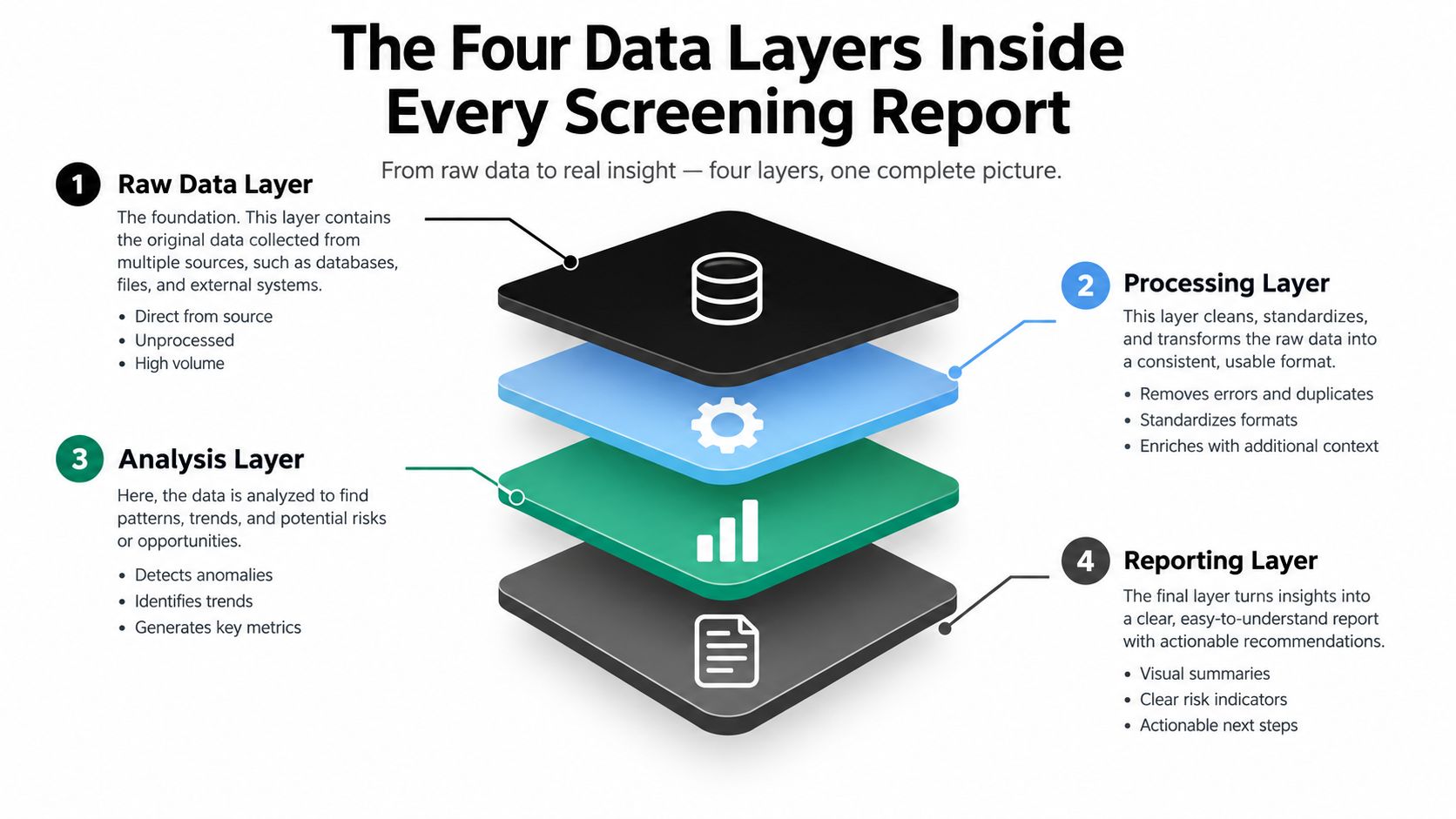
Credit and payment behavior
The credit panel may include account payment patterns, outstanding obligations, collections, and other information used to assess financial behavior. It can help you understand whether an applicant has managed recurring obligations, but it doesn't directly prove how that person will handle rent.
A thin credit file is also different from a damaged file. Someone who has rarely used credit may have little information available, while another applicant may have a longer record containing late payments or collections. Those situations call for different questions, not the same automatic conclusion.
Criminal records and identity
The criminal-record panel may draw from court records and other permitted databases. Its usefulness depends on accurate identity matching and case-level detail. A name match alone isn't enough, especially when people share names or use aliases.
Look for the jurisdiction, case number, filing date, charge, disposition, and current status. An arrest, charge, dismissal, and conviction describe different events. Treating them as interchangeable can produce an unfair and unreliable result.
Eviction history and case outcomes
An eviction panel may show landlord-tenant court activity. The key issue is whether it distinguishes a filing from a judgment, dismissal, settlement, or completed eviction. A filing indicates that a case began. It doesn't, by itself, establish that the landlord prevailed or that the tenant failed to comply with a lease.
Rental history and verification
Rental history adds information that a credit report often can't provide, such as whether rent was paid as agreed, whether notices were frequent, and whether the prior landlord would rent to the applicant again. Verification can be difficult when an applicant is a first-time renter or when a prior landlord is unreachable, so absence of verification shouldn't automatically become a negative finding.
Use the four panels together. Credit can show financial patterns, court data can show legal events, and rental verification can provide housing-specific context. A responsible decision weighs the relevance and reliability of each layer instead of allowing one alarming label to control the outcome.
FCRA and Fair Housing Compliance Without the Jargon
If you use a report to evaluate whether someone qualifies for housing, federal consumer-reporting rules generally apply. The Federal Trade Commission explains that a tenant background-check report is generally a consumer report under the Fair Credit Reporting Act when it contains information about creditworthiness, character, reputation, personal characteristics, or mode of living and is used to evaluate housing eligibility. The FTC's landlord guidance explains the operational duties that follow.
Four controls every landlord needs
Permissible purpose means you're obtaining the report for a legitimate housing decision, not curiosity or an informal investigation. The applicant's authorization and your documented rental purpose belong in the application file.
Accuracy means using a provider with reasonable procedures for matching and updating records. You should be able to see where information came from, when it was reported, and how an applicant can dispute an error.
Consistent criteria means deciding your standards before reviewing a particular applicant. Criteria can address credit history, verified income, rental conduct, or relevant court outcomes, but they should apply consistently and comply with applicable fair-housing rules.
Adverse action means more than an outright rejection. If information from the report contributes to a denial, a higher deposit, a required cosigner, or another unfavorable term, notice obligations may apply.
A practical explanation of the federal framework is available in this guide to what an FCRA background check involves.
Why individualized review matters
A peer-reviewed correspondence-audit study found that rental inquiries disclosing a criminal record had 60% lower odds of receiving a positive response than otherwise comparable inquiries without that disclosure. The same research reported that minority identities in its sample had an 8.3% lower likelihood of receiving a response indicating that a property was available. The study doesn't prove that every landlord discriminates, but it shows why blanket rules deserve caution.
Suppose two landlords receive the same application. Both use the same written criteria, examine the case disposition and date, give the applicant a chance to dispute an error, and record the same reason for the decision. Their process is easier to explain than one based on an unexplained score or a rule such as “any criminal record means denial.”
Practical rule: Compliance is the written process that makes a difficult decision understandable, consistent, and defensible.
How to Read a Screening Report and What the Numbers Really Mean
Start at the top of the report, not at the first alarming word. Confirm the applicant's name, address history, date of birth or other identifying details shown by the provider, and the search date. If the identity information doesn't line up, pause before interpreting any record.
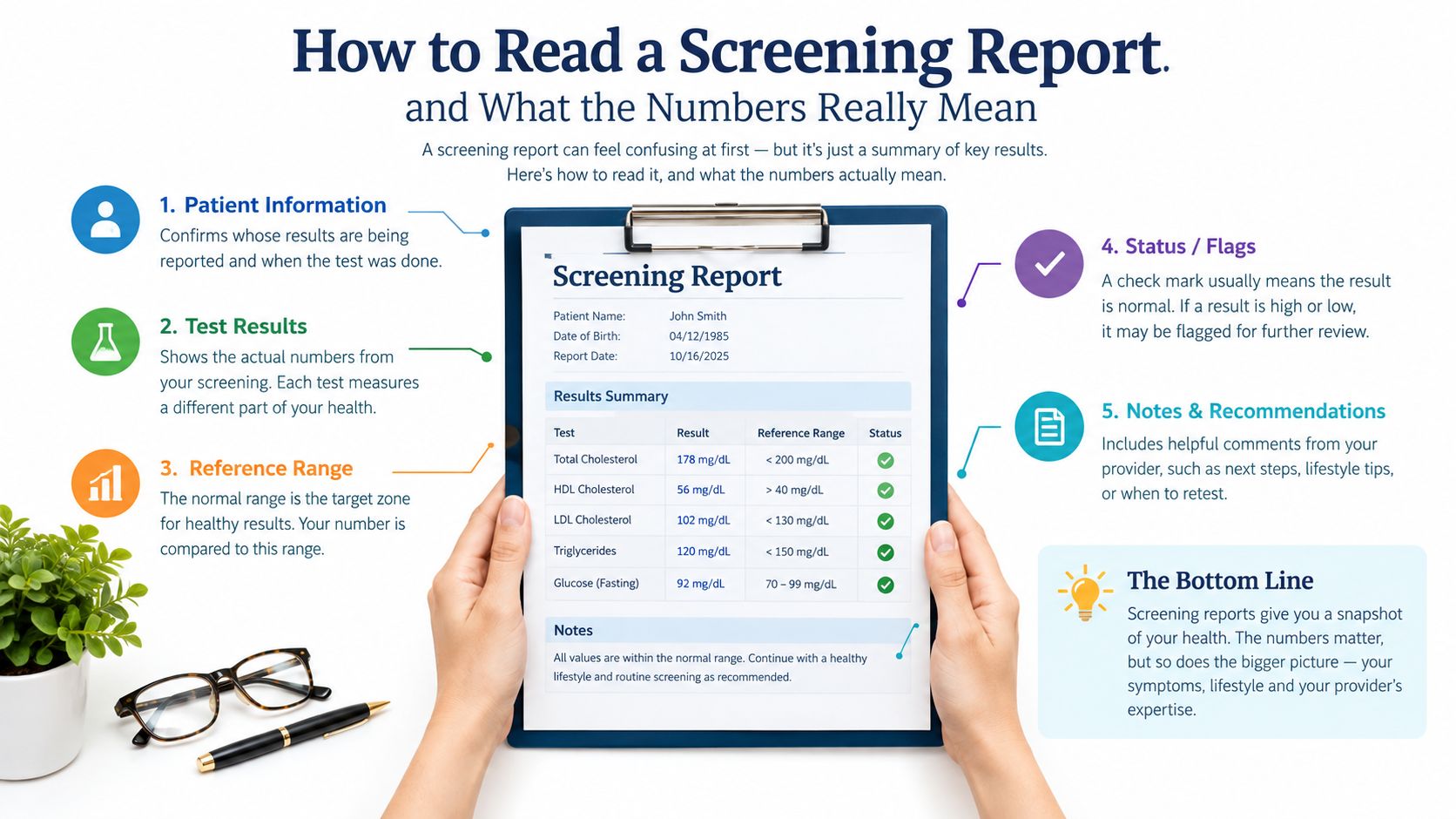
Read credit details behind the summary
A credit score is a summary indicator, not a rent-payment guarantee. Review the underlying patterns:
- Payment history: Repeated late payments may tell a different story from one isolated late account.
- Collections: Identify the type, age, status, and whether the account appears resolved.
- Utilization: High balances can indicate current financial pressure, but they don't explain the applicant's full cash-flow situation.
- File depth: Limited credit activity isn't the same as repeated failure to pay obligations.
An applicant with little credit history may need stronger rental or income verification. Another applicant may have a substantial file with old problems that no longer reflect current circumstances. The report gives you questions to investigate, not a complete forecast.
Read court records line by line
For a criminal entry, check the case number, jurisdiction, charge, filing date, disposition, and status. An arrest without a disposition isn't the same as a conviction. A dismissed or sealed matter may require different treatment under applicable law.
For an eviction entry, ask whether the record describes a filing, judgment, settlement, dismissal, satisfied debt, or another outcome. If you need broader public-record context for property research, a guide to how to access appraisal records can help distinguish general property research from applicant screening.
The same headline can hide very different profiles. One applicant may have a recent judgment tied to unpaid rent, while another may have a dismissed filing connected to a dispute that never resulted in possession. Treating both as identical is poor analysis.
A useful tenant screening report guide can support a consistent review order, but your written criteria and the actual case details still control the decision.
Why an Eviction Filing Is Not an Automatic Denial
An eviction filing means a case was initiated. It doesn't necessarily mean the tenant was removed, the landlord won, rent remained unpaid, or the court found a lease violation.
Urban Institute research reports substantial variation in aggregate eviction-history data and notes that screening reports haven't been shown to predict tenant performance or lease violations reliably. An eviction record may represent only a filing, rather than an executed eviction or judicial finding. The research submitted to federal regulators supports a more careful approach.
Separate the possible outcomes
A filing starts a court case. A judgment records a court decision. A dismissal means the case ended without the same result as a landlord victory. A settlement may resolve the dispute under agreed terms. A sealed case may be restricted from disclosure or use, depending on local law. A satisfied debt indicates that a financial obligation was later addressed, although the surrounding case history still requires accurate interpretation.
HUD guidance cited a large study in which 22% of evaluated eviction records contained ambiguous resolution information or falsely represented a tenant's eviction history. That guidance illustrates why a database that appears thorough can still mislead a landlord.
Use a four-question verification routine
- What was the disposition? Find the final outcome instead of stopping at “record found.”
- How recent is it? A current housing issue may deserve different attention from an old, resolved dispute.
- Is it relevant? Consider whether the case involved nonpayment, property damage, occupancy, or another issue connected to the obligations of the proposed tenancy.
- What context does the applicant provide? Give the applicant a meaningful opportunity to identify an error or explain circumstances.
Massachusetts guidance says sealed eviction records can't be disclosed or used in housing-eligibility scores or recommendations. Washington law warns that screening reports may contain misleading, incomplete, or inaccurate eviction and court-record information. Local rules can differ, so check the law where the property is located.
For practical record-search steps, landlords can review how to check for evictions, then verify the result before relying on it. The landlord's job isn't to collect the most alarming label. It's to resolve the record into an accurate, relevant outcome.
A Practical Screening Workflow for Independent Landlords
A small landlord doesn't need a complicated operation, but every application should move through the same checkpoints. Consistency protects applicants and helps you explain your decision later.
Before you order anything
Publish written criteria before accepting applications. State which factors you'll review, what documentation you'll request, and how you'll handle incomplete or disputed information. Don't create a new standard after seeing an applicant's name, occupation, family situation, or background.
Then collect the applicant's written authorization and confirm the housing purpose. Keep the consent, application, identity information, and report request together so you can show how the process began.
Review and document
When the report arrives, review identity information first. Then examine the credit, criminal, eviction, employment or income, and rental-history information that your criteria require. Record the specific facts considered, the source and date of the information, the applicant's explanation, and the criterion applied.
A useful file should contain:
- The published criteria: Preserve the version used for that application.
- The authorization: Keep the applicant's consent and screening request.
- The report record: Save the report, timestamp, searched sources, and any correction activity.
- The decision notes: Explain approval, conditional approval, or denial using relevant facts.
- The communications: Retain requests for context, dispute responses, and notices.
Understand conditional decisions
Adverse action isn't limited to saying no. Massachusetts guidance identifies denial, requiring a cosigner, or charging more than the advertised rent as adverse actions. It also requires notice of the report used and the applicant's right to obtain a free copy. CFPB guidance says a denied applicant must receive the screening company's contact details, information about the right to a free report within 60 days, and dispute information. The Massachusetts landlord-tenant guide provides a useful example of how detailed local requirements can become.
Your notice should identify the consumer-reporting agency, explain that the agency didn't make the housing decision, state the applicant's dispute rights, and explain how to obtain the report when required. State and local rules may add advance disclosures, timing requirements, or specific language.
Price and turnaround matter, but they should come after accuracy controls, dispute handling, source transparency, and notice support. The cheapest fast report can cost more if you must correct a bad match or reconstruct an undocumented decision.
How to Compare Tenant Background Check Services
Don't rank providers by the size of their database alone. Compare what each service searches, how it validates identity, what it shows when no record is found, and how it handles an applicant's challenge.
| Criterion | What to look for | Why it matters |
|---|---|---|
| Data sources | Credit, court, eviction, rental, identity, and income coverage described clearly | You can judge what the report does and doesn't establish |
| Data freshness | Search dates, source dates, update practices, and jurisdiction coverage | Old or incomplete information can distort a decision |
| FCRA controls | Consent capture, permissible-purpose controls, audit logs, and adverse-action support | Compliance depends on the workflow, not just the report |
| Dispute handling | Clear applicant process, correction tracking, and report reissue procedures | Errors need a documented path to resolution |
| Risk scoring | Plain-English factors, explainable outputs, and manual review options | Opaque scores can encourage automation bias |
| Pricing model | Per-applicant fees, subscriptions, and included reports stated plainly | You can compare the real operating cost |
| Turnaround | Typical delivery expectations and exception handling | Speed matters, but shouldn't outweigh accuracy |
| Workflow integration | Applications, leases, notices, payments, and recordkeeping | Fewer disconnected tools reduce missed steps |
Ask vendors whether an eviction “hit” displays the case outcome, whether criminal results distinguish arrests from convictions, and whether the report identifies searched jurisdictions. Ask what happens when a record belongs to another person.
AI risk scoring should support review, not become an automatic eligibility rule. A vendor that can't explain its factors, document testing, or provide a human correction path deserves careful scrutiny.
Red flags include opaque scoring, no documented dispute workflow, unclear source coverage, missing timestamps, and reports that can't be reissued after an error is corrected. Choose the service that makes your decision process more traceable, not merely the one that produces the fastest screen.
Putting Screening Inside a Modern Rental Workflow
A screening report is one event in a longer rental process. Before it comes the listing, inquiry, application, consent, and criteria disclosure. After approval come the lease, deposit handling, rent setup, maintenance communication, and financial records.
That sequence creates an important operational principle: the report is only as useful as the system around it. A landlord should be able to connect the application to the authorization, the authorization to the report, the report to the decision notes, and the decision to the lease. If the outcome is unfavorable, the notice should be generated from the same record rather than recreated from memory.
An integrated platform such as VerticalRent combines FCRA-compliant screening with AI risk summaries, plain-English explanations, state- and county-specific lease generation, ACH and card rent collection, and Schedule E reporting. Those features can keep the criteria, report, decision, lease, and payment history in one auditable workflow, although landlords still need to review local requirements and the underlying information.
The core principle is simple. A defensible screening decision is documented, individualized, and based on accurate data. It isn't driven by an unexplained score, an unverified database hit, or a rule that treats every applicant with the same label as identical.
If you want to connect tenant screening with applications, compliant lease creation, rent collection, and organized decision records, explore VerticalRent and review how its landlord workflow fits your properties. Use the platform to make screening one documented step in a repeatable rental process, rather than a rushed judgment made from a single score.
Put this into practice
VerticalRent tools related to this guide
Legal Disclaimer
VerticalRent and its authors are not attorneys, CPAs, or licensed legal or financial advisors, and nothing on this site constitutes legal, tax, or professional advice. The information in this article is provided for general educational purposes only. Landlord-tenant laws, eviction procedures, security deposit rules, and tax regulations vary significantly by state, county, and municipality — and change frequently. Nothing on this site creates an attorney-client relationship. Always consult a licensed attorney or qualified professional in your jurisdiction before taking any action based on information you read here.
Co-founded VerticalRent in 2011, growing it from nothing to 100k landlords and renters. Sold it in 2019, then re-acquired it in 2026 to make it better than ever.


