How Long Does Fcra Background Check Take
How long does fcra background check take. How long does an FCRA background check take?


There is no single federally mandated turnaround time for an FCRA tenant background check. An initial automated report may return in minutes, while a disputed item can take up to 30 days to reinvestigate.
A landlord may be waiting for a screening result while an applicant watches an application status sit unchanged. The frustrating part is that both people may be asking the wrong question. “How long does an FCRA background check take?” sounds like it should have one answer, but the timeline depends on whether the system is retrieving matching data or verifying information that could affect a housing decision.
The practical rule is simple: expect a fast preliminary result, allow additional time for court verification, and treat a dispute as a separate legal process. Speed matters, but a quick match with weak identifiers can create a bigger problem than a slower, properly verified report.
What an FCRA Background Check Timeline Actually Looks Like
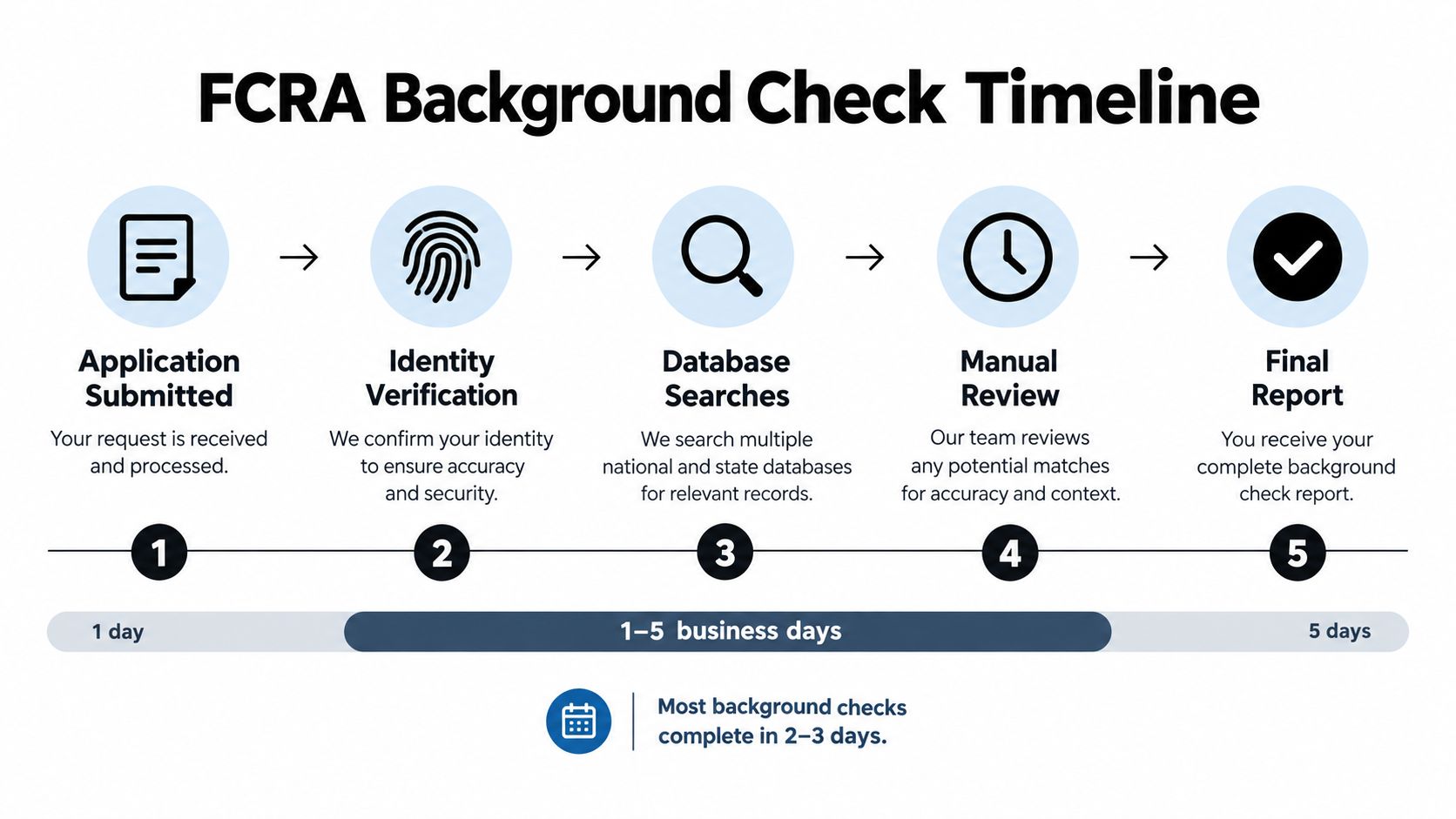
A tenant screening can move quickly when the applicant's identity information matches automated credit, criminal, eviction, and rental-history databases. In that situation, the initial report may arrive in minutes. The timeline expands when a provider must retrieve a courthouse record, reconcile conflicting identifiers, contact a prior landlord, or investigate a disputed item.
There's no single federally mandated turnaround time for an FCRA tenant background check. The Consumer Financial Protection Bureau explains that the duration depends on the records searched, the quality of the underlying data, and the procedures used to verify accuracy. If an applicant disputes information, the consumer-reporting company generally has up to 30 days to investigate and respond, although the CFPB has reported that some applicants wait longer or receive no response. The CFPB's tenant background check snapshot also emphasizes that screening companies must use reasonable procedures to assure maximum possible accuracy.
Practical rule: A fast result tells you that data was retrieved quickly. It doesn't prove that every potentially adverse record has been verified.
For landlords, the distinction matters at the decision stage. A preliminary match should trigger an accuracy review, not an automatic denial. For applicants, a pending status usually means one component needs attention, not necessarily that the application has failed. The broader mechanics are covered in this explanation of an FCRA background check.
The Stages That Determine How Fast a Check Returns
Think of screening like a package moving through a distribution center. A label gets created, scanners identify the package, automated systems sort it, and a human may intervene when the label is damaged or the destination is unclear. Tenant screening follows the same pattern.
The process starts with the application. The provider captures the applicant's legal name, date of birth, address information, and other identifiers needed to request consumer-report data. A misspelled name, incomplete address history, or inconsistent date of birth can stop the automated process before the substantive searches even begin.

Where automation helps
Credit, criminal, eviction, and rental-history searches may run against databases at the same time. Directly matching records can return quickly because software can query those sources without waiting for a clerk, former landlord, or applicant to respond.
Identity verification also acts as a gatekeeper. If the applicant's information aligns cleanly with available records, the report can progress. If the system finds multiple people with similar names or conflicting addresses, a reviewer may need to determine which records belong to the applicant.
Where human review enters
Court records are the common bottleneck. A database may flag a possible case, but the provider may still need to verify the courthouse record, review the case disposition, and confirm that the record belongs to the applicant. A court's accessibility, record format, and processing practices can determine whether that work finishes quickly or remains pending.
Rental-history verification has a different constraint. The provider may need to contact a prior landlord, and the response depends on business hours, correct contact details, and the landlord's willingness to reply. The overall report is therefore governed by its slowest meaningful component, not by the fastest automated search.
Component-by-Component Turnaround for the Main Check Types
A tenant screening is a bundle of separate checks. Each component has its own data source and failure points, so the overall result can't be judged by the timing of one search.
| Component | Typical initial return | Common bottleneck |
|---|---|---|
| Credit | Often seconds to minutes when the bureau file matches | Identity mismatch or unavailable file |
| Criminal history | Automated searches can return quickly | County courthouse verification and record matching |
| Eviction history | Database results may appear quickly | Court-record retrieval, incomplete records, or conflicting identifiers |
| Rental history | Depends on the provider's workflow | Prior landlord response time and unreachable references |
| Identity verification | Often quick when information matches | Manual review after inconsistent identifiers |
Credit screening is usually the cleanest automated component. A bureau can return a file quickly when the applicant's identifiers align, but a result that appears instantly still needs to be associated with the correct person.
Criminal screening has a sharper divide between retrieval and verification. A broad database search may flag a possible record rapidly, while a county court may require manual confirmation before a landlord can responsibly rely on it. Eviction screening follows the same pattern. A filing or judgment must be connected to the right tenant, and a raw database match isn't enough by itself.
Rental history behaves less like a database query and more like a phone call. A former landlord might respond promptly, but a disconnected number or unanswered request can hold up that portion of the report.
Identity checks often finish quickly when the data agrees. When the system detects conflicting names, addresses, or dates of birth, the provider may pause the report for manual review. This is why tenant screening turnaround should be evaluated by component, not by a single marketing promise.
The Three Reasons a Background Check Legally Stalls
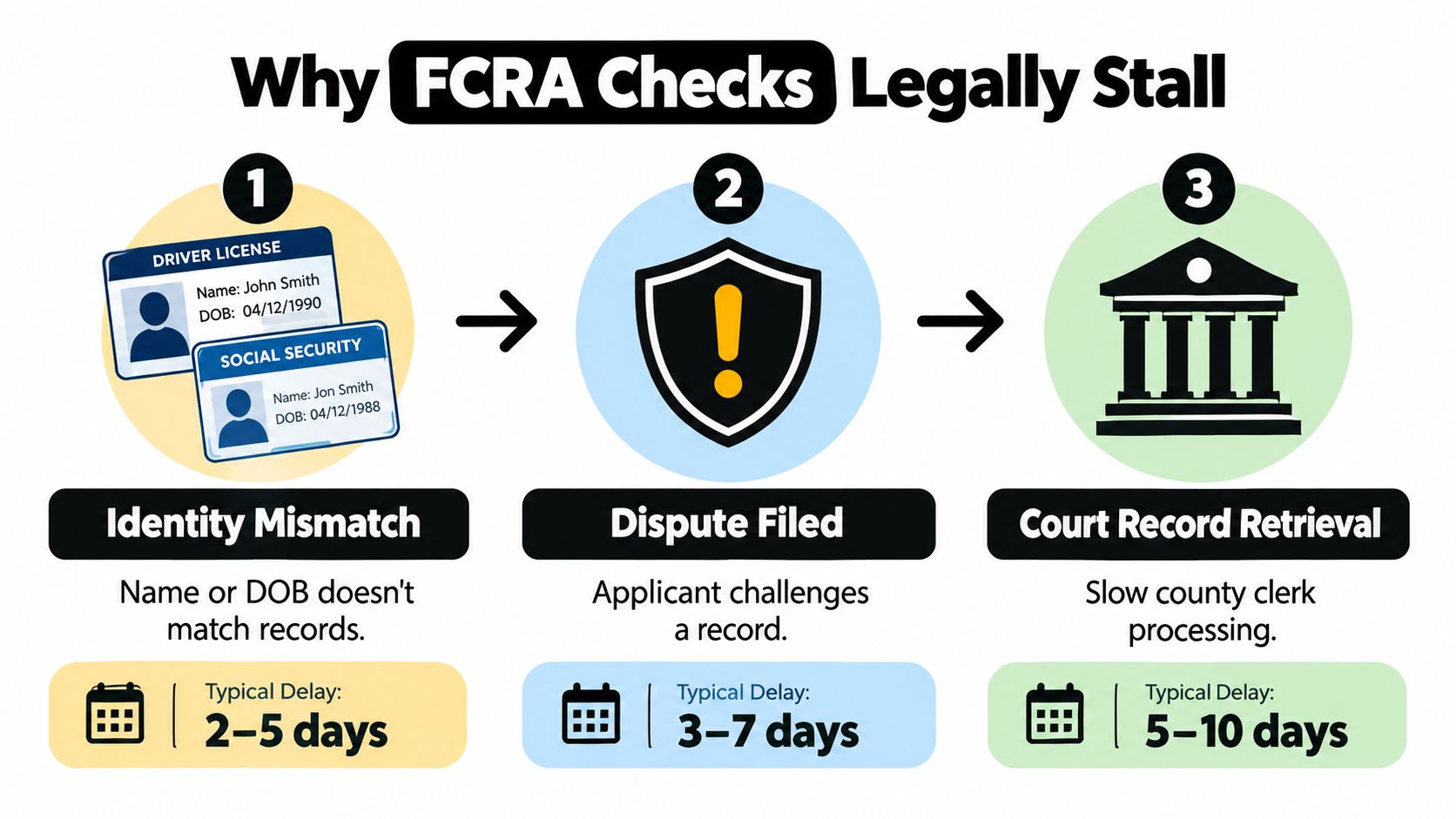
Most extended timelines come from one of three events: the system can't confidently match the applicant, an adverse record needs court verification, or the applicant challenges the report.
Identity mismatches create the first pause
A common name, an old address, a typo, or inconsistent personal information can produce several possible matches. The provider must separate the applicant from other people before reporting an adverse record. That review protects applicants from mistaken identity, but it also means the report can't be treated as complete merely because an automated search produced a hit.
The visible symptom is usually a pending status or a request for additional information. Applicants should answer promptly and provide only accurate information. Landlords should resist treating the delay as evidence of a problem.
Court verification slows the second stage
Automated databases are useful for finding possible records, but they may not show the complete case history or final disposition. The provider may need to retrieve the underlying court record and compare its identifiers with the applicant's information. Manual verification becomes especially important when a filing, arrest, or other record could influence a housing decision.
A dispute changes the legal timeline
A dispute is not just another customer-service ticket. It starts a reinvestigation process. The Consumer Financial Protection Bureau states that a consumer-reporting company generally has up to 30 days to investigate and respond to a dispute, although some applicants wait longer or receive no response. The law's accuracy requirements make this additional review necessary when an applicant challenges incomplete or incorrect information.
The timing can also depend on the company's role. The National Consumer Law Center explains that a reseller must determine within five days whether it is responsible for a reported error, while a non-reseller screening company generally must complete a reinvestigation within 30 days. The National Consumer Law Center's explanation of FCRA remedies provides the relevant distinction.
A delay caused by verification or reinvestigation isn't automatically a vendor failure. The red flag is the absence of a clear explanation, a failure to identify the pending component, or a failure to follow the applicable dispute process.
How Landlords Should Treat an Instant Result at the Decision Stage
An instant result should be treated as preliminary, not final. Automation is useful, but it can produce a false match when an applicant shares a name or other identifiers with someone in the searched records.
Before making a decision, verify the basics:
- Match the identifiers: Confirm that the name, date of birth, address history, and other available identifiers align with the applicant.
- Review the record type: Distinguish an arrest, filing, judgment, conviction, dismissal, or other disposition. These records don't mean the same thing.
- Confirm the source: Don't rely on an unverified database hit when the underlying courthouse record is available or required.
- Apply consistent criteria: Use the same written screening standards for comparable applicants and document the permissible housing purpose.
- Pause for a dispute: If the applicant challenges the accuracy of a record, allow the provider's reinvestigation process to run before treating the information as settled.
The FCRA also limits how far back some adverse information may be reported. Subject to statutory exceptions and state law, many categories of negative information generally can't be reported after seven years, while bankruptcies may generally be reported for up to 10 years. Criminal convictions are treated differently under federal law, and state rules may impose additional limits. The CFPB's background screening report explains these distinctions and the separate treatment of each adverse item.
If a landlord denies an application or imposes less favorable rental terms because of a consumer report, the FCRA requires an adverse-action process. The applicant must receive notice, information about the reporting company, and an opportunity to dispute inaccurate or incomplete information. Landlords handling applications in Texas can use this guide for Texas landlords on denial notices to understand the state-specific context, while the adverse action letter guide can help structure the communication.
Decision standard: Don't ask whether the report was fast. Ask whether the information is matched, verified, current, and applied through a documented process.
State Rules That Quietly Change the Timeline
Federal law provides the baseline, but state and local rules can alter the workflow before a provider ever searches a record. A landlord who uses a national turnaround estimate without checking local requirements is planning around incomplete information.
Application-fee rules can affect intake. If a jurisdiction limits the fee or requires specific disclosures about how it will be used, the landlord may need to provide information before ordering the report. That adds an operational step and can delay submission when the application process isn't prepared for it.
Some jurisdictions also require landlords to give applicants a copy of a screening report or explain the information used in a decision. The report may already exist, but the landlord's ability to act on it depends on completing the required notice process. A legally usable decision can therefore take longer than the moment the provider posts the initial result.

Lookback rules require local review
State rules may restrict the reporting or use of older criminal, eviction, or credit information beyond the federal framework. They may also require additional disclosures, individualized review, or limits on how a landlord uses certain records. Those requirements can send an otherwise automated result into a manual compliance workflow.
Operational consequences for small landlords
A small property owner doesn't need a 50-state legal manual to avoid avoidable delays. The useful approach is to confirm three items before launching a screening process:
- Fee requirements: Check whether the jurisdiction limits application fees or requires an explanation of how the fee is used.
- Applicant notices: Confirm whether applicants must receive a report, a summary, or additional decision information.
- Record restrictions: Verify state and local rules governing lookback periods and the use of adverse records.
The correct timeline is therefore local. A provider may return data quickly, but the landlord still needs enough time to complete the required review and communication steps.
Practical Ways Landlords and Applicants Can Shorten the Timeline
The fastest compliant process starts before the search. Landlords should use a complete application that captures the identifiers the provider needs, explain the expected workflow, and choose a screening service that shows how it handles court verification rather than advertising only an instant result.
Applicants can prevent avoidable back-and-forth by checking every submitted identifier before authorization. Use the legal name associated with the relevant records, provide current contact details, and respond quickly if the provider requests clarification. A missing or inconsistent detail can turn an automated process into manual review.
Landlords should also define an escalation point. If a component remains pending, ask the provider which source is holding the report, whether the issue is identity-related, and what action would resolve it. Applicants should ask the same questions in writing and request the applicable reinvestigation timeline if they dispute a factual error.
Applicant move: Dispute information that's inaccurate or incomplete, not information that's merely unfavorable. A focused dispute gives the provider a clear issue to investigate.
VerticalRent provides FCRA-compliant tenant screening with credit, criminal, eviction, and rental-history reports, along with electronic consent capture and an audit record of the consent timestamp. That kind of documented intake can help landlords keep the application and screening workflow together while preserving a clear record of authorization.
The CFPB advises that a standard report can return quickly when automated databases contain directly matching records, but the timeline can extend substantially when the provider must verify courthouse records, match identities manually, or resolve conflicting identifiers. The CFPB's guidance for applicants denied because of a tenant-screening report supports the practical approach: remove preventable intake errors, but don't pressure a provider to skip verification.
Putting the Timeline in One Clear Rule of Thumb
Use this rule when setting expectations:
Minutes for an initial automated return. Days for full accuracy when court or identity verification is required. Up to 30 days when a disputed item enters reinvestigation.
That rule gives landlords and applicants a better operating model than a single turnaround promise. The first result answers what the databases found. The completed review answers whether the information belongs to the applicant, whether it is current, and whether it can lawfully support a housing decision.
Common timing questions
Can a landlord make an offer before a reinvestigation finishes?
A landlord may choose a conditional process, but should not treat disputed information as settled or use it inconsistently. The landlord should follow the applicable screening policy and adverse-action requirements before denying the application or imposing less favorable terms.
Does a credit freeze change the timeline?
It can prevent or delay access to a credit file. The applicant should contact the relevant bureau or screening provider, follow the required identity process, and ask what action is needed to resume the report.
What should an applicant do if the provider misses the reinvestigation window?
Ask for the dispute status, the date the dispute was received, the item under review, and the expected response in writing. Keep copies of the report, dispute materials, and communications, then consider obtaining legal advice or contacting a relevant consumer-protection agency if the issue remains unresolved.
Landlords should track the application date, authorization, report status, verification requests, and decision communications. Applicants should keep their own record of submissions and disputes. That documentation turns a vague delay into a defined next action.
Use a screening workflow that separates fast data retrieval from responsible verification. Visit VerticalRent to run documented tenant screening with credit, criminal, eviction, and rental-history reports, then keep the application process organized from consent through decision.
Put this into practice
VerticalRent tools related to this guide
Legal Disclaimer
VerticalRent and its authors are not attorneys, CPAs, or licensed legal or financial advisors, and nothing on this site constitutes legal, tax, or professional advice. The information in this article is provided for general educational purposes only. Landlord-tenant laws, eviction procedures, security deposit rules, and tax regulations vary significantly by state, county, and municipality — and change frequently. Nothing on this site creates an attorney-client relationship. Always consult a licensed attorney or qualified professional in your jurisdiction before taking any action based on information you read here.
Co-founded VerticalRent in 2011, growing it from nothing to 100k landlords and renters. Sold it in 2019, then re-acquired it in 2026 to make it better than ever.


