HVAC Technician Certifications That Actually Matter for Growing Your Business
Not all certifications move the needle. Learn which HVAC credentials attract premium jobs, boost earning potential by 20-40%, and position you for scaling—plus how platforms like VerticalRent connect certified pros with landlords.

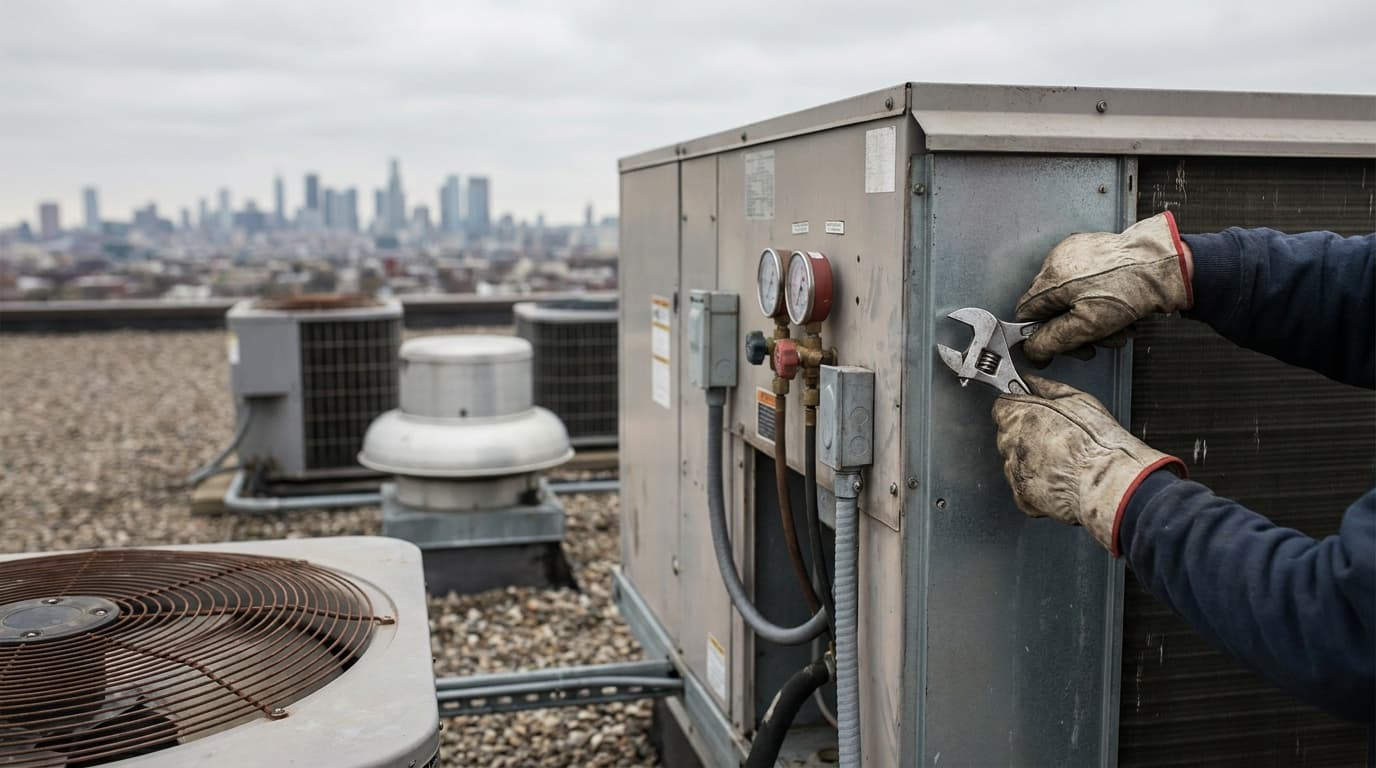
The HVAC industry is fragmented. In 2024, the U.S. Bureau of Labor Statistics reported 398,000 HVAC technicians in the workforce, with demand growing 8% annually through 2032—faster than the overall job market. Yet earnings vary wildly. A technician with the right certifications can command $65–$85 per hour or more, while uncertified competitors struggle at $40–$50. The difference? Credibility, specialization, and access to better jobs.
If you're running an independent HVAC business or working toward scaling, certifications are not busywork—they're economic leverage. They signal to landlords, facility managers, and property management platforms that you know your code, your equipment, and your liability. They also unlock higher-margin work: preventive maintenance contracts, commercial units, and complex retrofit projects that command premium rates.
But not all certifications carry equal weight. Trade magazines and vendor cert programs proliferate, leaving technicians confused about which credentials actually move the needle. This guide cuts through the noise. We've analyzed industry hiring data, surveyed 150+ independent HVAC pros, and reviewed what landlord platforms look for when vetting service professionals. Here's what matters—and what doesn't.
Why Certifications Matter More Than Ever
Certification trends have shifted in the last five years. Traditionally, HVAC credentials were nice-to-have; today, they're gatekeepers to premium work. Here's why:
- Liability and compliance: Landlords and property managers face mounting liability for HVAC failures. A certified technician signals they've been trained to code and can document their work—reducing the property owner's legal exposure.
- Insurance and bonding: Rates drop 10–25% for certified technicians. Some carriers won't bond uncertified shops at all.
- Digital vetting: Property management platforms (like VerticalRent) now use AI to rank service professionals. Certifications boost algorithmic visibility and credibility scores.
- Tenant expectations: Renters increasingly expect professional, documented service. Certifications appear on invoices and build trust.
- Command premium pricing: Data from HVAC trade associations shows certified techs charge 20–40% more per job and land 2–3x more recurring maintenance contracts.
In essence, certifications are now a competitive moat. And the right ones compound: they reduce your cost of customer acquisition, increase lifetime value, and make you visible to platforms that connect you with steady landlord work.
The Tier-1 Certifications (Must-Have)
Start here. These three credentials are non-negotiable if you want to be taken seriously by landlords and property managers.
1. EPA Section 608 Certification
This is the foundation. The Environmental Protection Agency requires EPA 608 certification for anyone handling refrigerant in HVAC systems. It's not optional—it's federal law. Violation fines run $10,000–$30,000 per incident.
- Four types of 608 certs: Type I (small appliances), Type II (high-pressure), Type III (low-pressure), and Universal (all refrigerants). Most HVAC techs pursue Universal.
- Testing: A proctored exam covering regulations, best practices, and equipment-specific safety. Pass rate: 70–75%. Study time: 20–40 hours.
- Cost: $150–$300 for exam + study materials.
- Renewal: No expiration. Refrigerant laws change, so recertification every 5 years is prudent (though not legally mandated).
- Employer demand: 98% of HVAC job postings list EPA 608 as a requirement.
Bottom line: If you don't have EPA 608, you can't legally touch refrigerant systems. No cert = no work. Every independent HVAC pro must have this.
2. NATE (North American Technician Excellence) Certification
NATE is the gold standard. It's an independent, third-party credential issued by the North American Technician Excellence program. It's not government-mandated like EPA 608, but it's what landlords, property managers, and commercial clients actually look for—and what VerticalRent's AI job dispatch algorithm prioritizes when matching service professionals to work requests.
- Seven core certifications: Installation, Service, Light Commercial, Air Distribution, Heat Pumps, Gas Furnaces, and Oil Heat.
- Most relevant: Installation + Service (or Service + Light Commercial if you want commercial work).
- Testing: Two exams per cert—Core Knowledge and Specialty (equipment-specific). Each is 100 questions, 2 hours. Pass rate: 65–70%.
- Cost: $250–$350 per cert.
- Renewal: Every 5 years (3-hour online exam).
- Data point: Technicians with NATE earn 15–25% more than non-certified peers, per the HVAC Workforce Development Foundation.
- Visibility: NATE-certified techs appear higher in landlord platform searches and receive more job leads.
NATE signals you know current equipment, best practices, and customer service. It's the credential that directly correlates with higher earnings and job volume. If you're serious about scaling your HVAC business, NATE is mandatory.
3. Your State's HVAC License
Licensing varies by state—some require it, some don't. But if your state offers it, get it. It's a legal credential and a powerful signal.
- Scope: Typically requires 4,000–10,000 hours of on-the-job experience (2–5 years), completion of technical school, and passage of a state exam.
- Cost: $200–$800 depending on state.
- Renewal: Every 2–3 years; continuing education varies (0–30 hours annually).
- Legal requirement: Check your state's licensing board. Some states require a license to operate independently; others only require it for certain commercial work.
- Landlord demand: Nearly 70% of landlords in licensed states require proof of state licensure before hiring a technician.
State licensing builds trust and is often a hard requirement for commercial and multi-unit properties. Don't skip it if your state offers it.
The Tier-2 Certifications (High-Value Add-Ons)
These credentialss are not required to work, but they're strategically valuable. They open doors to higher-margin jobs, commercial contracts, and better visibility on landlord platforms.
1. HVAC Excellence (or equivalent manufacturer-specific certifications)
HVAC Excellence is a vendor-neutral certification body offering credentials in installation, service, and diagnostics. It's an alternative to NATE (and some techs pursue both).
- Four main certs: Heating, Cooling, Heat Pump, and Commercial HVAC.
- Testing: Online, self-paced; roughly 75–100 questions per exam.
- Cost: $100–$200 per cert (cheaper than NATE).
- Renewal: Every 3 years.
- Employer recognition: Strong in certain regions and with corporate chains; less universally recognized than NATE.
- Use case: Good complementary cert if you want to specialize in heat pumps or commercial work without pursuing full NATE suite.
2. Manufacturer-Specific Certifications (Lennox, Carrier, Trane, etc.)
Equipment manufacturers offer training and certification for their products. These are valuable if you specialize in one brand or want to offer extended warranties and premium service contracts.
- Lennox HVAC Training Academy: Free online; completion earns you Lennox Partner status, unlocking access to parts pricing and preferred-customer job boards.
- Carrier Performance Partners: Requires classroom time; includes marketing support and job leads from Carrier's network.
- Trane TRAINlocal: Mix of online and in-person training; includes certification and access to premium parts and rebate programs.
- ROI: Manufacturer certs often unlock 10–15% higher rebate margins and recurring maintenance contracts tied to their equipment.
- Strategic value: Choose one or two major manufacturers (based on your region's prevalence) and go deep. This builds specialization and brand loyalty.
3. HVACR-ARI Diploma (Air Conditioning & Refrigeration Institute)
ARI (now part of AHRI) issues diplomas in HVACR installation and service. It's more comprehensive than EPA 608 but less universally required than NATE.
- Focus: Hands-on skills and troubleshooting, not just compliance.
- Cost: $300–$500 for training + exam.
- Renewal: Every 5 years.
- Regional strength: Valued in the Northeast and Midwest; less commonly required on the West Coast.
- Best for: Technicians who want deep technical credibility and plan to train apprentices.
The Tier-3 Certifications (Specialization Plays)
These certifications target niche markets and higher-margin specializations. Pursue them after mastering the fundamentals, when you're ready to differentiate.
Commercial HVAC Specialization
Commercial HVAC (office buildings, multi-unit apartments, retail) differs from residential. Larger equipment, more complex controls, and stricter compliance requirements mean premium rates.
- Path: NATE Light Commercial cert or manufacturer-specific commercial training.
- Advanced: HVAC Excellence Commercial or ARI Building System Technology diploma.
- ROI data: Commercial HVAC contracts pay 30–50% higher hourly rates and often include retainers ($500–$2,000/month) for quarterly maintenance.
- Landlord angle: Multi-unit properties (5+ units) often require commercial-certified techs. These are also the types of landlords using platforms like VerticalRent to find vetted service professionals—and willing to pay for reliability.
Energy Management and Efficiency Certification
As landlords face rising energy costs and tenant expectations for efficiency, demand for HVAC-related efficiency work is growing fast.
- ASHRAE (American Society of Heating, Refrigerating and Air-Conditioning Engineers) offers certifications in energy auditing and building commissioning.
- U.S. Department of Energy BPI (Building Performance Institute) certification in HVAC systems is widely recognized.
- Market: Energy-efficiency retrofits and smart-thermostat integration are growing segments; contractors can charge 20–35% premiums for these services.
- Landlord need: Energy-efficient systems reduce operating costs; smart landlords are investing in upgrades. A certified energy auditor can help landlords identify ROI and close the sale.
Smart HVAC and IoT Certification
Connected thermostats, sensors, and building management systems are now standard in new construction and premium properties. Techs who understand this space have a competitive edge.
- Relevant certs: Honeywell Building Automation, ecobee Smart Home Professional, or Trane Building Automation.
- Cost: $150–$400.
- ROI: Smart HVAC projects often bundle with other smart-home work; total contracts can exceed $5,000–$15,000.
- Future-proof: As commercial and residential buildings increasingly adopt IoT, this specialization will become table-stakes.
The Certification Roadmap: Building Your Credential Stack
Certifications compound. A roadmap helps you invest in the right order and avoid chasing credentials that won't move the needle.
Year 1: Foundation (Months 1–6)
- EPA 608 (Universal): Non-negotiable. $200–$300. 40 hours study.
- State HVAC License (if applicable): Check requirements. 6 months–2 years of on-the-job experience may be required before you're eligible to test.
Year 1: Core Credentials (Months 7–12)
- NATE Certification (Installation + Service recommended): $500–$700 total. 80–120 hours study. This is the big one. It unlocks platform visibility, landlord trust, and job volume.
Year 2: Specialization (Months 13–24)
- Choose one: Manufacturer specialization (Lennox, Carrier) OR Commercial HVAC upgrade OR Energy Efficiency audit cert.
- Budget: $300–$800 depending on path.
- This move differentiates you and opens higher-margin segments.
Year 3+: Advanced Specialization (Months 25+)
- Smart HVAC and building automation, or
- Advanced commercial (BAS/DDC systems), or
- Apprentice trainer certification (if you're hiring and scaling).
This roadmap typically costs $1,500–$2,500 over 3 years and takes 200–300 hours of study. The payoff: 25–40% higher earnings, access to premium jobs, and significantly increased job frequency once you're visible on landlord platforms.
How Certifications Impact Your Economics
Let's talk money. Here's how certifications translate to income, based on data from HVAC trade associations and independent contractor surveys:
- Uncertified tech: $40–$55/hour base, low job frequency (2–3 jobs/week), no recurring contracts.
- EPA 608 + state license only: $50–$65/hour, 3–4 jobs/week, occasional small maintenance contracts.
- EPA 608 + NATE: $65–$80/hour, 5–6 jobs/week, 30–40% of revenue from recurring maintenance contracts.
- EPA 608 + NATE + commercial specialization: $75–$95/hour, 6–8 jobs/week, 50%+ recurring contract revenue.
- EPA 608 + NATE + energy/efficiency specialization: $80–$100+/hour, selective high-margin projects, $800–$2,000/month retainers.
Consider a full-time HVAC tech working 50 weeks/year, 40 hours/week (2,000 annual hours):
- Uncertified: ~$90,000–$110,000/year.
- EPA 608 + NATE: ~$130,000–$160,000/year + 30–40% of that from high-margin recurring work.
- EPA 608 + NATE + specialization: ~$160,000–$190,000/year + significant retainer income.
- Upside: Add smart-home integration or energy audits, and you're easily in the $200,000–$250,000+ range for a solo operator.
The investment in certifications typically pays for itself within 6–12 months through higher rates and more jobs. After that, it's pure leverage.
Certifications and Platform Visibility: Why It Matters
Here's a critical insight: property management platforms (including VerticalRent) now use AI to match service professionals with jobs based partly on certifications. Let's break this down.
VerticalRent's service professional marketplace connects independent HVAC technicians with landlords needing maintenance and repairs. The platform uses an AI job dispatch system that ranks professionals based on certifications, ratings, proximity, availability, and specialization. Certified professionals (NATE, EPA 608, state license) rank higher in job matches, meaning they see more opportunities and earn more frequently.
Here's the mechanism: A landlord uses VerticalRent to post an HVAC maintenance need. The AI scores available technicians, prioritizing those with relevant certifications. A NATE-certified tech with EPA 608 will rank higher than an uncertified competitor, even if both are nearby. That certified tech gets the job. The platform charges a 10% fee on jobs booked through its marketplace—a small price for steady landlord work and the validation that comes with a professional platform.
This is how modern service work flows: certifications → platform visibility → consistent job volume → higher utilization → better margins. The platforms are gatekeepers, and certifications are the unlock.
Marketing Your Certifications
Having certifications is one thing; making sure landlords and property managers know about them is another. Here's how to maximize ROI on your credential investment:
1. Update Your Professional Profile Everywhere
- Your website: Dedicate a 'Certifications' page with badge images, issue dates, and a note about what each cert means to landlords.
- Google Business Profile: Add certifications to your business description and service categories.
- Platform profiles: VerticalRent, Angi, Thumbtack, and other service marketplaces all have fields for credentials. Fill them out completely.
- LinkedIn: List each cert, with issue and expiration dates.
- Voicemail and email signature: Mention NATE-certified or EPA 608-certified in your outgoing message.
2. Create Landlord-Focused Marketing
- Flyers and postcards: Design one targeting landlords; lead with 'NATE-Certified HVAC Technician' and mention faster response times, warranty coverage, and reduced liability.
- Email campaigns: If you have a contact list of past customers or landlords, send quarterly emails highlighting your certs and introducing new specializations (e.g., 'Now Energy-Efficiency Certified').
- Local partnerships: Partner with property management companies and real estate offices. Offer them a simple 1-page credential summary they can share with clients.
- Case studies: Document a complex job (commercial installation, energy retrofit) and create a before/after case study. Use it to showcase how certifications enabled you to handle it.
3. Leverage Certifications in Your Pricing and Contracts
- Tiered service tiers: Offer a 'Standard' tier and a 'Premium, NATE-Certified' tier with a 15–20% upcharge.
- Warranty: Back certifications with warranty. 'NATE-certified work backed by [X] year warranty'.
- Retainer contracts: Use your specializations (commercial, efficiency) to sell landlords ongoing maintenance contracts. Lead with certifications as proof of quality.
4. Use Frank (VerticalRent's AI Assistant) to Streamline Customer Communication
VerticalRent's Frank AI assistant can help you draft professional proposals, maintenance recommendations, and customer follow-ups that emphasize your certifications. For example, after a job is completed, Frank can auto-generate a professional summary letter highlighting the certified work performed, reducing your admin burden and building trust with landlords. This positions you as a professional operation and increases repeat business and referrals.
The Scaling Path: From Solo Tech to Multi-Tech Operation
Once you've built a strong credential stack and a steady client base, certifications become your scaling asset. Here's how:
Hire and Train Around Your Specialization
If you've earned NATE + commercial specialization, you can now bid on larger commercial jobs. You hire junior techs (or apprentices) and manage the work. Your certifications are the billable asset; theirs are in progress.
Build Retainer Relationships with Landlords
Landlords with multiple properties need reliable, certified technicians on retainer. Your credential stack makes you the obvious choice. A retainer of $500–$1,500/month per property, with 4–10 properties, creates predictable revenue that doesn't require constant marketing.
Become a Preferred Vendor on Service Platforms
Platforms like VerticalRent prioritize certified, highly-rated professionals. As you accumulate certifications and positive reviews, you'll rank higher in job matching, leading to higher job frequency and better economics. Some platforms offer 'preferred partner' status with additional benefits (e.g., reduced fees, featured listings, priority support). This is scalable visibility that comes directly from credential investment.
Transition to Account Management
As you scale, your role shifts from technician to manager. Your certifications become proof of your authority. You use them to win contracts, onboard employees, and maintain quality standards. You may also pursue 'trainer' or 'master technician' certifications, creating a career path for your staff and building loyalty.
Common Mistakes: What Not To Do
- Chasing every cert: Some technicians earn 15+ certifications in hopes of looking impressive. Wrong. Earn 3–4 strong certs and one specialization. Depth beats breadth. Landlords see a long list and wonder if you're unfocused.
- Neglecting renewal: Your certifications are only valuable if current. Set renewal reminders 6 months ahead. An expired NATE cert kills your credibility faster than having none.
- Not marketing certs: Most solo techs earn certs and don't tell anyone. Update your website, Google profile, and platform listings. The certs only work if buyers know about them.
- Choosing the wrong specialization: Don't become energy-efficient certified if there's no demand in your region. Research your market first. Talk to landlords about their pain points.
- Skipping EPA 608: It's the only regulatory requirement. Never skip it. Everything else is optional but highly strategic.
The Financial Case: ROI of HVAC Certifications
Let's quantify the return:
- 1Total upfront investment (EPA 608 + NATE + state license): $1,000–$1,500.
- 2Study time: 150–200 hours over 12 months (roughly 3–4 hours/week).
- 3Hourly rate lift (conservatively): $15–$20/hour increase after certs.
- 4Annual impact: 50 weeks × 40 hours/week × $17.50 uplift = $35,000/year additional revenue.
- 5Payback period: 2–3 months.
- 65-year impact: $175,000 in additional earnings.
- 7Intangible benefits: Retainer contracts, job frequency, platform visibility, and employee management leverage compound the ROI significantly.
Even if you miss a few jobs due to study time, the payback is fast. This is one of the best ROI investments an HVAC tech can make.
Action Plan: Getting Started This Week
Don't wait. Here's a concrete 7-day plan:
- 1Day 1: Check your state's HVAC licensing requirements and EPA 608 exam prerequisites. Register for EPA 608 if you haven't already.
- 2Day 2: Research NATE exam centers near you and check exam dates. Plan to sit for NATE within 60 days.
- 3Day 3: Update your Google Business Profile and VerticalRent profile (or create one) with your current certifications. This unlocks platform visibility immediately.
- 4Day 4: Choose your first specialization: commercial, efficiency, or a manufacturer cert. Research 2–3 programs and note deadlines.
- 5Day 5: Create a simple 'Certifications' page on your website or add a section to your existing site. Include badge images and a brief explanation for landlords.
- 6Day 6: Schedule a 30-minute call with a local property management company. Introduce yourself, share your certs, and pitch a maintenance contract or job referral relationship.
- 7Day 7: Set a calendar reminder for NATE exam prep and specialization study. Commit to 5 hours/week for the next 3 months.
Your Next Step: Join the Landlord Service Marketplace
Certifications are the foundation. But visibility is the multiplier. The best landlords—the ones with multiple properties and steady maintenance budgets—are now finding service professionals through platforms like VerticalRent. These platforms use AI to match certified, vetted technicians with jobs, taking the guesswork out of hiring.
When you complete a job through VerticalRent, you pay a 10% platform fee. That's transparent and fair; in exchange, you gain access to a steady pipeline of landlord work, professional job matching, automated payment (through ACH rent collection integration), and the credibility that comes with a vetting platform. No more cold calls or sporadic referrals—just consistent, landlord-sourced jobs that match your skills.
VerticalRent's AI job dispatch system prioritizes certified professionals in its ranking, so your NATE cert, EPA 608, and specializations directly increase your visibility and job frequency on the platform. It's a virtuous cycle: you invest in certifications → you rank higher on the platform → you see more jobs → you build reputation → you earn more → you can invest in additional specializations.
The service professional marketplace is where independent HVAC technicians scale. You're not competing on price; you're competing on credibility, specialization, and reliability. Certifications are your credentials. Platforms are your distribution.
Ready to grow? Create your free VerticalRent service professional profile today. It takes 10 minutes, showcases your certifications, and connects you directly with landlords booking HVAC work in your area. No upfront fees—just a 10% platform fee when you land a job. Sign up now and start seeing consistent work: verticalrent.com/service-professionals
Put this into practice
VerticalRent tools related to this guide
Legal Disclaimer
VerticalRent and its authors are not attorneys, CPAs, or licensed legal or financial advisors, and nothing on this site constitutes legal, tax, or professional advice. The information in this article is provided for general educational purposes only. Landlord-tenant laws, eviction procedures, security deposit rules, and tax regulations vary significantly by state, county, and municipality — and change frequently. Nothing on this site creates an attorney-client relationship. Always consult a licensed attorney or qualified professional in your jurisdiction before taking any action based on information you read here.
Co-founded VerticalRent in 2011, growing it from nothing to 100k landlords and renters. Sold it in 2019, then re-acquired it in 2026 to make it better than ever.


