Mini-Split Installation: The Growing Opportunity for HVAC Professionals
Mini-split systems represent one of the fastest-growing segments in HVAC, with the market projected to reach $25.4 billion by 2030. For tradespeople, this shift presents a significant opportunity to expand service offerings, increase profit margins, and tap into the growing demand for efficient, flexible cooling and heating solutions.

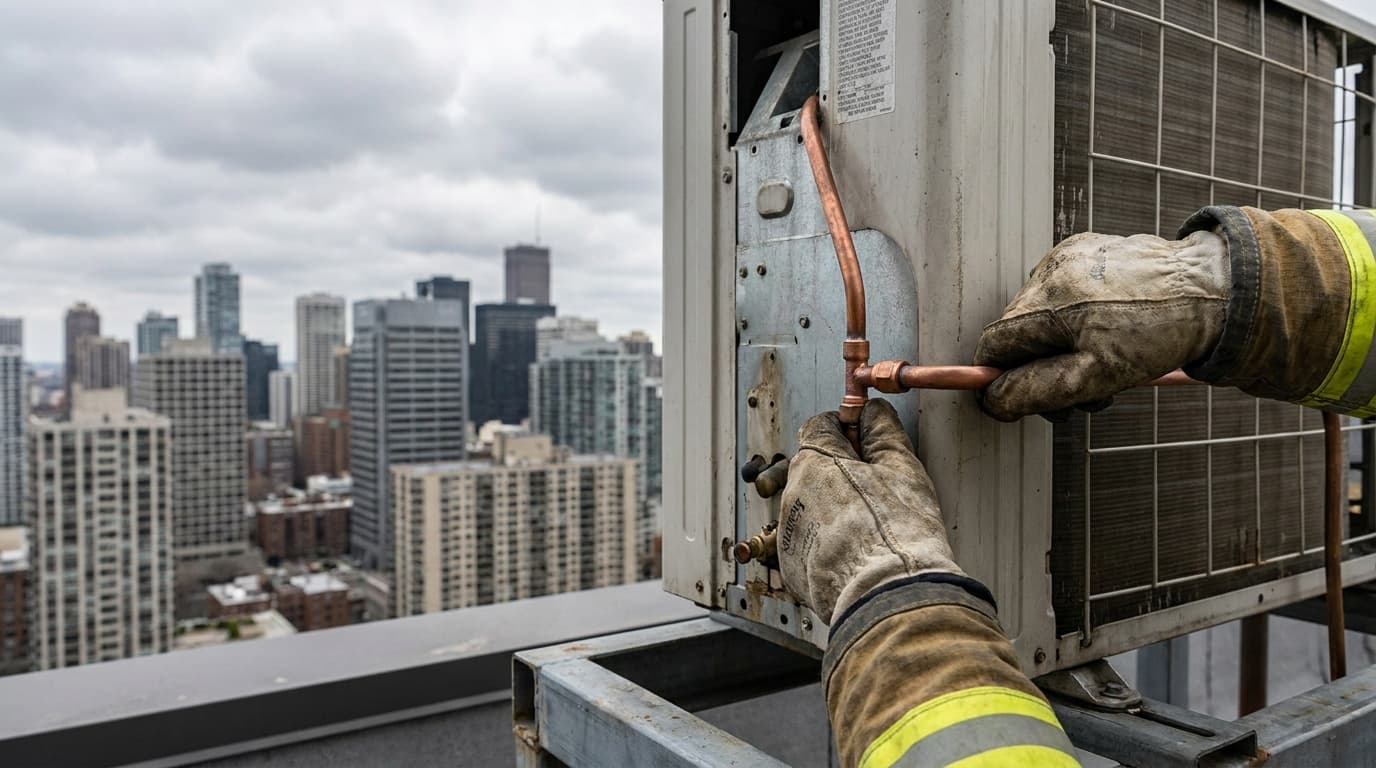
If you're running an HVAC business in 2024, you've probably noticed something: mini-splits aren't niche anymore. What was once a specialty service has become a mainstream expectation, particularly as homeowners increasingly demand energy-efficient alternatives to traditional central air systems. According to the U.S. Energy Information Administration, heat pumps—which includes mini-split technology—now account for approximately 24% of heating and cooling systems in U.S. homes, up from just 15% a decade ago. For HVAC professionals, this trend isn't just background noise. It's a direct opportunity to differentiate your business, command premium pricing, and secure consistent work in an industry that's rapidly evolving.
The mini-split market is experiencing explosive growth. The global mini-split heat pump market was valued at $13.8 billion in 2023 and is expected to grow at a compound annual growth rate (CAGR) of 12.5% through 2030, according to market research from Allied Market Research. In North America specifically, growth is even more pronounced. The residential mini-split market in the U.S. alone is projected to grow from $4.2 billion in 2023 to nearly $8.9 billion by 2030. That's not a trend—that's a fundamental shift in how Americans heat and cool their homes.
Why Mini-Splits Are Becoming Essential
Mini-split systems are gaining traction for concrete reasons that matter to homeowners. Unlike central air systems, mini-splits offer zone-based temperature control, meaning different rooms can be heated or cooled independently. This flexibility alone appeals to multi-unit properties, homes with additions, and anyone who wants to reduce energy waste. Energy efficiency is another major driver. Mini-split heat pumps can achieve SEER2 ratings (Seasonal Energy Efficiency Ratio) of 20 or higher, compared to traditional air conditioning systems that typically achieve 13-15 SEER2. For consumers, this translates to 30-50% lower energy costs for heating and cooling combined, according to the Department of Energy.
Installation costs have also dropped significantly. Five years ago, a typical mini-split installation would cost $3,500-$7,000. Today, basic single-zone systems can be installed for $2,500-$4,500, making them more accessible to middle-income homeowners. For multi-zone systems—which many properties require—costs range from $4,000-$12,000 depending on complexity and number of indoor units. As volume increases and your team's expertise develops, your installation speed will improve, directly impacting your profit margins.
There's also a policy tailwind. The Inflation Reduction Act, enacted in 2022, provides up to $2,000 in federal tax credits for heat pump installations in primary residences. Several states offer additional rebates—California, New York, and Massachusetts all have programs that can subsidize 25-50% of installation costs for qualifying homeowners. These incentives don't just reduce homeowner cost barriers; they dramatically accelerate decision-making and project timelines. A homeowner who was on the fence becomes a committed customer when they realize the federal government will reimburse $2,000 of their $5,000 project.
Market Demand: Where the Growth Is Coming From
- Retrofit Installations: Approximately 140 million single-family homes in the U.S. still rely on traditional HVAC systems. Of these, roughly 35% are over 15 years old and approaching end-of-life replacement. This installed base represents your primary addressable market.
- Multi-Unit Properties: Apartment buildings, condos, and small commercial properties represent a rapidly expanding segment. Mini-splits eliminate the need for complex ductwork and allow individual tenant control, solving longstanding landlord pain points around fairness and tenant satisfaction.
- New Construction: Builders increasingly specify mini-splits as standard in new homes, particularly in regions with moderate climates where zoning flexibility matters. New construction represents about 5% of the overall market but growing at 18% annually.
- New Home Additions: Homeowners adding rooms or sunrooms frequently choose mini-splits because extending existing ductwork is expensive or impossible. This is a high-margin segment since customers are already committed to renovation spend.
- Regional Growth Hotspots: Sunbelt states (Texas, Florida, Arizona) and the Pacific Northwest are seeing outsized mini-split adoption. Texas alone has seen a 310% increase in mini-split installations over the past five years.
Pricing Strategy: Capturing the Premium
One of the biggest advantages of offering mini-split services is pricing power. Mini-split installations command premium labor rates compared to traditional AC service work, and rightfully so. The work is more technical, requires specialized training, and typically involves more customer interaction around zoning design and thermostat setup.
Here's what the market currently supports. For a single-zone mini-split installation (one outdoor unit, one indoor unit), average labor costs range from $800-$1,500. For a two-zone system, expect $1,200-$2,000 in labor. A three-zone system typically runs $1,600-$2,800. These are the labor-only figures; total project costs to homeowners are 40-60% higher when including equipment. Your actual rates should reflect your local market, crew experience, and complexity factors. In competitive urban markets (NYC, San Francisco, Boston), skilled installers charge $2,000-$3,500 for labor on multi-zone systems. In secondary markets, $1,200-$2,000 is more standard.
To command premium pricing, you need to invest in specialization. Obtaining manufacturer certifications from Daikin, Mitsubishi, Lennox, or Fujitsu is non-negotiable. These certifications typically require 40-80 hours of training and hands-on installation work under supervision. The investment is worthwhile: certified installers can charge 15-25% more than non-certified competitors, and manufacturers often direct qualified homeowners to certified installers through their local dealer networks. This is lead generation you don't have to pay for.
Pricing should also account for design complexity. A straightforward single-zone retrofit installation might be profitable at $1,200 labor. But if you're designing a multi-zone system that requires custom refrigerant line routing, ceiling cavity preparation, or integration with existing HVAC systems, your labor should reflect that complexity. Build a pricing matrix that accounts for: • Number of indoor units • Linear feet of refrigerant line required • Difficulty of installation location (attic, crawlspace, exterior wall) • Integration with existing systems • Thermostat programming complexity • Additional service calls for commissioning and training Many installers charge $150-$300 per linear foot for refrigerant line installation in complex scenarios, which properly compensates for the precision work required.
Marketing Your Mini-Split Services: Getting in Front of Demand
The challenge with mini-splits isn't demand—demand is abundant and growing. The challenge is visibility. Homeowners actively searching for mini-split installations often don't know where to find qualified installers. This is your market opportunity.
Start with digital marketing fundamentals. You need a strong local SEO presence for keywords like "mini-split installation [your city]" and "heat pump installer near me." According to Google search trends, searches for "mini split installation" have grown 310% year-over-year in the last three years. That search volume represents homeowners actively seeking your services, and many are checking reviews before making contact.
- Google Business Profile: Ensure your profile is fully optimized with photos of completed installations, detailed service descriptions, and current service area information. Request reviews aggressively after every installation—mini-split customers are typically satisfied and willing to leave positive feedback.
- Website Content Strategy: Create a dedicated landing page for mini-split services. Include installation photos, customer testimonials, pricing ranges, and information about federal tax credits and state rebates. This page should be optimized for local search and should clearly explain the benefits of mini-splits compared to traditional systems.
- Before-and-After Content: Mini-split aesthetics matter to homeowners. The sleek indoor wall units look modern and unobtrusive compared to traditional AC equipment. Create video content showing installation progression, finished installations, and thermostat operation. This content performs exceptionally well on social platforms (Facebook, Instagram, TikTok) where homeowners spend time.
- Educational Content Marketing: Create guides explaining the difference between mini-splits and traditional AC, how zoning works, and how to calculate which system size is appropriate for a given space. This positions you as a trusted authority, not just a vendor. Blog content and videos around these topics rank well in search and drive qualified leads.
- Partnership with HVAC Equipment Distributors: Build relationships with your local Daikin, Mitsubishi, and Lennox distributors. Many have qualified lead programs that send interested homeowners to certified installers in their network. This is higher-intent traffic than most paid advertising channels.
- Google and Facebook Advertising: Paid search campaigns targeting mini-split keywords convert well, particularly in spring and fall when homeowners are most active. Expect cost-per-click (CPC) to range from $3-$8 for local mini-split terms, depending on market competition. A typical conversion (phone call or form submission) costs $60-$150. With average installation values of $4,000-$8,000, customer acquisition costs of $100-$150 are highly profitable.
- Referral Programs: Existing customers are your best source of future customers. Consider a $300-$500 referral bonus for customers who refer friends and family who successfully book installations. Happy mini-split customers will happily recommend you if incentivized.
- Manufacturer Co-Marketing: Some equipment manufacturers offer co-op advertising funds to certified installers. Daikin and Mitsubishi, for example, will contribute 50% of qualified advertising spend up to certain limits. This effectively doubles your marketing budget if properly leveraged.
Training and Team Development: The Essential Investment
Growing a mini-split business requires growing your team's capabilities. Unlike traditional AC service, which many experienced HVAC technicians can perform, mini-split installation is more specialized. Refrigerant line sizing, flare fitting quality, system commissioning, and thermostat programming all require precision and training.
Plan to invest in formal training for your crew. Manufacturer certifications (mentioned earlier) are the baseline. Beyond that, consider advanced training on multi-zone system design, commissioning procedures, and troubleshooting. The International Association of Certified Home Inspectors (InterNACHI) and other organizations offer mini-split focused training programs that run $400-$1,200 per technician. This investment pays for itself within 3-4 installations through ability to charge premium rates.
Additionally, create standardized processes for your team. Develop checklists for site assessment, installation steps, commissioning procedures, and customer handoff. These systems ensure consistency, reduce errors, and allow new team members to ramp up faster. When your crew installs mini-splits the same way every time, customers receive predictable, professional service, which generates better reviews and more referrals.
The Financial Reality: Margins and Volume
Let's talk concrete numbers. A typical single-zone mini-split installation might have the following economics: equipment cost: $1,200-$1,800 Labor cost (technician wages): $400-$600 Materials (lines, fittings, electrical): $150-$250 Total internal cost: $1,750-$2,650 Retail price to homeowner: $3,500-$5,500 Gross profit per installation: $850-$3,750 Gross margin: 24-68% The wide range reflects market variation and quality/complexity differences. In saturated markets, margins compress. In underserved areas with fewer competitors, margins expand. A baseline expectation is 35-45% gross margin on mini-split installations, which is significantly higher than traditional AC service (typically 20-30% margin).
Multi-zone systems have even better margins. A three-zone installation might generate $7,000-$12,000 in revenue while maintaining 40-50% gross margin, delivering $2,800-$6,000 in gross profit per project. At this level, even completing 2-3 projects per month creates substantial business impact.
Volume matters. An HVAC company that installs 15-20 mini-splits per month reaches critical operational efficiency. Crew scheduling becomes optimized, supply chain relationships deepen, and team expertise increases. At that volume, many companies see margins improve because efficiency gains outpace competitive pricing pressure. This is the scale where mini-split services become a core business line, not just a nice-to-have offering.
Operational Challenges and Solutions
Mini-split growth isn't without friction. Several operational challenges commonly emerge as you scale this service line:
- Supply Chain: Outdoor unit availability has been tight during peak season (April-September). Secure supply relationships with multiple distributors and consider forward-purchasing during off-season. Building a 2-4 week supply buffer prevents project delays.
- Weather Dependency: Installation quality and timeline depend heavily on weather. Rainy conditions complicate outdoor unit placement. Cold weather (below 50°F) can affect system performance testing. Schedule installations strategically during optimal windows and build buffer time into project schedules.
- Customer Expectations: Mini-split customers often expect immediate results and high performance. Set clear expectations during the sales process about system capabilities, noise levels, and operation. This reduces post-installation service calls and complaint issues.
- Scheduling Complexity: Unlike routine HVAC maintenance, mini-split installations are typically single-day projects requiring coordination with electricians (sometimes), HVAC technicians, and customer availability. Develop scheduling systems that minimize gaps between projects.
- Post-Installation Support: Many homeowners need guidance on thermostat operation, zoning strategy, and seasonal changeover. Budget for 1-2 follow-up calls per installation to handle questions and maximize customer satisfaction.
Technology Tools: Managing Growth
As your mini-split business scales, manual management becomes impractical. You need systems that handle scheduling, invoicing, customer communication, and parts tracking. This is where property management and service management platforms become valuable. Digital tools that streamline workflow improve efficiency, reduce errors, and free up your time to focus on business development rather than administrative work.
Look for software that integrates scheduling with customer information, allows mobile access for field technicians, and provides automatic customer notifications (appointment reminders, completion updates). These capabilities aren't luxuries—they're competitive necessities when you're managing multiple installations per month.
The Bottom Line: Why Mini-Splits Matter for Your Business
Mini-split installations represent a significant growth opportunity in the HVAC industry. The market is expanding at 12.5% annually, federal incentives are driving demand, and consumer preference is shifting toward energy-efficient, zone-based systems. For HVAC professionals, this translates directly to: • Higher profit margins (40-50% vs. typical 20-30% for standard service) • Premium labor rates ($1,500-$3,500+ for qualified installers) • Repeat business and service contracts (homeowners with mini-splits generate regular maintenance revenue) • Competitive differentiation (offering mini-splits separates you from basic HVAC shops) • Growing customer demand (search volume and leads are increasing, not decreasing) The barrier to entry is modest—manufacturer training, initial supply investment, and marketing effort. The ROI is compelling, particularly if you commit to building genuine expertise and marketing your capabilities effectively.
The question isn't whether to offer mini-split services. The question is how quickly you can get trained, certified, and marketing-ready to capture your share of this rapidly growing segment.
Streamline Your Growth with Better Business Tools
Growing an HVAC business with mini-split services requires managing more complexity—additional customer touchpoints, equipment coordination, scheduling challenges, and follow-up service needs. Manual systems break down at scale, and your team's productivity suffers.
VerticalRent is built specifically for tradespeople managing rental properties and service businesses. Our platform streamlines the operational aspects of your work: ACH rent collection (if you're managing any property income), automated service request triaging, tenant screening and management, AI-powered risk assessment, and streamlined maintenance coordination through our service professional marketplace. For HVAC businesses expanding into mini-split services, integration with property owners looking to upgrade their buildings creates additional business opportunities.
Whether you're managing your own rental properties or coordinating with property managers who need regular HVAC maintenance, VerticalRent eliminates the administrative overhead that slows down fast-growing businesses. This frees your team to focus on what matters: profitable installations and excellent customer service.
Ready to modernize your business operations and focus on growth instead of paperwork? Start with VerticalRent's free trial today at verticalrent.com. See how our platform helps HVAC professionals manage scheduling, customer communication, and service coordination more efficiently—so you can scale your mini-split business without drowning in administrative work.
Put this into practice
VerticalRent tools related to this guide
Legal Disclaimer
VerticalRent and its authors are not attorneys, CPAs, or licensed legal or financial advisors, and nothing on this site constitutes legal, tax, or professional advice. The information in this article is provided for general educational purposes only. Landlord-tenant laws, eviction procedures, security deposit rules, and tax regulations vary significantly by state, county, and municipality — and change frequently. Nothing on this site creates an attorney-client relationship. Always consult a licensed attorney or qualified professional in your jurisdiction before taking any action based on information you read here.
Co-founded VerticalRent in 2011, growing it from nothing to 100k landlords and renters. Sold it in 2019, then re-acquired it in 2026 to make it better than ever.


