HVAC Preventive Maintenance Plans: Structuring Agreements That Landlords Buy
Learn how to build recurring revenue as an HVAC pro by structuring preventive maintenance plans landlords actually want—pricing models, sales strategies, and scaling tactics that work.

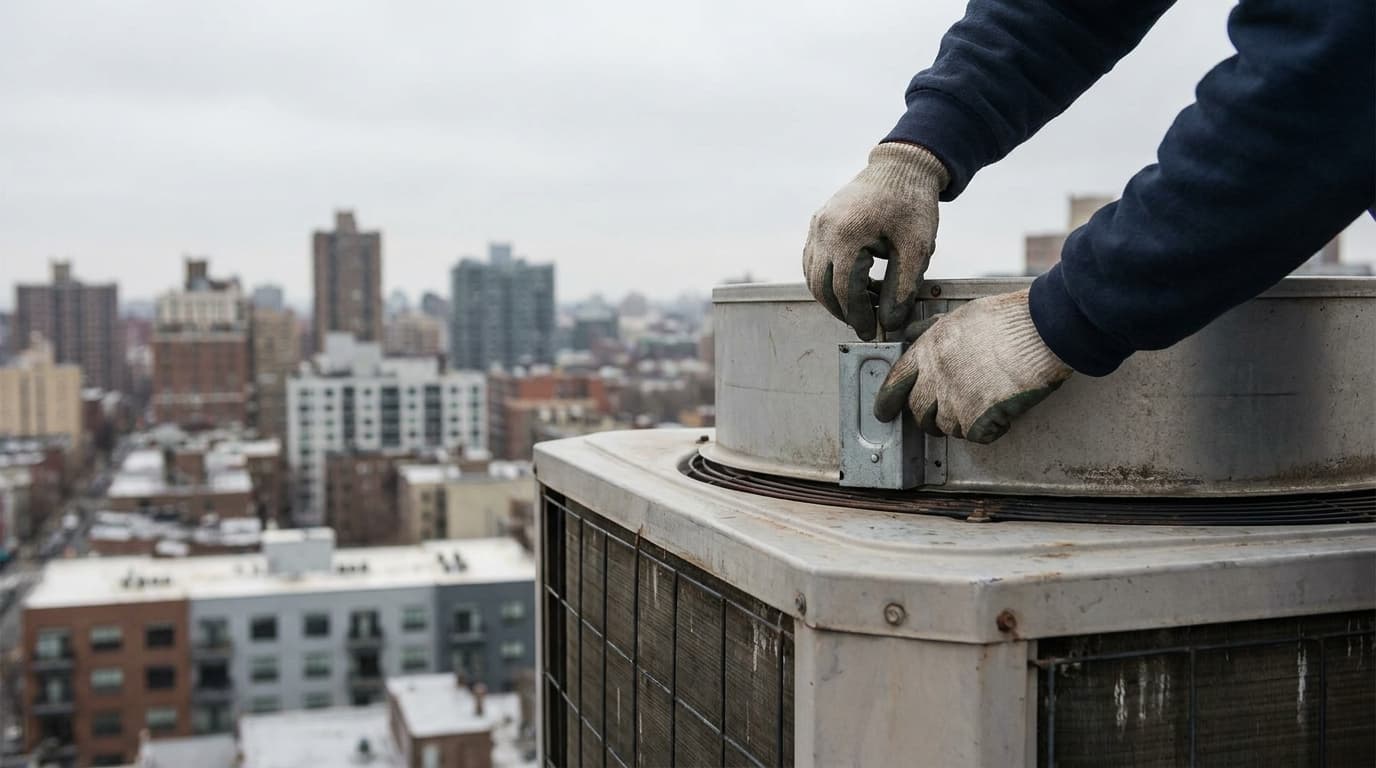
The HVAC service industry generates $130 billion annually in North America, yet most tradespeople still chase emergency calls instead of building predictable, recurring revenue. Preventive maintenance plans are where the profit lives—but only if you structure them the way landlords think, not the way contractors sell.
I've spent years watching HVAC professionals leave money on the table because they don't understand what landlords need from a PM plan. They don't want a list of services. They want peace of mind, budget certainty, and a single person they can blame when something breaks. This article shows you how to build that—and how to scale it across dozens of properties once you land your first few deals.
Why Preventive Maintenance Plans Are the Most Underutilized Revenue Stream in HVAC
Let's start with the numbers. According to the U.S. Bureau of Labor Statistics, emergency HVAC calls cost 3 to 5 times more than scheduled maintenance. A technician arriving for a breakdown call takes twice as long, often replaces components that could have been serviced, and generates follow-up emergency calls when the rushed diagnosis misses related issues.
For landlords, this is catastrophic. A single furnace failure during winter can result in tenant complaints, lease violations, emergency contractor markups, and potential liability. One study by ASHRAE found that properly maintained HVAC systems run 15–30% more efficiently than neglected ones. For a landlord with 20 units, that translates to $2,400–$4,800 per year in utility savings per property. Yet most HVAC contractors pitch PM plans as nice-to-haves instead of non-negotiables.
Here's what a preventive maintenance plan actually does for a landlord: it converts unpredictable emergency costs into fixed, budgetable expenses. It extends equipment life by 5–10 years. It reduces tenant complaints. It creates a paper trail of maintenance that protects them in liability disputes. And it builds a relationship where you become their trusted advisor instead of just the emergency guy they resent paying.
Understanding What Landlords Actually Buy (And Why Most PM Plans Fail)
Before you design your PM plan, you need to understand the landlord's actual buying process. Landlords don't manage properties for fun—they manage them for cash flow. Everything you sell them must protect or improve cash flow.
The Cash Flow Equation Landlords Are Solving
Monthly rent minus all expenses equals cash flow. In most markets, HVAC maintenance represents 2–5% of annual property operating expenses. But a single emergency replacement can consume 3–6 months of cash flow. Landlords want to eliminate catastrophic surprises, not add another monthly bill they don't understand.
This is why most HVAC PM plans fail: they're structured as a menu of optional services priced à la carte. "$150 for a spring tune-up, $180 for a fall inspection, emergency calls at 1.5x." A landlord with 5 properties sees this as $1,500–$1,800 per year—but doesn't know if it's necessary or if they're being upsold.
Successful PM plans work differently. They're structured as all-inclusive annual agreements with a single monthly or quarterly price, clear deliverables, and transparent emergency pricing. The landlord doesn't think about whether they need service—they know they do, and they know the cost.
The Five Objections Landlords Raise (And How to Overcome Them)
- "I'll just call when something breaks." Counter: Show them the math. One emergency furnace call at $800 + overtime at 2x labor + potential renter emergency = $2,000–$3,500. Your annual plan at $600–$1,200 pays for itself in one emergency. You're not selling service; you're selling insurance.
- "How do I know you won't overcharge me or upsell me?" Counter: Offer a fixed-price guarantee. Every service is documented with photos/video. Pricing is transparent before work starts. This removes the salesmanship fear.
- "I have a property management company. They handle HVAC." Counter: Offer them a dedicated partnership. Tell the PM company they can white-label your service to their landlords. You handle the work; they handle the relationship. They get a 10–15% referral fee. This converts a competitor into a channel.
- "What happens if I need a repair outside the plan?" Counter: Build a tiered model. Plan includes 2 emergency calls per year at no charge. Additional emergencies are 20% discounted from retail. This incentivizes them to stay on the plan instead of switching contractors.
- "I have 20 properties. I need a discount." Counter: Offer tiered pricing. 1–3 properties: standard rate. 4–9 properties: 10% discount. 10+: 15% discount. You now have a reason to grow their portfolio with you and a blueprint for scaling.
Pricing Models That Work: Three Structures Landlords Will Sign
Model 1: The All-Inclusive Annual Plan
This is the most popular with landlords because it's the simplest to budget for. You define one annual price that includes:
- Two scheduled maintenance visits (spring and fall)
- All standard parts and fluids (filters, condensate line cleaning, refrigerant top-off, capacitor replacement)
- Two emergency service calls per year at no additional charge
- Priority scheduling (48-hour response time, no weekend surcharge)
- Annual efficiency report with utility optimization recommendations
- 24/7 customer support via phone
Pricing: $75–$150 per unit per month, depending on equipment age, climate zone, and local market rates. A landlord with a 10-unit building pays $9,000–$18,000 per year. For them, this is a fixed cost they can put in their operating budget. For you, it's $750–$1,500 per unit annually, and you control 60–70% of your schedule.
The math: If you manage 50 units on PM plans at $100/unit/month, that's $60,000 per year in recurring revenue. You need approximately 10–15 hours per unit per year for scheduled maintenance. That's 500–750 hours annually—about 2–3 days per week, every week, from a single technician. The rest of your schedule is billable emergency work, one-time installs, or new customer acquisition.
Model 2: The Performance-Based Warranty Plan
This model appeals to larger landlords and PM companies because it shifts risk to you but signals confidence in your work. Structure it as:
- Annual price covers all preventive maintenance plus ALL emergency repairs for one year
- No limit on service calls, parts, or labor
- You assume the risk; they get peace of mind
- Excludes only: tenant damage, modifications, or equipment over 20 years old
Pricing: $150–$250 per unit per month. Higher than the all-inclusive model because you're covering repair risk. Only take this model for newer equipment (5–12 years old) where you can statistically predict failure rates.
This model is genius for scaling because once a landlord trusts you, they can add properties without renegotiating terms. You become their HVAC department.
Model 3: The Tiered Loyalty Plan (The Scaling Model)
This is the model that builds recurring business. You offer three tiers:
- 1Bronze: Two scheduled visits + 1 emergency call included = $50–$75/unit/month
- 2Silver: Two scheduled visits + 3 emergency calls + 24/7 priority support = $100–$125/unit/month
- 3Gold: Two scheduled visits + unlimited emergency calls + priority dispatch + quarterly efficiency reviews = $150–$175/unit/month
Landlords start at Bronze (low risk) and upgrade to Silver or Gold as they realize the value. You lock in long-term customers, generate predictable cash flow, and have a clear upsell path.
Building the Plan That Converts: What to Include and How to Present It
The Components of a Landable PM Plan
A PM plan isn't just a list of services. It's a contract that removes ambiguity and demonstrates your competence. Here's what goes in:
- 1Scope of Work: Define exactly what's included in each visit. "Spring maintenance includes: system startup, filter replacement, outdoor unit cleaning, electrical inspection, capacitor testing, refrigerant charge verification, thermostat calibration." Specificity builds trust.
- 2Equipment Schedule: List every piece of equipment covered—furnace model/serial, AC unit, heat pump, ductwork, thermostat. This shows you know what you're servicing and creates a liability trail.
- 3Response Time Guarantee: "Service calls scheduled within 48 hours during business hours; 24-hour emergency response with $X fee for off-hours calls." Landlords need to promise this to tenants.
- 4Pricing for Overages: What happens if they need a repair beyond the plan? "Major component replacement (compressor, blower motor) charged at $X/hour + parts at cost + 20%." No surprises.
- 5Exclusions: Be explicit. "Plan excludes: new installations, ductwork modifications, tenant-caused damage, systems over 20 years old, equipment not specified in schedule." This protects you from scope creep.
- 6Annual Review: "Each January, we review service history, equipment condition, and pricing for the coming year. Equipment approaching end-of-life will be flagged." This keeps you in the relationship and positions you as an advisor.
- 7Cancellation Terms: "Annual commitment. Month-to-month thereafter with 30 days' notice." Lock them in for year one, then make them want to stay.
- 8Documentation: "Every service includes photographic documentation emailed within 24 hours and stored in secure customer portal." Landlords need proof of maintenance for liability. You need records to defend your work.
Sales Strategy: How to Land Your First PM Plans
Who to Target and Why
Not all landlords are PM plan buyers. The best prospects share three characteristics: they own 3+ properties, they've been burned by emergency HVAC costs, and they use a property management company or manage properties as a business (not a hobby).
According to the National Association of Residential Property Managers, 39% of landlords use PM companies. These are your ideal targets because:
- They think in systems and processes, not individual repairs.
- They're used to paying for recurring services (landscaping, cleaning, maintenance).
- They have a single point of contact (the PM company) who can authorize a new vendor.
- They're actively managing cash flow and operating budgets.
The Approach: Partner With PM Companies First
The fastest way to scale PM plans is not to sell individual landlords. It's to become the HVAC partner for property management companies. Here's the formula:
- 1Identify 10–15 PM companies in your service area. Look for firms managing 50+ properties each.
- 2Propose a white-label partnership: You handle all HVAC maintenance and repairs for their landlords. They own the customer relationship and bill their clients. You invoice the PM company with a 10–15% wholesale discount from your retail rates.
- 3Offer them a marketing asset: A one-page PM plan they can email to landlords or include in their onboarding. You handle all the work; they get the credit.
- 4Start with one property as a pilot. Document everything. Ask for testimonials and case studies.
- 5Once they see the value, propose converting their entire HVAC vendor relationships to your PM plans.
Why this works: PM companies are drowning in vendor management. A landlord with 20 properties might have 5 different HVAC contractors (because they keep firing them or contractors quit). The PM company wants consolidation and reliability. You're solving their problem.
Direct Outreach to Landlords: The Sales Message
If you're going direct to landlords, your pitch isn't about HVAC. It's about business risk. Here's the formula:
"Hi [Landlord Name], I'm [Your Name] from [Company]. I work with landlords in [City] who own 3+ properties. I noticed you own [their property] at [address]. I work with property managers to set up preventive maintenance plans that convert unpredictable $2,000–$5,000 emergency calls into a fixed monthly cost. Most of my clients pay $100–$125 per unit per month and see zero emergency calls in year one. Would it make sense to review your current HVAC history and see if this would work for you?"
This works because it's specific, anchors the value (zero emergency calls), and gives them a reason to meet. You're not selling service; you're selling predictability.
The Data You Need to Collect and How to Use It
Once you land your first PM plans, you need data to prove the model works and to manage the business profitably. Track:
- Revenue per unit per year: You should be collecting $600–$2,100/unit/year depending on model. If you're below $600, your pricing is too low. Raise it.
- Emergency call frequency: Track how many unscheduled calls you receive from plan customers vs. non-plan customers. You should see 30–50% fewer emergencies from plan customers within 6 months.
- Repeat business rate: What % of year-one plan customers renew? You should be above 85%. Below 80% means something is wrong (price, service, communication).
- Cost of goods sold per unit: What are you actually spending on filters, fluids, parts, and labor per maintenance visit? You need 60–70% gross margin on PM plans to have room for scale.
- Time per visit: Track hours spent on each scheduled maintenance visit. You should be hitting this in 1.5–2 hours per unit. If you're over 2.5 hours, you're losing money.
- Tenant satisfaction: Ask your landlords for tenant complaints HVAC-related before and after the plan. This is gold for your case studies.
Scaling: From 5 Plans to 50
The Workforce Multiplication
One technician can profitably manage 40–60 units on PM plans while maintaining 30–40% of their schedule for billable emergency work and new installs. That's roughly $30,000–$60,000 in recurring annual revenue per technician.
To scale from 5 plans to 50 plans without hiring 10 new technicians, you need systems:
- Route optimization: Use software like ServiceMax or ServiceTitan to schedule all maintenance visits in geographic clusters. Instead of bouncing across your service area, you handle 8–10 units per day in the same neighborhood.
- Standardized checklists: Every PM visit follows the same 10-item checklist in the same order. This reduces decision-making time and ensures quality consistency.
- Pre-scheduling: Contact every plan customer in month 11 of their agreement and book their spring and fall visits 90 days out. Your schedule fills up before emergencies can disrupt it.
- Delegation: Train a junior technician to do 60% of the work on routine PM visits (filters, cleaning, fluid checks). You handle the 40% that requires expertise (diagnostics, electrical, refrigerant). This cuts PM visit time by 30–40%.
- Outsource non-core work: Partner with handypersons or maintenance contractors for ductwork cleaning, attic inspections, and thermostat replacements. You stay in your HVAC lane.
The Technology Lever
Here's where the economics get interesting: If you integrate with a property management platform that handles tenant communication, service ticketing, and payment processing, your overhead per plan drops 20–30%.
For example, platforms like VerticalRent offer service professional marketplaces where landlords and property management companies can dispatch HVAC work directly. This eliminates your phone time, scheduling arguments, and follow-ups. Instead, you log in, see available jobs, accept them, and work. The platform handles landlord communication, payment processing, and documentation. VerticalRent takes a 10% platform fee on completed work—which sounds high until you realize you've eliminated 20% worth of admin overhead.
More importantly, being listed on a service professional marketplace puts you in front of hundreds of landlords and PM companies who are actively looking for vendors like you. You don't have to cold-call anyone.
Expanding the Service Line
Once you've landed 30+ PM plans, you're embedded in your landlords' operations. This is the moment to expand into related services:
- Plumbing PM plans (same model, different trade)
- Electrical inspections and safety checks
- Insulation audits and weatherization
- Thermostat upgrades (smart thermostats that you monitor and optimize)
- Seasonal preparation (winterization, summer readiness)
You're not trying to do all of this yourself. You're becoming the HVAC expert they trust, and when they need plumbing or electrical, they ask for your recommendation. You partner with other trades, take a 10–15% referral fee, and maintain your landlord relationship while multiplying your revenue per customer.
Marketing Your PM Plans: The Channels That Actually Work
Content Marketing
Create one-page PDF guides that landlords actually want: "The Hidden Costs of Emergency HVAC Calls," "How to Read an HVAC Maintenance Report," "5 HVAC Red Flags That Cost $3,000+." Distribute these on your website and send them after every service call.
Case Studies
After your first 10 PM plans, ask 3 customers for case studies. Don't ask permission—tell them: "I'm going to document our partnership for the next 6 months. In January, I'll send you the before/after numbers on your emergency calls and costs. You can use this however you want." Write it up professionally and send it to the next 20 landlords you're pitching.
Referral Partnerships
Offer your PM company partners a 10% referral fee for every new landlord they refer to you outside their managed portfolio. This incentivizes them to recommend you. Pay it happily.
Marketplace Listings
Join service professional marketplaces like VerticalRent that connect tradespeople directly with landlords and PM companies actively hiring. Landlords see your profile, reviews, and services. The platform handles communication and payment. You dispatch to available jobs. This is passive lead generation at a 10% platform fee, which is a bargain compared to cold-calling or Google Ads.
Handling Objections and Holding Your Price
Once you've refined your PM plan offer, you'll hear the same objections repeatedly. Here's how to respond without discounting:
"Your price is 20% higher than the estimate from [competitor]." Response: "That's likely because they're quoting a list of optional services. Our plan includes everything—parts, labor, priority scheduling, emergency calls, and documentation. What their plan doesn't include is accountability. If they miss something and your system breaks, that's on you. With us, we own the outcome. You can verify that with the references I'm sending you."
"Can you match [competitor's] price?" Response: "No. Price is how we compete with someone who doesn't guarantee results. We compete on reliability and outcomes. If you want to go with [competitor], I respect that. But save my number. When you have an emergency breakdown in January and they charge you $2,500 to replace a capacitor that we would have replaced for $150 in October, call me."
"I'm going to shop around." Response: "Good. Ask each contractor: How long have you been in business? Can they give you references with 20+ properties? What's their emergency response time? Do they guarantee zero surprise costs? Once you've called around, you'll understand why our price is what it is."
The Long-Term Economics: Why PM Plans Build Wealth
Here's the real reason to build PM plans: they create a business that's worth money. A service business with 20 emergency-driven customers is worth 0.5x annual revenue. A service business with 50 customers on PM plans is worth 2–3x annual revenue because cash flow is predictable and recurring.
If you build a book of 100 units on PM plans at an average of $100/unit/month, that's $120,000 in annual recurring revenue. A buyer will value this at $240,000–$360,000. That's your exit.
But before you think about exiting, here's why you'd want to stay: With $120,000 in recurring revenue locked in, you can hire a second technician, expand into adjacent services (plumbing PM plans, electrical inspections), and systematically build a $500,000+ revenue business that runs without you.
The Integration Advantage: Using Technology to Scale Faster
The HVAC contractors who've scaled PM plans fastest in the past 3 years haven't done it by hiring more people. They've done it by integrating with property management platforms.
Here's why: When a landlord or PM company sends you a service request through a platform, the workflow is clean. They submit a work order with photos and context. You get a notification. You schedule it or accept it immediately. You show up, complete the work, take documentation photos, and mark it complete. The platform sends the landlord a receipt and automatically processes payment. You get paid within 3–5 days. Zero back-and-forth.
Compare this to the traditional workflow: Landlord calls you. You're busy. They call again. You finally call back. You schedule a visit. Day of the appointment, they give you different access instructions than what was on the voicemail. You finish work. Landlord questions why you charged $X. You send an invoice. Landlord takes 30 days to pay. You follow up.
The platform model eliminates all that friction. And because you're visible to every landlord on the platform, you get a steady stream of potential PM plan customers continuously. Some will ask for one-off repairs. After the first repair, you pitch the PM plan. Your close rate will be 20–30% higher because they've already experienced your professionalism.
Common Mistakes (And How to Avoid Them)
- Underpricing because you're nervous: You'll be tempted to price your PM plan lower than your per-call rates to make it an easy sell. Don't. You're selling business certainty, not discounts. Price at 85–95% of what they'd pay in emergency calls. You still win because you control your schedule.
- Overcomplicating the offer: Three tiers are enough. Don't create a menu of 10 customizable options. Landlords hate making decisions. Give them Bronze, Silver, Gold. Done.
- Not documenting work: Every service call is an opportunity to prove your value. Take photos of before/after, parts replaced, and issues found. Email them within 24 hours. This is your case study material and your protection in disputes.
- Assuming one PM model fits all properties: A 50-year-old building with a 1980s furnace needs a different plan than a new construction with brand-new equipment. Adjust pricing and scope accordingly.
- Not asking for renewals 60 days before expiration: Landlords are busy. If you don't reach out by month 11, they'll forget the plan exists and start calling for emergency work. Proactive outreach in November locks in 90%+ renewal rates.
- Hiring before you're profitable: Don't bring on a second technician until your first one is booked 50+ hours per week and you have 30+ units on PM plans. Growth at the wrong time kills businesses.
The Bottom Line
Preventive maintenance plans aren't the future of HVAC contracting—they're the now. Landlords who've experienced one PM plan won't go back to emergency-call chaos. Once you structure one that works, scaling becomes the easy part. You'll have more business than you can handle, and landlords will be asking when you can fit them in.
The contractors winning in this market right now are those who've figured out that landlords don't want a list of services. They want a business partner who removes uncertainty, handles everything, and earns their trust year after year.
You can be that partner. Start with your first five PM plans, document the outcomes, and let the case studies sell the next fifteen. Within 18 months, you'll have a waiting list.
Ready to Scale: Use the Right Platform
If you're serious about building recurring revenue and reaching landlords actively hiring HVAC professionals, the infrastructure matters. Platforms matter. Communication infrastructure matters. Payment infrastructure matters.
VerticalRent's service professional marketplace is built exactly for this. We connect HVAC contractors directly with landlords and property management companies searching for reliable service partners. You get consistent lead flow, landlords see your profile and reviews, you dispatch to work when you want, and we handle payment processing and documentation.
The 10% platform fee sounds like a lot until you realize it replaces the 25–30% of your time you currently spend on scheduling, invoicing, following up, and customer service. You stay in your lane. We handle the business infrastructure. Landlords get reliability. You get scale.
Create your free service professional profile on VerticalRent today. List your HVAC services, upload your portfolio, set your availability, and start receiving dispatch offers from landlords and PM companies actively hiring in your area. Zero subscription fees. You only pay the 10% platform fee on work you actually complete. Get started: verticalrent.com/service-professionals
Put this into practice
VerticalRent tools related to this guide
Legal Disclaimer
VerticalRent and its authors are not attorneys, CPAs, or licensed legal or financial advisors, and nothing on this site constitutes legal, tax, or professional advice. The information in this article is provided for general educational purposes only. Landlord-tenant laws, eviction procedures, security deposit rules, and tax regulations vary significantly by state, county, and municipality — and change frequently. Nothing on this site creates an attorney-client relationship. Always consult a licensed attorney or qualified professional in your jurisdiction before taking any action based on information you read here.
Co-founded VerticalRent in 2011, growing it from nothing to 100k landlords and renters. Sold it in 2019, then re-acquired it in 2026 to make it better than ever.


