Heat Pump Technology: Why HVAC Technicians Must Master It Now
Heat pump technology is reshaping the HVAC industry faster than most technicians realize. With adoption rates climbing 15% annually and government incentives pushing residential conversions, mastering heat pump installation and service isn't optional—it's essential to staying competitive and profitable in 2024 and beyond.

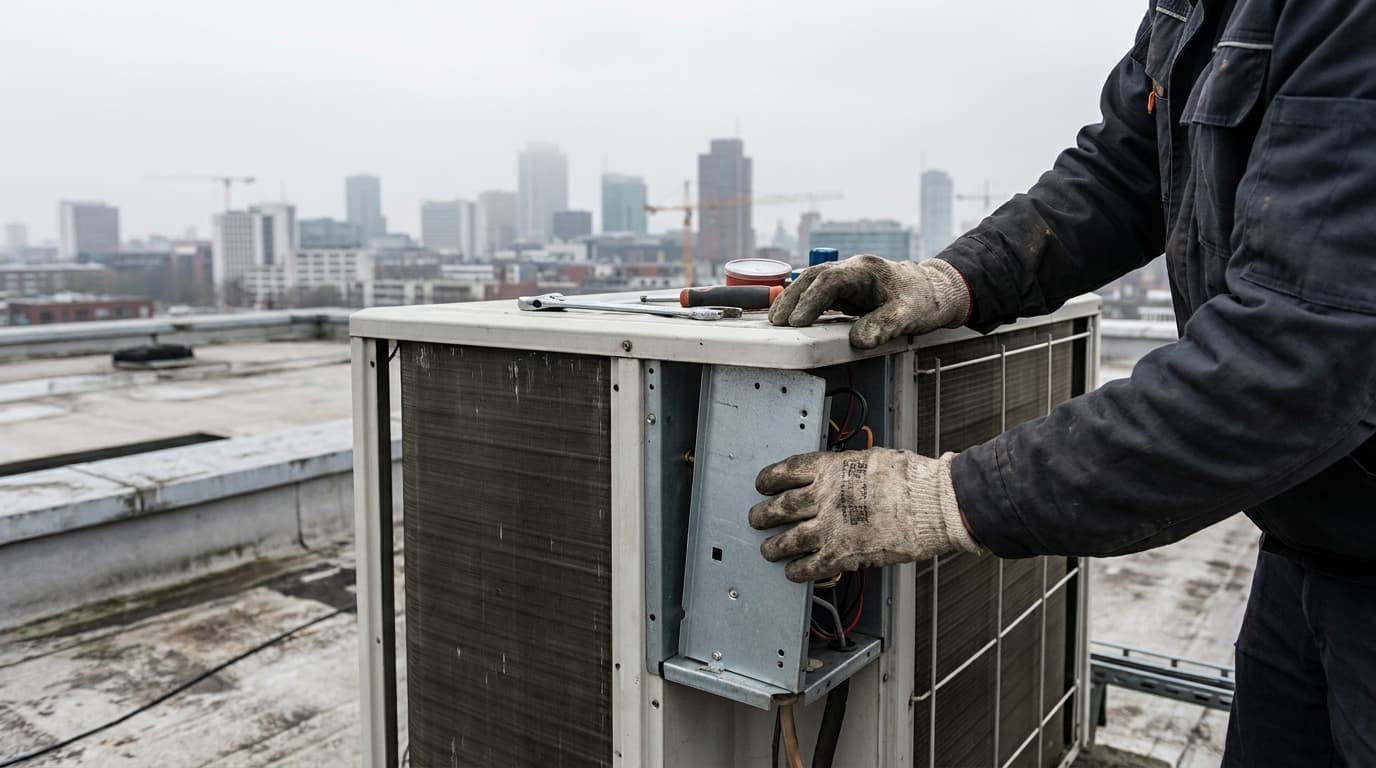
If you're still primarily focused on traditional furnace and air conditioning systems, you're watching the industry shift beneath your feet. Heat pump technology has moved from niche territory to mainstream necessity, and the data tells a compelling story about where your business needs to go.
According to the International Energy Agency, heat pump sales globally are projected to reach 10 million units annually by 2025, up from 2.9 million in 2019. In the United States specifically, the Department of Energy estimates that heat pumps could economically displace furnaces in approximately 50% of U.S. homes. This isn't gradual change—it's a fundamental market restructuring happening right now. For HVAC technicians, this represents both a massive threat to existing revenue streams and an enormous opportunity for those who adapt quickly.
The Market Reality: Heat Pumps Are No Longer Tomorrow's Technology
The shift toward heat pumps is being driven by multiple converging factors, each powerful enough to reshape your service territory on its own. Together, they're creating an irreversible market transformation.
First, there's the regulatory environment. The Inflation Reduction Act allocated $369 billion for climate and energy initiatives, with $8 billion specifically dedicated to residential heat pump rebate programs. States like Massachusetts, New York, and California have already begun phasing out new gas furnace installations. The Biden administration has set a target of 20 million residential heat pump installations by 2030. These aren't suggestions—they're mandates with funding behind them. Contractors who don't offer heat pump solutions will simply lose bids in regulated markets.
Second is the efficiency argument, which directly impacts your customers' wallets. A modern air-source heat pump delivers 250-300% efficiency in ideal conditions, compared to 95% for a high-efficiency gas furnace. For customers with electric heating or heat pump systems already in place, upgrading to a modern variable-capacity heat pump can reduce energy costs by 40-50% on heating and cooling combined. This isn't marginal improvement—it's transformational. Homeowners experiencing $200+ monthly heating bills see the value proposition immediately.
Third is the financial incentive structure. The Inflation Reduction Act provides up to $8,000 per household for heat pump installation for families making up to 80% of area median income, with expanded access for those up to 150% of AMI. These aren't rebates that require customer paperwork—many programs handle the discount at point of sale. A homeowner who was considering a $8,000 furnace replacement suddenly faces a $3,000 out-of-pocket cost for a heat pump that costs more upfront but saves them $50+ monthly. The decision becomes trivial.
What Technicians Get Wrong About Heat Pump Complexity
Most traditional HVAC technicians approach heat pumps with skepticism rooted in legitimate concerns: they're more complex, they require different troubleshooting procedures, and cold-climate performance was historically problematic. These concerns had merit in 2010. They're now outdated.
Modern cold-climate heat pumps—particularly ductless mini-split systems and cold-climate air-source heat pumps from manufacturers like Daikin, Mitsubishi, and Lennox—maintain substantial heating capacity even at -15°F. Daikin's Altherna heat pump, for example, delivers rated output at temperatures where traditional systems would require backup heat. This changes the entire value equation in northern climates. You're not limited to southern markets anymore.
Yes, heat pumps are more sophisticated. But that's actually advantageous for your business. Higher complexity means higher service call rates, longer billable hours per service event, and stronger barriers to entry for competitors. A technician who understands variable capacity compressors, inverter operation, reversing valve diagnostics, and thermal expansion valve troubleshooting becomes significantly more valuable than one limited to basic furnace replacement and seasonal maintenance.
The Skills You Need to Master
- Refrigerant cycle optimization: Understanding how heat pumps extract heating energy from cold outdoor air requires deeper knowledge of saturation temperatures, subcooling, and superheat. Mastering these concepts takes your diagnostic capabilities far beyond traditional systems.
- Inverter compressor diagnostics: Variable-capacity compressors are electronically controlled and require multimeter testing, board diagnostics, and communication protocol understanding. Traditional amp-draw testing doesn't work here.
- Reversing valve troubleshooting: Heat pumps switch between heating and cooling modes, and reversing valve problems create the most common callbacks. Understanding solenoid operation, pressure differentials, and pilot-operated valve mechanics is essential.
- Ductless system installation: Mini-split systems now represent the fastest-growing heat pump category. Proper line-set installation, evacuation procedures, charge verification, and condensate management differ significantly from traditional systems.
- Defrost cycle management: Cold-climate heat pumps require sophisticated defrost cycles that novice technicians often misinterpret as malfunctions. Understanding when defrost is appropriate and how to verify proper operation prevents unnecessary service calls and warranty claims.
- Integration with backup heat: Many installations use heat pumps with electric resistance backup or existing furnaces. Optimizing when the system switches to backup heat impacts both comfort and operating costs.
- Smart control programming: Modern heat pumps integrate with smart thermostats that offer remote monitoring, demand response, and usage analytics. Technicians who understand this ecosystem provide greater value at installation and service.
Pricing Strategy: Heat Pumps Command Premium Service Rates
One concrete benefit of specializing in heat pump technology is immediate improvement to your pricing power. A technician certified in heat pump service can legitimately charge premium rates—typically 15-25% higher than standard HVAC service rates—because the work requires more specialized knowledge and carries higher financial stakes for the customer.
Consider your service call structure: A standard furnace diagnostic might bill at $150-200 in many markets. A heat pump diagnostic for a complex refrigerant cycle issue—where correct diagnosis requires understanding operating modes, outdoor ambient conditions, target superheat calculations, and seasonal variations—legitimately justifies $250-300. Customers understand they're paying for expertise, not just billable hours.
Installation pricing follows the same logic. A high-efficiency furnace replacement in the $4,500-6,000 range becomes a heat pump installation at $7,500-10,000. The equipment cost is higher, but so is the labor cost because the work is genuinely more complex. Your margins improve on both material and labor.
More importantly, service revenue increases. Heat pumps generate maintenance calls, defrost cycle issues, reversing valve problems, and seasonal optimization requests that traditional systems don't. A customer with a heat pump system calls 1.8x more often than a furnace-only customer, according to field data from larger service companies. That's not speculation—that's recurring revenue.
Marketing Your Heat Pump Expertise
Once you've developed genuine heat pump competency, your marketing changes entirely. You're no longer competing on price or speed—you're selling expertise and performance.
The most effective positioning combines education with local incentive awareness. Create content around these themes:
- Local incentive guides: 'Your complete guide to the $8,000 federal heat pump rebate' resonates immediately with homeowners. Positioning yourself as the expert who helps them navigate programs increases phone calls. Even better, if you partner with local contractors to handle the incentive paperwork, you become the trusted advisor.
- Cold-climate case studies: If you're in a northern market, demonstrate heat pump performance through actual customer data. Real heating bills from January before and after heat pump installation convince skeptics. Document the data and publish it.
- Noise and efficiency comparisons: Many objections to heat pumps involve noise and efficiency myths. Create clear, factual comparisons showing modern mini-splits operating at 18-22 decibels—quieter than a refrigerator.
- Integration with solar: Heat pump + solar + battery storage is the fastest-growing category. Positioning yourself at this intersection—even if you partner with solar installers rather than install it yourself—positions you as forward-thinking.
- Maintenance optimization: Publish detailed guides on heat pump seasonal maintenance, defrost cycles, and real-world efficiency optimization. Become the knowledge source for your market.
- Contractor comparison: Explicitly state your certifications, training hours, and manufacturer partnerships. Most competitors won't match this specification, making your marketing claims defensible and credible.
The Financial Reality: Why Heat Pump Specialization Pays
Let's quantify the business impact of heat pump specialization over a three-year period.
A typical HVAC service company performing 200 furnace/AC replacements annually at average job values of $5,500 generates $1.1M annual revenue. Assume 35% gross margin (material and labor) on service work, yielding $385K annual gross profit before overhead.
Now consider a repositioned company targeting heat pump installations. Same market size, same service territory. Heat pump installations average $8,200 per job, 38% gross margin (higher equipment margin on premium systems), generating $1.24M annual revenue and $471K gross profit. That's $86K additional annual gross profit on the same market size, purely from better positioning and specialization.
Add in increased service call frequency (the 1.8x multiplier noted earlier) and service call rates that are 20% higher due to specialization, and the gap widens further. Three-year cumulative difference: approximately $280K-320K in additional gross profit for a company that pivots toward heat pump expertise.
That's real money—enough to invest in better tools, hire additional technicians, or substantially improve your own income.
Certification and Training Paths
You don't need to start from zero. Most experienced HVAC technicians have 80% of the foundational knowledge already. The remaining 20% is specific to heat pump operation and the refrigerant cycle applications unique to these systems.
- Manufacturer training programs: Daikin, Mitsubishi, Lennox, and Carrier all offer technician certification programs. These typically run 2-3 days and cost $1,500-2,500. They're worth every dollar because they're current, manufacturer-specific, and provide credentials you can advertise.
- EPA certification updates: Ensure your EPA Section 608 certification is current and covers low-GWP refrigerants. If you're operating with certification from 2010, you need an update. This isn't optional—it's legal requirement.
- Online technical courses: Organizations like HVACR School and Refrigeration Technologies provide comprehensive heat pump coursework. These work well for foundational concepts but lack the hands-on component of manufacturer training.
- Partnering with experienced technicians: If you're a company owner with limited personal hands-on experience, partner with an experienced heat pump technician for 2-3 months of projects. Pay a premium wage for the knowledge transfer. You'll recoup it in months.
- Field learning with support: Many manufacturers provide remote technical support. Use it liberally on your first 5-10 heat pump installs. Yes, projects take longer initially. The learning curve compresses rapidly.
Operational Considerations: Tools and Equipment
Heat pump specialization requires modest additional investment in diagnostic equipment. If you're currently working with basic multimeters and clamp meters, you need to upgrade.
- Digital manifold gauge sets: These replace analog gauges and cost $800-1,500. They measure temperature, pressure, and superheat simultaneously. Non-negotiable for professional heat pump work.
- Infrared thermometers: Measure surface temperatures without contact. Verify evaporator and condenser performance accurately. $100-300 for quality equipment.
- Vacuum pump: A good pump is essential for proper system evacuation. Invest in quality—$400-800. Cheap vacuums create moisture in systems, shortening compressor life.
- Refrigerant scale: Precise charging is crucial. A quality scale costs $500-1,000 but eliminates guesswork and callbacks.
- Tablet-based diagnostics: Many modern systems communicate via Bluetooth. A quality tablet with manufacturer apps provides real-time system diagnostics. $300-500 total setup.
Total investment: approximately $2,500-3,500 in new equipment. You'll recoup this on your first 2-3 premium-priced heat pump service calls.
The Competitive Advantage Window
Here's the reality that should motivate immediate action: this advantage window is closing. In 2024, heat pump expertise still carries substantial premium pricing power because most competitors lack it. In 2027, it will be table stakes. Technicians without heat pump competency will be like technicians without EPA certification in 1995—essentially unemployable for new installations.
The time to build expertise is now, while early adopters still represent a minority of the market and command premium positioning. Wait two years and you're following 1,000 other competitors into a commoditized market.
Practical Next Steps
- Schedule manufacturer training: Pick one manufacturer (Daikin or Mitsubishi for mini-splits, Lennox for air-source) and complete certification within 90 days. Budget $2,500 and 5 business days.
- Audit your equipment: List every diagnostic tool you own. Identify gaps. Order the most critical additions immediately.
- Create a service plan: Before taking your first heat pump service call, develop a standard service checklist specific to heat pumps. This prevents missed diagnoses and improves customer confidence.
- Find a mentor: Identify an experienced heat pump technician—perhaps in a nearby market or at a larger company. Propose quarterly paid consulting calls to review your first projects.
- Market your transformation: Update your website, social media, and local listings to highlight heat pump specialization. Mention certifications, training, and cold-climate capability explicitly.
- Price accordingly: Once certified and equipped, adjust your pricing structure to reflect specialization. Document your rates clearly and defend them through expertise, not apology.
Heat pump technology isn't the future of HVAC—it's the present. The question isn't whether to develop expertise, but how quickly you can do it. Your competitors are making that decision right now. So are your potential customers. The market is moving fast, and the early adopters among technicians will capture disproportionate share of both installations and service revenue for the next several years. After that, specialization becomes table stakes. Act now while the advantage still exists.
Running Your Heat Pump Business More Efficiently
As you build your heat pump practice and generate more installations and service calls, you'll face the operational challenge every growing HVAC business encounters: managing jobs, technicians, tenants, and administrative overhead becomes increasingly complex. You need systems that scale with you without adding proportional administrative burden.
This is where the right business platform makes a measurable difference. You need integrated tools that handle job management, customer communication, scheduling optimization, and service documentation—all in one system designed specifically for trades professionals. When you're managing multiple technicians across heat pump installations and service calls, coordinating callbacks, and ensuring proper documentation for warranty and compliance, scattered tools create inefficiency at scale.
VerticalRent provides exactly this integration for HVAC companies. Beyond property management for landlords, VerticalRent serves tradespeople through AI-powered service management, automated scheduling, direct payment processing, and comprehensive service documentation. More importantly, it handles the communication workflows that become critical as your heat pump practice grows—appointment confirmations, post-service follow-ups, warranty documentation, and customer relationship continuity.
Whether you're managing five technicians or twenty, you need a platform that tracks every job, every communication, and every payment without creating administrative overhead. VerticalRent's core features—AI service triage, automated scheduling, and integrated payment processing—eliminate the administrative friction that grows exponentially as you scale.
For HVAC companies specifically, the value is immediate: reduced scheduling conflicts, faster payment processing, comprehensive service records automatically archived, and customer communication logs that eliminate "he said, she said" disputes about service scope.
Ready to specialize in heat pump technology while scaling your business operations? Start with the technical expertise—get your manufacturer certifications, upgrade your tools, and build your service reputation. Then layer in business systems that let that expertise translate to actual profit growth. VerticalRent provides the operational infrastructure that lets growing HVAC companies scale without drowning in administrative overhead. Book a demo at verticalrent.com to see how our service management tools work specifically for HVAC contractors handling complex jobs and multiple technicians. Your competitors are still using spreadsheets and scattered tools. Don't let that be you.
Put this into practice
VerticalRent tools related to this guide
Legal Disclaimer
VerticalRent and its authors are not attorneys, CPAs, or licensed legal or financial advisors, and nothing on this site constitutes legal, tax, or professional advice. The information in this article is provided for general educational purposes only. Landlord-tenant laws, eviction procedures, security deposit rules, and tax regulations vary significantly by state, county, and municipality — and change frequently. Nothing on this site creates an attorney-client relationship. Always consult a licensed attorney or qualified professional in your jurisdiction before taking any action based on information you read here.
Co-founded VerticalRent in 2011, growing it from nothing to 100k landlords and renters. Sold it in 2019, then re-acquired it in 2026 to make it better than ever.


