HVAC Maintenance Schedule: A Landlord's Complete Guide
Protect your investment with a landlord-focused HVAC maintenance schedule. Our guide covers checklists, roles, record-keeping, and automation to cut costs.

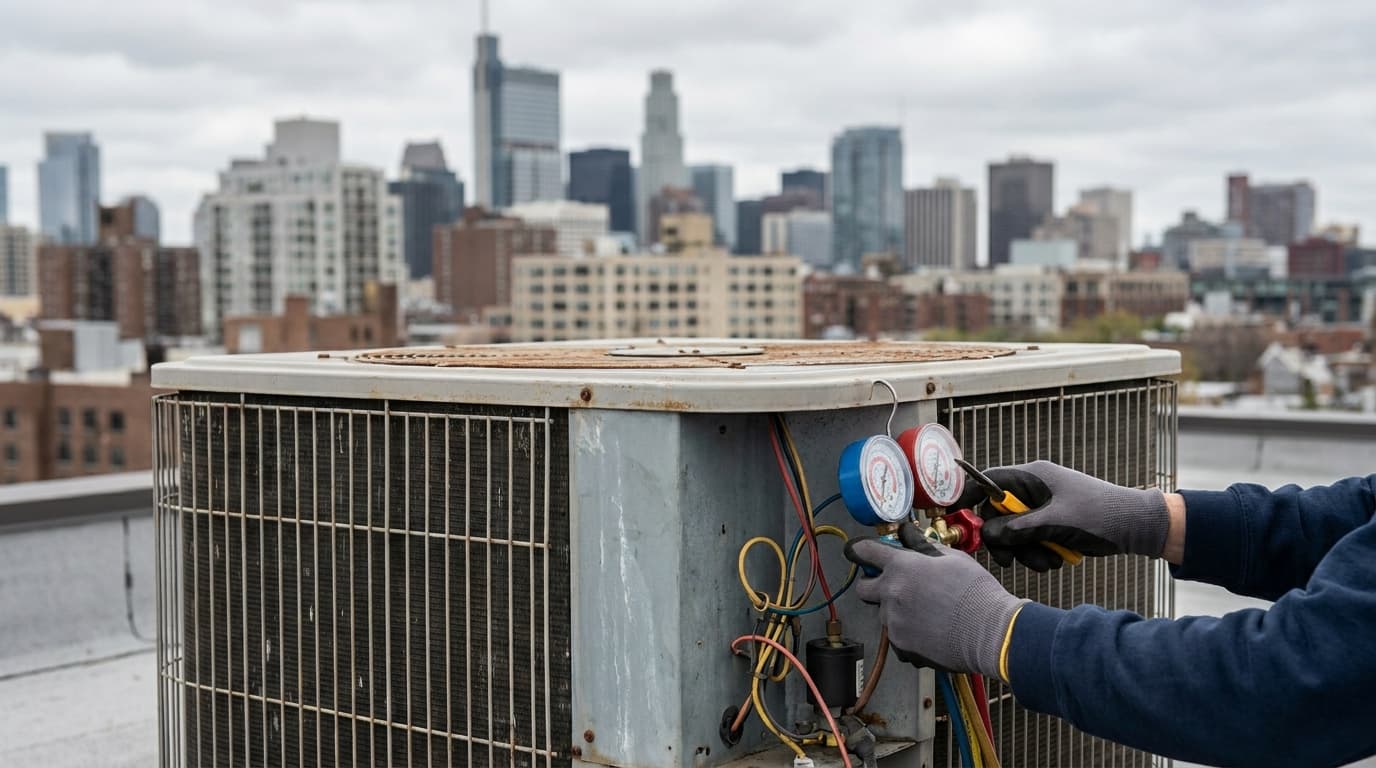
Most landlords think of HVAC maintenance as a repair-prevention task. That's too small a view. A structured preventive maintenance program can cut total maintenance costs by 50%, extend equipment life by 5-8 years, and produce ROI reported as high as 545% for commercial HVAC systems, according to this HVAC preventive maintenance benchmark summary.
For a rental portfolio, that changes the conversation. Your HVAC maintenance schedule isn't just about keeping tenants comfortable. It's part of how you control operating costs, reduce vacancy risk tied to comfort complaints, protect capital equipment, and avoid the worst kind of maintenance event: an urgent failure during peak weather when the tenant is upset and the vendor calendar is packed.
Why a Proactive HVAC Schedule Is a Financial Strategy
Reactive HVAC management looks cheaper only until the first breakdown. Then you pay for rush service, deal with tenant frustration, and often approve repairs without much time to compare options. That pattern repeats until the system ages out faster than it should.
Preventive work changes the economics. The benchmark numbers matter because they frame maintenance as an asset strategy, not a line-item nuisance. If a disciplined program can reduce total maintenance costs and stretch usable equipment life, then every skipped inspection becomes a financial decision, not just a scheduling lapse.
What landlords get wrong
A lot of small owners wait for one of three triggers: no cooling, no heat, or a tenant complaint. That's not a maintenance plan. That's outsourced detection. By the time a tenant notices weak airflow, odd cycling, or rising indoor humidity, the system has usually been working harder than necessary for a while.
The better approach is simple. Build recurring service into the normal operating rhythm of the property, the same way you handle lease renewals, smoke alarm checks, and turnover prep.
Practical rule: If the first time you think about the HVAC system is when a tenant says it stopped working, you're already late.
Why this matters across a portfolio
Even with a small portfolio, HVAC issues create ripple effects:
- Tenant retention risk: Poor comfort leads to complaints, strained renewals, and negative reviews.
- Budget disruption: Emergency repairs rarely arrive when your maintenance budget is feeling generous.
- Capital planning pressure: Deferred maintenance tends to shorten the window between repair and replacement.
- Operational drag: Every avoidable HVAC emergency steals time from leasing, collections, and higher-value work.
Landlords who want a tighter process can also learn from how service companies think about recurring work. Resources on Pipeline On for service agreement growth are useful because they show how recurring maintenance gets systematized instead of treated as one-off chaos. That same mindset works well on the ownership side.
The Landlord's HVAC Maintenance Framework
A working HVAC maintenance schedule starts with role clarity. Problems pile up when everyone assumes someone else is handling the basics. In rentals, that usually means the tenant ignores a dirty filter, the landlord assumes the contractor will catch everything later, and the technician arrives only after performance has already dropped.
The cleanest structure uses three roles: tenant, landlord, and professional technician.
Tenant responsibilities
Tenants are the first line of observation. They live with the system every day, so they'll notice weak airflow, strange noises, unusual odors, water near the air handler, or rooms that stop holding temperature.
Their job should stay limited to simple, low-risk tasks and reporting.
- Filter checks when assigned: If your lease puts routine filter replacement on the tenant, make that expectation specific.
- Basic visibility checks: Keep vents unblocked and report ice, leaks, or loud operation.
- Outdoor access awareness: Don't let storage, trash, or overgrowth crowd the outdoor unit.
- Prompt reporting: Small symptoms matter. Delayed reporting usually turns a cheap correction into a larger service call.
Landlord responsibilities
The landlord owns the system, so the landlord owns the process. That means setting the schedule, documenting the work, approving the vendor, and deciding when a property needs a tighter inspection cycle.
A landlord also has to decide what gets standardized across the portfolio and what gets customized. A newer system in a lightly used unit can often stay on a basic cadence. An older unit, a heat pump that runs year-round, or a property in a harsher environment needs closer attention.
Professional responsibilities
Licensed HVAC technicians handle the work that affects safety, refrigerant, electrical integrity, combustion performance, and internal system operation. A good technician isn't just there to “look it over.” They should inspect, test, clean, and document what they found.
The fastest way to waste money on maintenance is to blur the line between owner oversight and technical service. Landlords should manage the schedule. Technicians should manage the machinery.
Put the framework into the lease and workflow
Use a short written standard for each property:
| Role | Primary job | What they should not do |
|---|---|---|
| Tenant | Report issues early, perform assigned simple tasks | DIY repairs, panel removal, refrigerant or electrical work |
| Landlord | Schedule, track, approve, review vendor notes | Assume silence means the system is fine |
| Professional | Perform technical inspection and service | Rely on verbal summaries only |
That division avoids a common failure point. The tenant isn't guessing, the landlord isn't chasing memory, and the tech isn't walking into a vague service request.
The Monthly and Quarterly HVAC Checklist
The most effective HVAC maintenance schedule isn't built only around spring and fall. It's supported by small recurring checks that keep airflow open, spot water problems early, and catch visible issues before they become service calls.
ENERGY STAR specifically advises inspecting, cleaning, or changing air filters once a month, and notes that airflow problems can reduce system efficiency by up to 15%, as summarized in this HVAC checklist reference.

Monthly tasks that prevent easy failures
Monthly work is mostly about airflow, drainage, and visibility. These aren't glamorous tasks, but they're the ones that keep a system from struggling undetected.
- Check the air filter: Tenant or landlord, depending on your lease. If it's dirty, replace it. Don't treat filter care as optional.
- Look at the condensate area: Landlord for accessible systems, or assign to your maintenance person. Water stains, standing water, or a slow drain are early warning signs.
- Clear around the outdoor unit: Tenant can handle simple debris removal. Keep plants, leaves, and stored items away so the unit can breathe.
- Notice performance changes: If the system starts short cycling, blowing weak air, or taking too long to reach set temperature, log it.
For landlords managing rentals, a more property-specific walkthrough list can help. This guide on HVAC maintenance for rental properties is useful if you want to align tenant expectations with owner oversight.
A quick visual reference helps when you're training tenants or staff:
Quarterly tasks that deserve landlord attention
Quarterly checks go one level deeper. These are still lighter than a professional tune-up, but they're structured enough to catch neglect.
- Test the thermostat: Confirm the reading seems accurate and the system responds normally.
- Inspect visible refrigerant lines and insulation: You're not diagnosing charge. You're looking for obvious wear, damage, or missing insulation.
- Review the condensate drain path: Make sure it's draining cleanly and not setting up a water issue.
- Clean outdoor coil area gently: Remove surface debris carefully. Don't bend fins or overdo pressure.
If monthly tasks keep air moving and water draining, quarterly tasks keep small wear from turning into system stress.
What doesn't work is bunching all of this into one annual visit and hoping the tenant fills the gap. Most don't. The process has to be built so the easy work is completed.
Your Seasonal HVAC Service Schedule for Spring and Fall
Every landlord needs one firm baseline. For HVAC, that baseline is at least two preventive service visits per year, one in spring for cooling assets and one in fall for heating assets, according to this preventive maintenance schedule guidance.
That's the floor, not the ceiling.

Spring tune-up for cooling readiness
Spring service is about preparing the system before heavy cooling demand starts. You don't want the first hot week of the year to be your system test.
A professional cooling visit should typically include:
- Filter review and airflow check: The tech confirms the system can move air properly and notes any restrictions.
- Refrigerant-level check: This helps identify charge problems or signs that the system isn't operating as it should.
- Coil cleaning: Dirty coils force the system to work harder and can drag down cooling performance.
- Drain-line review: A blocked condensate line can create water damage and shutdown issues.
- Thermostat verification: The system should respond correctly to thermostat calls.
- Electrical inspection: Connections, controls, and contact points should be checked for wear or looseness.
- Fan and motor inspection: Moving parts need inspection for wear, balance, and proper operation.
If a contractor just changes a filter, glances at the outdoor unit, and leaves, that's not a real seasonal service.
Fall service for heating readiness
Fall service is less forgiving because safety matters more. Heating systems, especially combustion equipment, deserve a closer look before cold weather arrives.
A proper fall visit should usually include:
- Heat exchanger inspection: The technician checks for visible signs of damage or deterioration.
- Ignition or startup testing: Furnaces should start cleanly and consistently.
- Burner and combustion review: The system needs proper operation, not rough or delayed ignition behavior.
- Safety control testing: High-limit and other protective controls should be verified.
- Electrical and control inspection: Loose or failing electrical components often show up during startup and cycling checks.
- Thermostat operation test: Heating calls should trigger the correct sequence.
What to ask your HVAC vendor
Landlords get better service when they ask for specifics. Use questions like these:
- What did you inspect, test, and clean today?
- Did you note any wear that should be monitored before the next visit?
- Are there airflow, drainage, or control issues that need follow-up?
- Is this system still appropriate for a standard schedule, or should we increase inspection frequency?
That last question matters. A spring and fall cadence works as a baseline, but some properties need more than baseline management.
Annual and Long-Term Maintenance Planning
Seasonal service keeps the system operating. Long-term planning protects the asset.
A landlord who manages HVAC well doesn't just ask, “Did the unit make it through this season?” The better question is, “What is this system telling me about the next few years?” That shift turns maintenance records into replacement planning, budget forecasting, and fewer surprises.
What belongs in long-term planning
Some tasks don't need monthly attention, but they do need periodic review and documentation.
- Duct condition review: If airflow complaints repeat in the same rooms, or dust and comfort issues keep coming back, inspect duct condition and connections before blaming the equipment.
- Electrical component trend review: Contactors, capacitors, relays, and wiring issues often show up first as intermittent performance complaints.
- Insulation and line condition: Exposed line-set insulation and weathered exterior components can signal broader wear.
- Warranty and model tracking: Keep install details and service history tied to the exact unit, not just the property address.
For a broader ownership view of recurring maintenance planning, this preventive property maintenance checklist is a useful companion. HVAC should sit inside a wider annual property maintenance calendar, not outside it.
Plan the replacement before you need it
Most landlords don't replace HVAC at the perfect moment. They replace it when the system forces the decision. That usually means a rushed quote, a stressed tenant, and limited bargaining power.
Owner mindset: The best time to think about replacement is when the system still works, but the maintenance record shows rising risk.
Start a simple replacement watchlist for each property. If a unit starts producing repeat service recommendations, struggles to maintain comfort, or becomes harder to schedule around because tenants are reporting recurring issues, flag it early. You don't need a spreadsheet full of formulas. You need a list, service notes, and a budget plan.
How to Customize Your Schedule for Your Properties
The standard twice-a-year answer is a useful baseline, but it's not enough for every rental. Better maintenance guidance says schedules should be built from asset inventory, OEM guidance, and actual operating conditions, with high-usage or critical systems needing more frequent checks than low-usage ones, as explained in this schedule customization discussion.
That's the difference between a generic HVAC maintenance schedule and a landlord-grade one.

Start with an asset inventory
Before changing frequency, list what you own. For each system, track:
| Item | Why it matters |
|---|---|
| Property and unit | Multi-unit portfolios get messy fast without unit-level tracking |
| System type | Heat pump, furnace and AC split system, mini-split, packaged unit |
| Approximate age and condition | Older or marginal systems need closer monitoring |
| Tenant usage pattern | Year-round occupancy and heavy use increase wear |
| Service history | Repeat issues usually point to a schedule or equipment problem |
Once you can see the portfolio clearly, frequency decisions become much easier.
Adjust by age, use, and environment
A newer system in a mild climate with consistent occupancy may do fine on the baseline plus routine filter and visibility checks. An older system in a dusty, humid, or high-demand property often needs quarterly attention on top of seasonal professional service.
Use these decision rules:
- Older equipment: Increase inspection frequency when wear is already visible or service notes keep mentioning the same components.
- Heavy-use properties: Units in properties with constant occupancy or higher internal loads deserve closer review.
- Harsh environments: Dust, pollen, coastal air, and debris around outdoor equipment can justify a tighter cleaning and inspection cycle.
- Critical properties: If a system failure would create major tenant disruption, don't run it on the minimum schedule.
Heat pumps need a different mindset
Heat pumps deserve special attention because they often handle both heating and cooling. That means they don't get an off-season in the way a traditional furnace or AC component might. Filters, airflow, controls, and defrost-related behavior need closer operational awareness across the year.
Landlords often miss this and use the same scheduling assumptions they use for separate furnace and AC systems. That usually leads to under-monitoring.
Use tenant feedback as operating data
Tenant complaints aren't just service requests. They're field data.
- Comfort drift in one room: Possible airflow or distribution issue
- Frequent thermostat adjustments: Could point to control or performance problems
- Repeated noise reports: Often a sign of wear, vibration, or loose components
- Water complaints: Drainage and condensate need attention
Don't build your schedule only from the calendar. Build it from what the property is telling you.
Essential Record-Keeping and Compliance Notes
A disciplined HVAC maintenance schedule falls apart if the records are weak. Landlords need documentation for warranty questions, vendor accountability, tenant disputes, budgeting, and compliance.
Strong maintenance guidance says you should track asset age, condition, refrigerant type, and every refrigerant transaction while aligning with frameworks such as EPA Section 608 and ANSI/ASHRAE/ACCA Standard 180, as outlined in this HVAC program and compliance guide.
What to document every time
After each service visit, keep a record that answers basic operational questions without relying on memory.
- Date and property/unit: So you can tie the service to the exact equipment location
- Vendor name and technician notes: Notes matter more than invoices alone
- Observed condition: Clean, worn, leaking, restricted airflow, abnormal cycling, and similar findings
- Work performed: Inspection, cleaning, testing, replacement, drain clearing, control check
- Recommended follow-up: Anything the technician says should be rechecked or budgeted
- Refrigerant-related details: If refrigerant was involved, log that carefully and completely
Why records protect landlords
Good records do three jobs at once. They help you manage future work, they show that you maintained the asset responsibly, and they reduce arguments about what was or wasn't done.
If a tenant claims you ignored repeated comfort issues, a dated service log tells a different story. If a contractor says a problem “must have been building for a long time,” your prior inspections may show otherwise. If you're deciding whether to repair or replace, the service history gives you a pattern instead of a guess.
Written service history turns HVAC from a memory problem into a management system.
Keep the format simple
You don't need a complicated facilities platform to start. A usable record system can be:
- A property-by-property digital folder
- A spreadsheet or asset log
- Work orders tied to each service event
- Photos of tags, nameplates, and visible wear
- Scanned invoices and technician checklists
What doesn't work is stuffing receipts into a drawer and assuming you'll remember the story later. You won't. Neither will your contractor, your assistant, or your future self during an emergency approval call.
Automating Maintenance Reminders and Vendor Dispatch
A maintenance schedule only creates value if the work gets done on time. For many landlords, the failure point isn't intent. It's admin drag. Filters don't get checked because nobody sent the reminder. Seasonal service gets delayed because there's no recurring work order. Vendor follow-up slips because everything lives in texts, emails, and memory.
Automation fixes the repeatability problem.

What to automate first
Start with the recurring tasks that are most likely to be missed:
- Monthly reminders: Filter checks, visible drain review, outdoor-unit clearance
- Quarterly tasks: Thermostat checks, visible line inspection, follow-up reviews on prior notes
- Seasonal service orders: Prebuilt spring and fall work orders with your required scope
- Vendor routing: Assign preferred HVAC contractors by property or service area
A digital work order process matters here. If you need a straightforward reference point, this guide to a maintenance work order system shows how recurring maintenance can move from ad hoc messaging into a trackable workflow.
Build a simple dispatch workflow
The most practical automation stack for small landlords usually includes a calendar, a reminder layer, a work-order system, and a vendor contact list. You don't need enterprise software. You need consistency.
One option in the rental space is VerticalRent, which supports tenant-submitted maintenance requests, AI triage, and vendor dispatch as part of a broader rental management workflow. That matters if you want HVAC service events recorded in the same operational system as the rest of the property.
If missed calls are part of your service bottleneck, it also helps to study how HVAC operators solve missed HVAC service calls. Landlords run into the same issue from the other side when emergency scheduling falls apart after hours.
What good automation looks like
A useful system doesn't just remind you that maintenance is due. It tells the right person what to do, when to do it, and where to record the result.
That means:
- Tenants get plain-language reminders for assigned tasks.
- Landlords get due dates and exceptions, not a giant generic checklist.
- Vendors receive a clear scope of work instead of “please inspect HVAC.”
- Completion gets logged automatically with notes, date, and property history.
The wrong setup creates more alerts and more noise. The right setup makes recurring HVAC work almost boring. That's exactly what you want.
Sample HVAC Maintenance Schedule Template for Landlords
A landlord-grade HVAC maintenance schedule should fit on one page. If it takes too much interpretation, it won't get used consistently. The goal is to create a repeatable template, then adjust it by property based on age, use, equipment type, and service history.
If you want to pair this schedule with calendar-based appointment management, tools covered in Twizzlo's 2026 scheduling guide can help you think through reminders, booking flow, and recurring service coordination in a practical way.
Landlord's HVAC Maintenance Schedule Template
| Task | Frequency | Responsible Party |
|---|---|---|
| Inspect air filter and replace if needed | Monthly | Tenant or Landlord |
| Keep vents unobstructed and report airflow issues | Monthly | Tenant |
| Clear debris around outdoor unit | Monthly | Tenant or Landlord |
| Check for visible condensate drainage issues | Monthly | Landlord |
| Test thermostat response and basic accuracy | Quarterly | Landlord |
| Inspect visible refrigerant-line condition and insulation | Quarterly | Landlord |
| Gently clean debris from outdoor unit exterior | Quarterly | Landlord |
| Review tenant feedback for noise, comfort, or cycling complaints | Quarterly | Landlord |
| Cooling system tune-up | Spring | Professional |
| Heating system inspection and safety service | Fall | Professional |
| Review service history and rising-risk units | Annual | Landlord |
| Update asset records, warranty info, and vendor notes | Annual | Landlord |
| Evaluate replacement candidates and budget timing | Annual | Landlord |
How to use the template
Don't treat this as fixed for every property. Use it as your base version, then tighten the frequency for older systems, heat pumps, heavy-use rentals, and properties where tenant complaints repeatedly point to airflow or control problems.
The key is consistency. A simple schedule followed every year beats an ambitious one that lives in a file and never gets executed.
If you want one place to manage renters, leases, rent collection, and maintenance workflows, VerticalRent gives independent landlords a practical operating system for small portfolios. It's a straightforward way to keep property tasks organized while reducing the manual follow-up that causes recurring maintenance to slip.
Put this into practice
VerticalRent tools related to this guide
Legal Disclaimer
VerticalRent and its authors are not attorneys, CPAs, or licensed legal or financial advisors, and nothing on this site constitutes legal, tax, or professional advice. The information in this article is provided for general educational purposes only. Landlord-tenant laws, eviction procedures, security deposit rules, and tax regulations vary significantly by state, county, and municipality — and change frequently. Nothing on this site creates an attorney-client relationship. Always consult a licensed attorney or qualified professional in your jurisdiction before taking any action based on information you read here.
Co-founded VerticalRent in 2011, growing it from nothing to 100k landlords and renters. Sold it in 2019, then re-acquired it in 2026 to make it better than ever.


