Energy-Efficient HVAC Upgrades: Upselling Opportunities for Technicians
Energy-efficient HVAC upgrades represent one of the most profitable service opportunities in the trades today. We'll show you exactly how to identify upgrade candidates, price these services competitively, and market them effectively to maximize your revenue per service call.

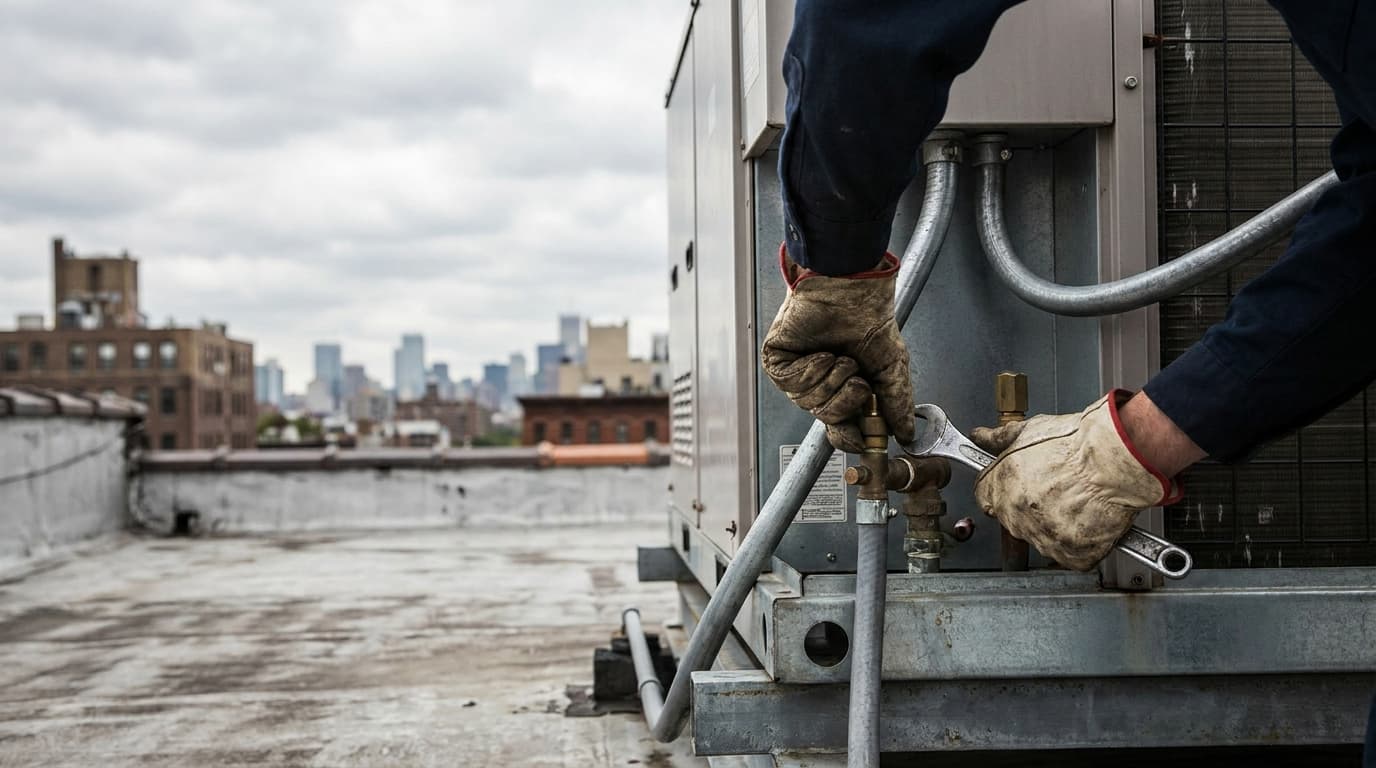
Here's the reality: most HVAC technicians leave money on the table during every service call. You're already in the home. You already have the customer's trust. You already understand their system's limitations. Yet the majority of techs complete their maintenance or repair work and move on to the next job without exploring what could genuinely improve the customer's comfort, reduce their energy bills, or prevent future breakdowns.
The energy-efficient HVAC upgrade market is experiencing explosive growth. According to the U.S. Energy Information Administration, heating and cooling account for approximately 42% of residential energy consumption. That's the single largest energy expense in most homes. When you combine this massive expense with rising energy costs—utilities have increased an average of 15% over the past three years—homeowners are actively looking for solutions. The International Energy Agency reports that energy-efficient HVAC systems can reduce heating and cooling costs by 20-40% compared to older units.
This isn't just about being helpful (though that matters). This is about building a sustainable, profitable business. Service calls that include upgrade recommendations generate significantly higher revenue, improve customer satisfaction scores, and create repeat business through extended warranties and maintenance contracts.
The Current Market Opportunity
The data supporting energy-efficient HVAC upgrades is compelling. The EPA's ENERGY STAR program reports that ENERGY STAR certified HVAC systems use approximately 10-15% less energy than standard models. For a homeowner spending $1,200 annually on heating and cooling, that translates to $120-180 in annual savings. Over the 15-20 year lifespan of a quality HVAC system, those savings compound to $1,800-3,600 per household.
But here's what makes this interesting for your business: the residential HVAC replacement market is worth approximately $12.9 billion annually in the United States, according to the HVAC Excellence foundation. New construction accounts for only a portion of this. The majority comes from replacements of aging systems—and most of those replacements happen reactively, after a system fails, rather than proactively.
Why does this matter? Because proactive upgrade recommendations allow you to control the conversation. You're not competing on emergency rates. You're positioned as the expert who saw the problem coming and offered a solution that saved the customer thousands of dollars over time.
Identifying Upgrade Candidates During Service Calls
The first step is developing a systematic approach to identifying which customers are genuinely good candidates for upgrades. This isn't about aggressive upselling—it's about professional assessment. During every maintenance call or repair visit, you should be evaluating four critical factors.
- System Age: HVAC systems typically last 15-20 years depending on maintenance and climate. If you're servicing a system that's 12+ years old, the customer should be thinking about replacement planning. Systems over 15 years are essentially on borrowed time. Modern equipment can be 20-30% more efficient than units from just 10 years ago.
- Repair Frequency: Calculate the total cost of repairs over the past three years. Industry data shows that if you're spending more than 50% of the replacement cost on repairs annually, replacement becomes economically rational. A $6,000 replacement might make sense if the customer spent $3,000+ in the previous year on repairs alone.
- System Inefficiency Indicators: Look for signs of declining performance—temperature inconsistencies between rooms, longer run times to reach set temperatures, higher-than-normal energy bills, or audible strain during operation. These suggest the system is working harder to deliver less comfort.
- Refrigerant Status: If the system uses R-22 refrigerant, this is now a critical upgrade trigger. R-22 phase-out means replacement costs are skyrocketing—refrigerant that cost $15 per pound in 2010 now costs $100+ per pound. A simple refrigerant recharge that costs $400 today might cost $1,200 by next year. Early replacement becomes economically logical.
During your assessment, document these factors clearly. Take photos of the equipment nameplate showing age. Note repair history. Record current energy efficiency ratings (SEER, HSPF, or AFUE depending on system type). This documentation becomes your justification for upgrade recommendations and helps customers make informed decisions.
Specific Energy-Efficient Upgrade Options and Their Value Proposition
Energy-efficient HVAC upgrades aren't one-size-fits-all. Different customers have different needs, budgets, and motivations. Your job is matching the right solution to each customer's situation. Here are the primary upgrade paths you should be prepared to present:
High-Efficiency Heat Pump Systems
Heat pumps have evolved dramatically in the past five years. Modern cold-climate heat pumps maintain efficiency down to -15°F, making them viable across North America. A modern Air Source Heat Pump (ASHP) with SEER2 ratings of 18+ and HSPF2 ratings of 10+ provides 20-30% energy savings compared to traditional air conditioning plus electric heating.
For customers with baseboard heating or electric heating, this is a transformative upgrade. Total installed cost typically ranges from $8,000-15,000 depending on ductwork modifications needed. Annual energy savings average $800-1,500 for heating-dominant climates. Payback period is typically 8-12 years before incentives, and 4-7 years when including federal tax credits (up to $3,600 for heat pump installation) and potential state rebates.
Variable Speed and Two-Stage Systems
Customers who already have decent ductwork can often benefit from upgrading to variable-speed equipment rather than full replacement. Variable Refrigerant Flow (VRF) systems or two-stage compressors maintain closer to desired temperatures while using significantly less energy than single-stage systems.
These upgrades typically cost $5,000-10,000 installed and deliver 10-15% energy savings. Payback is typically 6-10 years. The practical value for customers isn't just financial—it's comfort. Variable-speed systems reduce temperature swings, minimize humidity problems, and run more quietly.
Smart Thermostat Integration
While not a major revenue opportunity individually, smart thermostat installation is a high-margin add-on that dramatically improves upgrade value. Smart thermostats achieve 10-15% energy savings through automated temperature adjustments and learning algorithms. They cost $200-500 installed and represent nearly 100% profit for your business.
More importantly, smart thermostats enhance customer perception of modern equipment. They're tangible, interactive, and immediately visible benefits that justify the overall upgrade investment.
Ductwork Sealing and Insulation
Most homes lose 20-30% of conditioned air through ductwork leaks and poor insulation. Sealing and insulating ducts can recover that lost efficiency at a fraction of the cost of equipment replacement. A typical ductwork sealing and insulation project costs $1,500-4,000 and delivers immediate 15-20% efficiency gains.
This is often the most underutilized upgrade path. Many technicians don't actively market ductwork improvements because they require different skills or partnerships. But customers see $1,500-4,000 as vastly more accessible than $10,000+ equipment replacement. Use ductwork upgrades as a gateway to larger equipment projects—prove your value and expertise with a smaller project first.
Pricing Your Energy-Efficient Upgrade Proposals
Pricing energy-efficient upgrades requires a different mindset than pricing repairs. With repairs, you're solving an immediate problem. With upgrades, you're offering an investment that pays returns over time.
Start by establishing your cost basis. Determine what you pay for equipment, parts, labor hours required for installation, and overhead allocation. Most HVAC contractors use a materials + labor markup approach with a 3-4x multiplier on installed equipment and a $85-150 hourly rate for labor depending on market conditions and your experience level.
But here's the critical part: never lead with price. Lead with value. A high-efficiency system that costs $12,000 installed but saves $1,200 annually is fundamentally different than a $7,000 standard-efficiency system that saves $400 annually. Over 15 years, the difference is $12,000 in cumulative savings.
Structure your proposals around three tiers: Bronze (baseline replacement), Silver (mid-range efficient system), and Gold (premium high-efficiency system). This anchoring approach makes your premium options look reasonable while giving customers clear choices at different price points.
Include specific numbers: show current annual energy costs, project post-upgrade costs, calculate cumulative savings, and highlight applicable rebates and tax credits. Make the financial math transparent and compelling.
Marketing Energy-Efficient Upgrade Services
Marketing upgrade services requires a different approach than marketing emergency repair services. You're building awareness and positioning yourself as the forward-thinking professional in your market.
Direct Customer Outreach
Your existing customer database is your most valuable asset. If you've been servicing customers for 3-5 years, you have detailed knowledge of their equipment ages. Create a targeted outreach campaign: identify all customers with systems 12+ years old, calculate approximate energy savings they could achieve, and send personalized letters or emails.
Example: 'Based on our service records, your HVAC system was installed in 2010. Modern energy-efficient systems typically save homeowners with your equipment age $1,000-1,500 annually in energy costs. We're offering free energy-efficiency evaluations through [DATE]. Call [NUMBER] to schedule yours.' This specific, data-backed approach converts better than generic 'upgrade your system' messaging.
Educational Content Marketing
Create blog posts, videos, and infographics explaining energy-efficient HVAC options, comparing lifecycle costs, and detailing the ROI on various upgrades. Rank for keywords like 'HVAC replacement cost [YOUR CITY]' and 'energy-efficient air conditioning near me.' This positions you as the authoritative expert customers find when they're actively researching upgrades.
Specific content ideas: 'What HVAC System Age Triggers Replacement Planning?' 'Complete Cost-Benefit Analysis: Heat Pump vs. Traditional AC+Furnace,' 'Energy Tax Credits in [YOUR STATE]: How Much You Can Save,' and 'Why Your Ductwork Might Be Costing You $1,200 Annually.'
Local Partnership Opportunities
Partner with local energy auditors, weatherization contractors, and home performance companies. When they recommend HVAC upgrades, they need qualified installation partners. You provide installation; they provide referrals. This creates a steady pipeline of pre-qualified upgrade opportunities where the customer has already decided to invest in efficiency.
Leverage Rebate Programs
Federal tax credits currently provide up to $3,600 for heat pump installation. Many states offer additional rebates—some providing $1,000-2,000 per system. Market these aggressively. 'After tax credits, your investment is only $6,500 instead of $10,000, and you'll save $1,200 annually' is far more compelling than focusing solely on the upfront cost.
Service Call Best Practices for Upgrade Recommendations
Recommending upgrades during service calls requires finesse. You're transitioning from trusted technician solving an immediate problem to consultant proposing capital investment. Here's the framework that converts:
- Start with Transparency: 'This repair will cost $400 and likely last 2-3 more years. But I want to show you something important about your system's age and efficiency.' Honesty builds trust.
- Present Data, Not Opinions: Share specific numbers about system age, efficiency ratings, estimated remaining lifespan, and energy consumption. Let the data speak, not your sales pitch.
- Acknowledge Budget Constraints: 'I know this isn't a small investment. Most customers spread this over time or budget for it during their slower season. We have financing options that make monthly payments around $180 for this system.'
- Offer Incremental Options: Give customers a pathway that doesn't require making the full decision immediately. 'We could seal your ducts first for $2,000, save you $300 annually, then plan equipment replacement next year.' This reduces decision pressure while keeping them engaged.
- Follow Up: Never assume a single conversation leads to a decision. Send proposal documentation, energy savings calculations, rebate information, and financing options within 24 hours. Follow up one week later: 'Did you have questions about the proposal?'
Financing Options Increase Close Rates
A $10,000 upgrade feels impossible for many homeowners. A $180 monthly payment feels manageable. Partner with financing companies to offer HVAC-specific financing (0% APR promotional periods are common). This dramatically increases your close rate on higher-value upgrades.
Data from HVAC financing providers shows that 60-70% of customers who would decline a system upgrade will move forward when financing options are presented. That's direct revenue impact.
Building a Sustainable Upgrade Business
Successful technicians don't treat upgrade recommendations as occasional add-ons. They build systematic processes: assessment checklists during service calls, documented customer energy profiles, targeted outreach campaigns, and consistent follow-up.
The math is straightforward. If you're completing 15-20 service calls monthly and converting 10% of those to upgrade consultations, and 20% of those consultations to closed jobs, you're adding 3-4 additional upgrade installations monthly. At an average margin of $2,500 per installation, that's $7,500-10,000 additional monthly revenue.
Over a year, that's $90,000-120,000 in additional revenue—from the same customer base you're already serving, with no additional marketing cost beyond your systematic approach to recommendations.
The Operational Challenge: Managing Upgrade Pipelines
Here's where most technicians struggle: managing the paperwork and follow-up process. You're completing service calls, writing estimates, coordinating financing, scheduling installations, and tracking customer communications. Without a system, things fall through the cracks. A customer who said 'I'm interested, but I need to think about it' disappears into your loose paperwork pile, and someone else's contractor gets the job.
This is where business management tools become critical. You need a system that integrates service call information, generates professional estimates, tracks proposal status, automates follow-up communications, and measures close rates. Without this infrastructure, you're leaving upgrade opportunities on the table.
This is exactly why tradespeople need integrated business management platforms. At VerticalRent, we built tools specifically for service businesses like yours. Our AI-powered features help technicians quickly assess systems during service calls, generate energy-efficient upgrade recommendations with accurate pricing, create professional proposals instantly, and track the entire customer pipeline from initial consultation to completed installation. Plus, features like ACH rent collection and tenant screening help HVAC contractors who work with rental properties identify upgrade opportunities on a portfolio basis.
Measuring What Works
Track three key metrics: recommendation rate (percentage of service calls where you present upgrade options), proposal-to-consultation conversion (percentage of customers who accept a formal evaluation), and consultation-to-close conversion (percentage of proposals that result in signed contracts). Most successful HVAC businesses achieve 15-20% recommendation rates, 40-50% proposal conversions, and 25-35% close rates on proposals.
If your numbers are lower, focus on the upstream metric first. If you're only recommending upgrades on 5% of calls, your conversion rate is irrelevant. Develop a discipline around assessment and recommendation. Set a goal of 20% of service calls including upgrade recommendations within 90 days.
Conclusion: The Reality of Energy-Efficient HVAC Upgrades
Energy-efficient HVAC upgrades represent the single best opportunity for technicians to build profitable, sustainable businesses. The market demand is genuine and growing. Customers have clear financial incentives. Financing makes upgrades accessible. Your expertise positions you perfectly to identify opportunities and recommend solutions.
But opportunity without execution is just conversation. You need a systematic approach: clear assessment criteria, data-backed proposals, professional presentation, consistent follow-up, and integrated business systems to track the entire pipeline.
The technicians who will dominate their markets in the next 5 years are those who build upgrade businesses now. Not aggressive upsellers, but trusted consultants who help homeowners make smart investments in comfort, efficiency, and reliability.
Ready to Build Your Upgrade Business?
Start with VerticalRent. Our platform gives you AI-powered assessment tools during service calls, automated estimate generation with accurate pricing and rebate information, professional proposal generation, CRM tools to track customer pipelines, and analytics to measure what's working.
Whether you're completing 5 service calls monthly or 50, you need systems that help you capture upgrade opportunities systematically. Visit verticalrent.com today and see how other service contractors are building sustainable upgrade businesses. Schedule a demo with our team, and we'll show you exactly how to implement this strategy in your business.
The energy-efficient HVAC market is waiting. Your customers are ready. Your competition is waking up to the opportunity. The question is whether you'll be the contractor they trust for guidance, or whether you'll watch someone else capture this revenue.
Put this into practice
VerticalRent tools related to this guide
Legal Disclaimer
VerticalRent and its authors are not attorneys, CPAs, or licensed legal or financial advisors, and nothing on this site constitutes legal, tax, or professional advice. The information in this article is provided for general educational purposes only. Landlord-tenant laws, eviction procedures, security deposit rules, and tax regulations vary significantly by state, county, and municipality — and change frequently. Nothing on this site creates an attorney-client relationship. Always consult a licensed attorney or qualified professional in your jurisdiction before taking any action based on information you read here.
Co-founded VerticalRent in 2011, growing it from nothing to 100k landlords and renters. Sold it in 2019, then re-acquired it in 2026 to make it better than ever.


