Anti-Discrimination Protections for Renters in Nebraska
Nebraska renters have powerful legal protections against housing discrimination. Learn your federal and state rights before you sign your next lease.

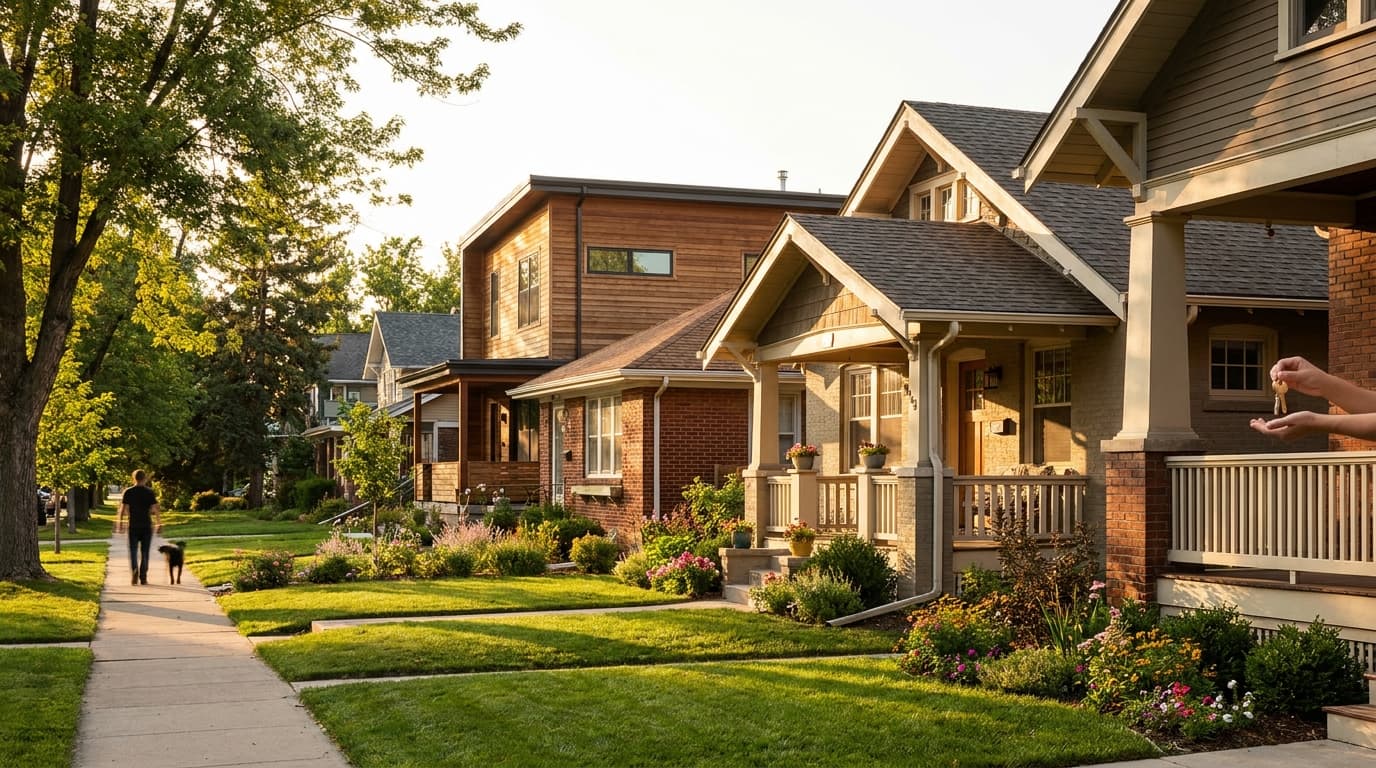
Housing discrimination is not a relic of the past. According to the National Fair Housing Alliance, more than four million fair housing violations occur in the United States every single year — and the vast majority go unreported because renters simply don't know their rights. If you're renting in Nebraska, or searching for a place to rent in cities like Omaha, Lincoln, Grand Island, or Bellevue, you are protected by a layered system of anti-discrimination law that operates at the federal, state, and in some cases local level. Understanding these protections can be the difference between landing the home you deserve and unknowingly accepting illegal treatment.
This guide breaks down exactly what the law says, what discrimination actually looks like in practice, which classes Nebraska protects beyond federal minimums, how to file a complaint, and what remedies you may be entitled to. Whether you're a first-time renter, a seasoned tenant, or somewhere in between, this is the information Nebraska landlords are required — by law — to respect.
The Federal Foundation: The Fair Housing Act of 1968
All housing discrimination law in the United States starts with the federal Fair Housing Act (FHA), passed as part of the Civil Rights Act of 1968 and significantly strengthened by the Fair Housing Amendments Act of 1988. The FHA applies in all 50 states, including Nebraska, and it prohibits discrimination in the sale, rental, financing, and advertising of housing based on seven protected classes.
- Race
- Color
- National origin
- Religion
- Sex (interpreted by HUD and courts to include gender identity and sexual orientation since the 2020 Supreme Court Bostock decision)
- Familial status (having children under 18, being pregnant, or in the process of adopting)
- Disability (physical or mental impairments that substantially limit one or more major life activities)
Under the FHA, a landlord cannot refuse to rent to you, set different terms or conditions, advertise in a discriminatory way, deny that a unit is available when it is, or otherwise make your housing experience different based on any of these protected characteristics. This federal floor applies to landlords of all sizes, from corporate apartment complexes to individual property owners — with very limited exceptions for small owner-occupied properties (the so-called 'Mrs. Murphy exemption,' which applies to buildings with four or fewer units where the owner lives in one unit, but even this exception does not apply to discriminatory advertising).
Important: Federal law does not exempt small landlords from the prohibition on discriminatory advertising, even if the property itself might qualify for a limited exemption. Posting a listing that says 'no kids' or 'Christians preferred' violates the FHA regardless of property size.
Nebraska's Fair Housing Act: State-Level Protections
Nebraska has its own fair housing law — the Nebraska Fair Housing Act, codified at Nebraska Revised Statutes §§ 20-301 through 20-344. Administered by the Nebraska Equal Opportunity Commission (NEOC), this state law mirrors much of the federal FHA but adds important additional protections that go beyond what federal law requires. Nebraska's law applies to the rental, sale, and financing of housing throughout the state.
Protected Classes Under Nebraska Law
Nebraska's Fair Housing Act covers all seven federal protected classes and expands the list to include additional categories. As of the current statute, Nebraska prohibits housing discrimination based on:
- Race
- Color
- Religion
- Sex
- National origin
- Familial status
- Disability
- Marital status — a protection not included under federal law
- Pregnancy — explicitly stated in Nebraska law, though partially covered federally under sex and familial status
- Ancestry — distinct from national origin and race, covering ethnic and lineage-based discrimination
The inclusion of marital status is significant. Under Nebraska law, a landlord cannot refuse to rent to you because you are single, divorced, widowed, or unmarried — including unmarried couples. This means a landlord who advertises a 'no unmarried couples' policy or refuses to rent to a single adult simply because they're not married is violating Nebraska law, even if the practice might fall into a gray area under federal-only analysis.
What Conduct Is Prohibited?
Under both federal and Nebraska law, it is unlawful for a landlord, property manager, real estate agent, or anyone acting on their behalf to engage in any of the following:
- 1Refusing to rent or negotiate for the rental of a dwelling to any person because of a protected characteristic.
- 2Making a dwelling unavailable to someone on a discriminatory basis — for example, telling a prospective tenant a unit is already rented when it is not.
- 3Changing the terms, conditions, or privileges of a rental — such as charging a higher security deposit to a person with a disability.
- 4Publishing or making any statement, advertisement, or notice that indicates a preference for or against any protected class.
- 5Representing falsely that a dwelling is not available for inspection or rental.
- 6Providing different housing services or facilities based on a protected class.
- 7Threatening, coercing, intimidating, or interfering with anyone exercising their fair housing rights or assisting others in exercising those rights.
- 8Retaliating against a tenant who has filed a fair housing complaint.
What Housing Discrimination Actually Looks Like
Discrimination doesn't always look like a landlord saying 'I won't rent to you because of your race.' In fact, overt discrimination like that is far less common than subtler forms that are equally illegal. Here are real-world examples of housing discrimination that Nebraska renters encounter:
Discriminatory Advertising
Listings that say things like 'perfect for a single professional,' 'ideal for empty nesters,' 'no Section 8' (in jurisdictions where voucher status is protected), 'English speakers preferred,' or 'great neighborhood for families' can all be code language for discriminatory preferences. Under Nebraska and federal law, advertising that signals a preference against any protected class is illegal — even if it uses indirect language.
Pretextual Application Denials
A landlord who finds a technical reason to deny an application — a credit score that is arguably borderline, a slight gap in employment history — while approving similar applicants who don't share your protected characteristic may be engaging in pretext discrimination. Courts and investigators look at patterns: was the same standard applied to everyone? Were exceptions made for similarly situated applicants of a different group?
Failure to Provide Reasonable Accommodations
Nebraska and federal disability law require landlords to provide reasonable accommodations in rules, policies, practices, and services when necessary for a person with a disability to have equal opportunity to use and enjoy a dwelling. For example, if you have a disability and require a reserved parking space near your unit, your landlord may be legally required to provide one even if the property has a 'first come, first served' parking policy. Similarly, landlords must allow reasonable modifications to the physical structure of the unit — such as installing grab bars in a bathroom — though tenants may generally be required to pay for such modifications and restore the property afterward.
Emotional support animals (ESAs) and service animals are a major area of disability accommodation law. Nebraska landlords with a 'no pets' policy are generally required to allow ESAs and service animals as a reasonable accommodation, and they cannot charge a pet fee or pet deposit for them. They can, however, request documentation from a healthcare provider. Denying a legitimate ESA request is a fair housing violation.
Steering
Steering occurs when a landlord or agent guides you toward or away from certain units or neighborhoods based on a protected characteristic. For example, showing Black applicants only units in one part of a city while showing white applicants a broader range of available properties is a classic form of steering — and it's illegal under both state and federal law.
Discriminatory Lease Terms and Conditions
A landlord who imposes stricter occupancy limits on families with children than on groups of adults of the same size, charges higher deposits from people of certain national origins, or requires additional documentation from applicants based on religion is engaging in discriminatory terms and conditions. Occupancy standards are a particularly contentious area: HUD's guidance generally considers two people per bedroom a reasonable occupancy standard, but landlords cannot apply stricter limits specifically to exclude families with children.
Disability Rights in Nebraska Rentals: A Closer Look
Disability-related housing discrimination is the single most commonly reported category of fair housing complaint in the United States, accounting for more than 55% of all complaints filed with HUD in recent years. In Nebraska, both the Nebraska Fair Housing Act and the federal FHA provide robust protections for people with disabilities, and it's worth understanding them in detail.
A 'disability' under fair housing law is broadly defined as a physical or mental impairment that substantially limits one or more major life activities, a record of such an impairment, or being regarded as having such an impairment. This definition is intentionally broad and covers conditions including mobility impairments, visual or hearing impairments, HIV/AIDS, mental health conditions, traumatic brain injuries, and many chronic illnesses.
- Landlords must allow reasonable accommodations in policies and procedures — at no cost to the tenant.
- Landlords must allow reasonable modifications to the physical unit — though tenants may be required to pay for modifications and restore the property.
- Landlords cannot ask about the nature or severity of a disability, only whether an accommodation is needed and, in some cases, documentation that a disability-related need exists.
- Newly constructed multi-family buildings with four or more units built for first occupancy after March 13, 1991 must meet specific accessibility design requirements under the FHA.
- Nebraska's law reinforces all of the above at the state level.
Familial Status Protections: Rights for Families with Children
Families with children are a heavily targeted group in housing discrimination, despite having strong federal and state protections. The FHA and Nebraska Fair Housing Act both prohibit discrimination based on familial status, which covers households with one or more children under the age of 18, pregnant individuals, and people in the process of securing legal custody of a child.
Landlords in Nebraska cannot advertise 'adults only' buildings (unless the property qualifies as housing for older persons under the FHA's 55+ or 62+ exemptions), refuse to rent to families with children, impose stricter occupancy standards on families with children than on comparable adult groups, or require children to sleep in rooms of a specific size or configuration beyond what reasonable health and safety standards dictate.
Nebraska does not have a statewide 'source of income' protection, meaning landlords can legally refuse to accept Housing Choice Vouchers (Section 8) in most parts of the state. However, renters should check with their local city or county — some jurisdictions may have enacted local ordinances providing additional protections.
Local Protections: What Cities in Nebraska Offer
While Nebraska's state law sets a strong baseline, some Nebraska municipalities have gone further with local ordinances. Renters in major Nebraska cities should be aware of these additional local layers.
Omaha
Omaha's Human Rights and Relations Department enforces local fair housing and employment anti-discrimination ordinances. Omaha's human rights ordinances have historically included protections beyond state minimums, and the city has an active local enforcement apparatus. Omaha renters who believe they have experienced discrimination have the option of filing with the city in addition to state and federal agencies.
Lincoln
Lincoln has its own Lincoln Commission on Human Rights, which enforces local anti-discrimination ordinances covering housing. Lincoln's ordinances have, at various times, included additional protected categories and enforcement mechanisms. Renters in Lincoln should check with the Commission to understand current local protections.
Because local ordinances can change and may provide protections that go beyond state law, it is always worth checking with your city or county's human rights office in addition to consulting state and federal resources.
How to Recognize and Document Discrimination
If you suspect you are experiencing housing discrimination, documentation is everything. Fair housing cases often come down to your word against the landlord's, which makes contemporaneous records critically important.
- 1Write everything down as soon as it happens. Note dates, times, exact words used, and the names of anyone present.
- 2Save all written communications. Keep emails, text messages, application responses, and any written notices from the landlord.
- 3Screenshot listings and advertisements before they can be deleted or edited.
- 4If you believe you were told a unit was unavailable when it wasn't, consider asking a friend who doesn't share your protected characteristic to inquire about the same unit.
- 5Request documentation in writing. If a landlord denies your accommodation request or application, ask them to provide the reason in writing.
- 6Note any patterns — for example, if your building has been rented to people of one demographic consistently while denying applicants of another.
- 7Contact a fair housing organization early. Organizations like the Fair Housing Center of Nebraska can conduct testing and investigations.
How to File a Fair Housing Complaint in Nebraska
Nebraska renters who believe they have experienced housing discrimination have multiple avenues for filing a complaint. You do not need to hire an attorney to initiate a complaint, and filing is free. Importantly, you generally have one year from the date of the discriminatory act to file with HUD or the NEOC, so do not delay.
Option 1: File with the Nebraska Equal Opportunity Commission (NEOC)
The NEOC is the state agency responsible for enforcing Nebraska's Fair Housing Act. You can file a complaint online at neoc.ne.gov, by phone, or in person at NEOC offices. The NEOC will investigate your complaint, attempt conciliation between the parties, and if conciliation fails, may pursue formal administrative proceedings. Complaints filed with the NEOC are also automatically cross-filed with HUD under a worksharing agreement.
Option 2: File with the U.S. Department of Housing and Urban Development (HUD)
You can file a fair housing complaint directly with HUD at hud.gov/fairhousing or by calling 1-800-669-9777. HUD will investigate and attempt conciliation. If conciliation fails, HUD may refer the case to an administrative law judge or to the Department of Justice.
Option 3: File a Private Lawsuit
You have the right to file a private civil lawsuit in federal or state court within two years of the discriminatory act, regardless of whether you have filed an administrative complaint. Many civil rights attorneys take fair housing cases on a contingency fee basis, meaning you may not need to pay upfront. If you prevail, you may be entitled to actual damages, injunctive relief, punitive damages, and attorney's fees.
Option 4: Contact a Local Fair Housing Organization
Fair housing organizations can provide free counseling, conduct fair housing testing (where trained testers pose as applicants to document discriminatory treatment), and help you navigate the complaint process. The National Fair Housing Alliance has a directory of member organizations at nationalfairhousing.org.
What Remedies Are Available?
If your fair housing complaint is successful — whether through an administrative proceeding or a court case — Nebraska renters may be entitled to a range of remedies, including:
- Actual damages: Compensation for out-of-pocket losses, such as moving costs, temporary housing expenses, or higher rent paid elsewhere.
- Compensatory damages: Compensation for emotional distress, humiliation, and loss of housing opportunity.
- Injunctive relief: A court or agency order requiring the landlord to stop discriminatory practices, implement fair housing training, or make housing available to you.
- Punitive damages: In cases involving especially egregious or willful discrimination, courts can award additional punitive damages.
- Civil penalties: In HUD administrative proceedings, landlords may be assessed civil money penalties of up to $21,410 for a first offense (amounts are adjusted periodically for inflation).
- Attorney's fees and costs: Prevailing complainants are typically entitled to recover their legal fees.
Retaliation Is Also Illegal
One of the most important protections in both federal and Nebraska fair housing law is the prohibition on retaliation. If you file a fair housing complaint, assist someone else in filing a complaint, or simply assert your fair housing rights, your landlord cannot legally retaliate against you. Retaliation can take many forms — issuing an eviction notice, raising your rent, failing to make repairs, or creating a hostile living environment. Any adverse action taken because you exercised your fair housing rights is itself a separate violation of the law.
If your landlord takes any adverse action against you shortly after you file a fair housing complaint or request an accommodation, document it immediately. The timing of retaliation is often key evidence in proving a retaliation claim.
How Technology Is Changing Fair Housing Enforcement
The way rental housing is advertised, screened, and managed has changed dramatically in the digital age — and so has the landscape of fair housing risk. Algorithmic screening tools, AI-powered background checks, and automated denial systems have drawn increasing scrutiny from HUD and fair housing advocates for the potential to replicate or amplify historical patterns of discrimination. In 2023, HUD issued guidance clarifying that the Fair Housing Act applies to algorithmic tenant screening tools and that landlords remain liable for discriminatory outcomes even when they use third-party software.
At VerticalRent, we take this seriously. Our AI risk scoring for rental applications is designed with fairness principles in mind — it evaluates financial and tenancy-related factors without using race, national origin, religion, sex, disability, familial status, marital status, or other protected characteristics as inputs. Landlords using VerticalRent's screening tools through our TransUnion partnership get consistent, documented screening criteria that help them demonstrate non-discriminatory decision-making. Consistency in application standards is one of the best defenses against fair housing liability — and one of the best protections renters have.
Five Things Every Nebraska Renter Should Do Right Now
- 1Know your protected classes. You are protected at minimum by seven federal classes and additional Nebraska state classes including marital status, pregnancy, and ancestry. Know them by name.
- 2Read every listing carefully before you apply. Watch for language that signals illegal preferences and report discriminatory ads to HUD or the NEOC.
- 3Request accommodations in writing. If you have a disability and need an accommodation, put your request in writing and keep a copy.
- 4Document everything from day one. Save all communications with landlords and property managers from your very first inquiry.
- 5Know your deadlines. You generally have one year to file a complaint with HUD or the NEOC. Do not wait.
Finding a Fair Landlord Starts Before You Sign
Anti-discrimination law protects you, but finding a fair landlord from the start is even better. Landlords who use professional property management tools — transparent screening criteria, documented lease processes, and consistent policies — are generally far less likely to engage in discriminatory conduct, whether intentional or inadvertent. When a landlord uses a platform like VerticalRent, applicants benefit from standardized screening through our TransUnion partnership and AI-generated, state-compliant leases that document terms consistently for every tenant. Consistency is the cornerstone of fair housing compliance.
As a renter, don't be afraid to ask landlords about their screening criteria before you apply. A legitimate landlord will be able to articulate clear, objective standards — income requirements, credit thresholds, rental history requirements — that apply equally to all applicants. Vague or shifting standards are a red flag.
VerticalRent's platform helps independent landlords manage properties fairly and efficiently — and that's good for renters. When landlords have AI-powered tools for lease generation, maintenance triage, and screening, they're better equipped to operate consistently and professionally. Browse our resources for both landlords and renters at verticalrent.com.
Resources for Nebraska Renters
- Nebraska Equal Opportunity Commission (NEOC): neoc.ne.gov | (402) 471-2024
- HUD Fair Housing: hud.gov/fairhousing | 1-800-669-9777
- Nebraska Revised Statutes §§ 20-301 through 20-344 (Nebraska Fair Housing Act): nebraskalegislature.gov
- National Fair Housing Alliance (find local organizations): nationalfairhousing.org
- Nebraska Legal Aid (free civil legal services): nelegalaid.org | 1-844-268-5400
- Omaha Human Rights and Relations Department: cityofomaha.org/humanrights
- Lincoln Commission on Human Rights: lincoln.ne.gov
You have rights as a renter in Nebraska. Federal law, state law, and in many cases local ordinances all work together to ensure that where you live is not determined by who you are. If you believe those rights have been violated, don't stay silent — document what happened, contact a fair housing agency, and know that the law is on your side.
Ready to rent smarter? VerticalRent connects renters with independent landlords who use transparent, professional tools — including standardized screening, AI-assisted lease generation, and clear rental terms. Whether you're searching for your next home or managing a rental property, visit verticalrent.com to see how we're making the rental process fairer, faster, and more transparent for everyone.
**Legal Disclaimer** *The information in this article is provided for educational purposes only and does not constitute legal advice. Tenant-landlord laws vary significantly by state, county, and city and may have changed since this article was written. VerticalRent is not a law firm and the author is not an attorney. If you have a specific legal situation, please consult a licensed attorney in your jurisdiction.*
Put this into practice
VerticalRent tools related to this guide
Legal Disclaimer
VerticalRent and its authors are not attorneys, CPAs, or licensed legal or financial advisors, and nothing on this site constitutes legal, tax, or professional advice. The information in this article is provided for general educational purposes only. Landlord-tenant laws, eviction procedures, security deposit rules, and tax regulations vary significantly by state, county, and municipality — and change frequently. Nothing on this site creates an attorney-client relationship. Always consult a licensed attorney or qualified professional in your jurisdiction before taking any action based on information you read here.
Co-founded VerticalRent in 2011, growing it from nothing to 100k landlords and renters. Sold it in 2019, then re-acquired it in 2026 to make it better than ever.


