The Eviction Process in New York: Your Rights as a Renter
Facing eviction in New York? Learn your legal rights, the step-by-step court process, and key protections under New York law before your landlord can remove you.

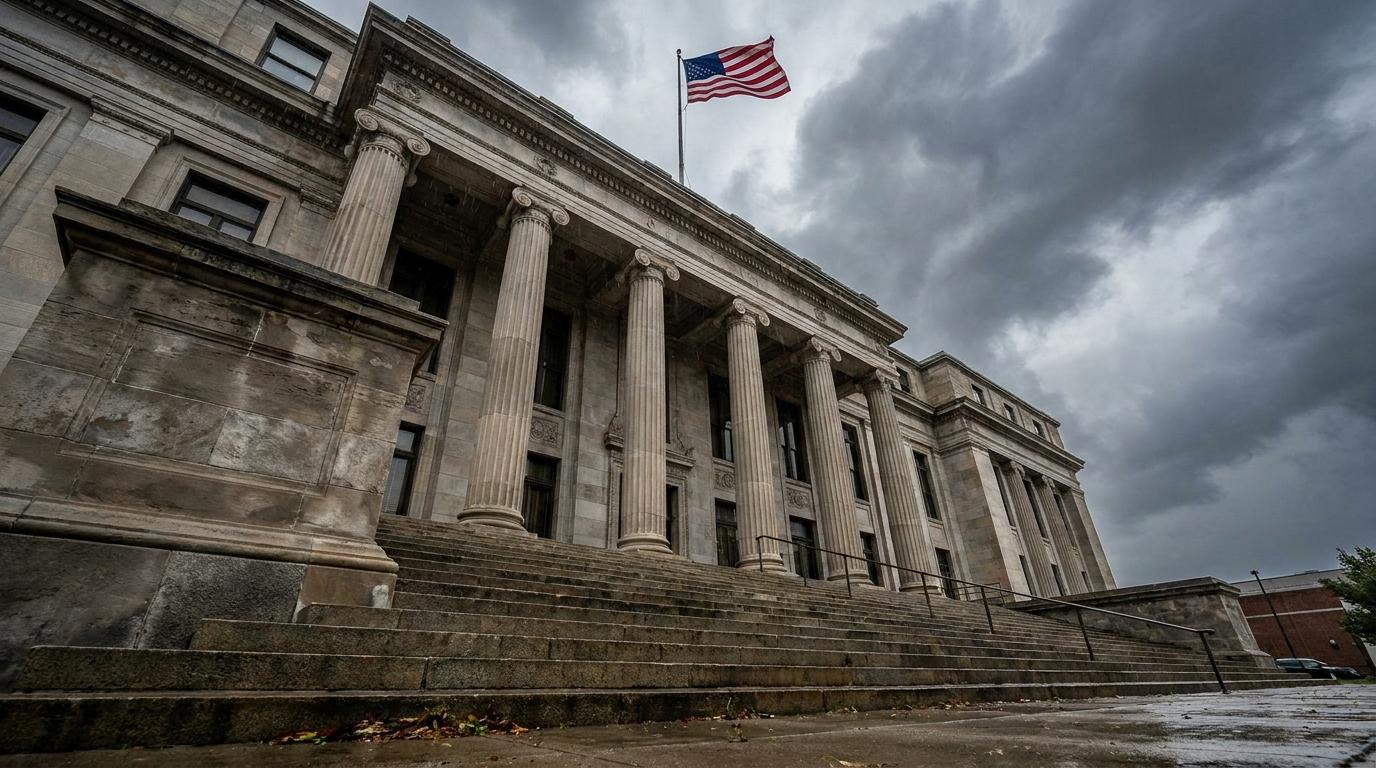
Receiving an eviction notice is one of the most stressful experiences a renter can face. Your home, your stability, and your family's well-being all feel like they hang in the balance. But here's what most renters in New York don't realize: being handed a notice is not the same as being evicted. In New York State, the eviction process is one of the most tenant-protective in the entire country, governed by multiple layers of state law, local ordinances, and landmark legislation that explicitly slow down and constrain what a landlord can legally do. The law requires specific steps, specific timelines, and specific notices — and if your landlord skips even one of them, the entire case can be thrown out of court.
According to data from the New York State Unified Court System, landlords filed over 220,000 eviction cases statewide in 2023 — the highest volume since before the COVID-19 pandemic. In New York City alone, housing court sees hundreds of cases every single day. And yet, studies from organizations like the Legal Aid Society consistently show that tenants who have legal representation are dramatically more likely to avoid eviction or negotiate favorable outcomes. The problem is that the overwhelming majority of tenants — roughly 90% in NYC Housing Court — appear without an attorney, while nearly all landlords have one. Knowledge is your first line of defense. This guide is designed to give you that knowledge.
The Legal Foundation: New York's Tenant-Protective Laws
New York's eviction process is primarily governed by Real Property Actions and Proceedings Law (RPAPL) and Real Property Law (RPL). These statutes define how and when a landlord can begin eviction proceedings, what notices are required, what courts have jurisdiction, and what defenses are available to tenants. On top of state law, the Housing Stability and Tenant Protection Act of 2019 (HSTPA) dramatically strengthened tenant rights across the board — expanding protections for rent-stabilized tenants, capping application fees, limiting security deposits, and placing new restrictions on eviction proceedings.
Additionally, New York City has its own layer of protections under the New York City Administrative Code, including Right to Counsel (Local Law 136 of 2017), which guarantees free legal representation to qualifying low-income tenants facing eviction in Housing Court. As of 2023, this program has been expanded citywide and covers households earning up to 200% of the federal poverty level. If you live in New York City and are facing eviction, you may be entitled to a free lawyer — that is a right you should absolutely exercise.
KEY FACT: Under New York law, a landlord CANNOT legally remove you from your home without a court order AND a warrant of eviction executed by a city marshal or sheriff. Self-help evictions — such as changing your locks, removing your belongings, or shutting off utilities to force you out — are illegal and can expose the landlord to significant civil liability.
Step 1: The Notice — What Your Landlord Must Do First
Before a landlord can even file a case in court, they must serve you with a legally compliant written notice. The type of notice depends entirely on the reason for the eviction. This is not a formality — courts scrutinize these notices carefully, and defects in the notice are one of the most common grounds for dismissing an eviction case entirely.
Types of Eviction Notices in New York
- 14-Day Rent Demand Notice: Used when a tenant has not paid rent. The landlord must demand the specific amount owed and give the tenant 14 days to pay or vacate. This was changed from 3 days to 14 days under the HSTPA of 2019 — a major win for tenants.
- 10-Day Notice to Cure: Used when a tenant has violated a lease term (such as having an unauthorized pet or subletting without permission). This gives the tenant 10 days to fix ('cure') the violation before the landlord can proceed.
- 30-Day Notice of Termination (Month-to-Month Tenancies under 1 Year): Used when a landlord wants to end a month-to-month tenancy where the tenant has lived in the unit for less than one year. The notice must be given at least 30 days before the end of a rental period.
- 60-Day Notice of Termination (Tenancies of 1–2 Years): If you have lived in your unit for between one and two years on a month-to-month basis, your landlord must give you at least 60 days' notice.
- 90-Day Notice of Termination (Tenancies over 2 Years): If you have been a tenant for more than two years, your landlord must provide 90 days' notice. This is a critical protection added by the HSTPA.
- Holdover Notice: Used when a lease has expired and the tenant remains in the unit. The notice requirements vary based on the type of tenancy and length of occupancy.
These notices must be served in a specific manner under RPAPL Section 735. Proper service typically requires personal delivery to the tenant, delivery to a person of suitable age at the premises plus mailing, or if no one is home, 'nail and mail' — affixing the notice to the door and also mailing a copy. Improper service is another common grounds for dismissal.
Step 2: Filing in Housing Court
If you do not comply with the notice — meaning you don't pay the overdue rent, cure the lease violation, or move out — the landlord's next step is to file a petition in Housing Court (in New York City) or in the local Justice Court or Supreme Court in upstate New York counties. The landlord files what is called a 'Notice of Petition' and a 'Petition,' which together formally start the court case. These documents must then be served on you, the tenant, in accordance with RPAPL requirements.
Once served, you will have a court date — typically scheduled within 10 to 17 days after the petition is filed. The court date is called a 'return date' or 'first appearance.' This is critically important: missing this date can result in a default judgment against you, which means the landlord wins automatically without presenting any evidence. If you receive court papers, attend every court date, no matter what.
IMPORTANT: In New York City, tenants can access free legal help at Housing Court through organizations like the Legal Aid Society, Brooklyn Legal Services, Bronx Legal Services, and the Tenant Helpline (311). Outside of NYC, free legal assistance may be available through local Legal Aid offices or law school clinics. Never assume you have to face Housing Court alone.
Step 3: Your Day in Court — Defenses and Options
When you appear in court, you have the right to respond to the petition and raise defenses. This is where knowing your rights becomes enormously powerful. New York law recognizes a wide range of affirmative defenses that can delay, reduce, or entirely defeat an eviction proceeding.
Common Legal Defenses for New York Renters
- Improper Notice: If the landlord's notice did not comply with the required format, timeframe, or service method, the case may be dismissed outright.
- Warranty of Habitability (RPL Section 235-b): New York law implies a warranty in every residential lease that the landlord will maintain the premises in a livable condition. If your apartment has significant conditions — like mold, rodents, lack of heat, or structural hazards — you may be able to raise this as a defense to a nonpayment proceeding and have your rent reduced retroactively.
- Retaliation: Under RPL Section 223-b, it is illegal for a landlord to evict you in retaliation for complaining to a government agency about housing conditions, organizing tenants, or exercising any legal right. If your eviction follows protected activity within the last 12 months, there is a legal presumption of retaliation.
- Discrimination: If you believe the eviction is based on your race, national origin, religion, sex, disability, familial status, sexual orientation, or other protected class under federal, state, or local law, this is a full defense to eviction.
- Acceptance of Rent After Notice: If your landlord accepted rent from you after serving an eviction notice, this can in some cases waive the right to proceed on that notice.
- Procedural Defects: Courts have dismissed cases for incorrect calculation of the amount owed, wrong party names, failure to register the property with the city's Multiple Dwelling Registry, or improper filing.
- COVID-19 Hardship: Although the main COVID eviction moratoriums have ended, some courts may still consider hardship documentation in determining outcomes, particularly in cases involving tenants with pending rental assistance applications.
If you have a nonpayment case, you also have the option to pay the full amount of rent owed at any time before a final judgment is entered — and in some situations, even after a judgment is entered but before the warrant of eviction is issued. This is called the 'right of redemption,' and it is an important safety valve for tenants who have fallen behind due to a temporary hardship.
Step 4: Judgments, Warrants, and What Happens If You Lose
If the court rules in the landlord's favor — either because you defaulted, lost at trial, or did not raise successful defenses — the judge will issue a 'judgment of possession' in favor of the landlord. But even at this stage, you are not immediately removed from your home. The landlord must then apply for a 'warrant of eviction,' which is a separate legal document that authorizes enforcement.
In New York City, a warrant of eviction is executed by a New York City marshal, not the police. Outside of New York City, it is typically executed by the county sheriff. By law, the marshal or sheriff must give you at least 72 hours' written notice before physically executing the warrant — meaning you will receive a 'marshal's notice' on your door telling you the date and time the lockout will occur. This 72-hour notice gives you a final window to either vacate voluntarily, pay the judgment, or return to court to request a stay of eviction.
Staying an Eviction — Your Last Resort Options
- Order to Show Cause: At any point after a judgment is entered, you can file an 'Order to Show Cause' with the court asking a judge to stay (pause) the eviction. You must have a valid legal reason — such as new evidence, a procedural error, an emergency hardship, or a pending appeal.
- Emergency Hardship Stay: Under RPAPL Section 753, in holdover cases involving renters who have lived in the unit for less than six months, a judge may grant a stay of up to six months if eviction would cause extreme hardship. For longer tenancies or rent-regulated units, more expansive stay protections may apply.
- Appellate Review: If you believe the lower court made a legal error, you have the right to appeal the decision to the Appellate Term of the Supreme Court.
- Emergency Rental Assistance: Programs like ERAP (Emergency Rental Assistance Program) have historically provided a legal stay while applications are pending. Check with your local Department of Social Services or HRA (in NYC) to see what programs are currently available.
Special Protections for Rent-Stabilized and Rent-Controlled Tenants
If you live in a rent-stabilized or rent-controlled apartment — predominantly in New York City, but also in certain municipalities like Westchester, Nassau, and Albany counties — you have additional, significant protections beyond what general tenants receive. Under the Rent Stabilization Law and Code, a landlord can only evict a rent-stabilized tenant for specific, enumerated 'good cause' reasons. These include nonpayment of rent, violation of lease terms, subletting without permission, using the apartment for illegal purposes, or the landlord's bona fide intent to personally use the unit as a primary residence (owner use).
Crucially, a rent-stabilized landlord generally must offer you a renewal lease and cannot simply decline to renew your tenancy. This is fundamentally different from non-regulated tenants, who can be asked to vacate at the end of a lease term with proper notice. If your landlord refuses to renew your rent-stabilized lease without a legally recognized good cause reason, that itself is an illegal eviction attempt — and you should contact the Division of Housing and Community Renewal (DHCR) immediately.
RENT STABILIZATION CHECK: Not sure if your apartment is rent-stabilized? You can check by visiting the NYC Rent Guidelines Board website or by calling DHCR at 718-739-6400. You can also request a rent history for your apartment, which can reveal if you've been overcharged — a defense in eviction proceedings.
Good Cause Eviction: A New Statewide Expansion
In April 2024, New York significantly expanded tenant protections statewide with the passage of a 'Good Cause Eviction' law as part of the state budget. This is a landmark change. Under this law, most residential tenants in New York — not just those in rent-stabilized apartments — now have protections against arbitrary non-renewal of leases and unreasonable rent increases. Landlords must have a legally recognized reason (good cause) to evict a tenant or refuse to renew a lease, unless the tenant falls under a specific exemption.
The law applies to most residential tenants but includes exemptions for small landlords (owners of buildings with fewer than 10 units who also own four or fewer residential units total), buildings built after 2009 for 30 years from the certificate of occupancy, owner-occupied buildings with fewer than 10 units, and certain other categories. Municipalities also have the option to 'opt in' to extend the law's coverage further. This is a rapidly evolving area of law, and renters throughout New York — including in upstate cities like Buffalo, Rochester, and Syracuse that previously had little tenant protection — now have significantly stronger rights than they did before 2024.
What to Do If You Receive an Eviction Notice: A Step-by-Step Action Plan
- 1Don't panic — but don't ignore it. Read the notice carefully and note the type of notice, the amount claimed (if any), and any deadlines. Keep all papers in a safe place.
- 2Determine if the notice is legally valid. Check whether the notice type matches the reason given, whether the timeframe is correct, and whether it was served properly. Defects here can get a case dismissed.
- 3Respond within the notice period if possible. If it's a 14-day rent demand and you can pay the rent, do so and get written confirmation. If it's a notice to cure, fix the lease violation and document that you did so.
- 4Gather all documentation. Collect your lease, all rent receipts or bank statements showing rent payments, any communication with your landlord, photos of apartment conditions, and any notices you've received.
- 5Seek legal help immediately. In NYC, call 311 to access free legal services or visit your local Housing Court's Resource Center. Outside NYC, contact your local Legal Aid office, bar association referral service, or law school clinic.
- 6Appear for every court date. Missing a court appearance almost always results in a default judgment against you. If you can't make it, contact an attorney or the court as soon as possible.
- 7Raise all available defenses in court. If your apartment has habitability issues, if the landlord retaliated against you, or if there were procedural defects, these must be raised as defenses — a judge won't raise them for you.
- 8Explore rental assistance programs. Organizations like community development nonprofits, local DSS offices, and city agencies may offer emergency rental assistance that can help you catch up on arrears and resolve a nonpayment case.
- 9If a marshal's notice is posted, act immediately. File an Order to Show Cause or contact an attorney right away. You still have options even at this late stage.
- 10Know your post-eviction rights. Even after an eviction, your landlord cannot dispose of your belongings without following legal procedures. Contact local social services if you need emergency shelter.
Illegal Evictions: What Your Landlord Cannot Do
It is worth being explicit about what constitutes an illegal 'self-help' eviction in New York, because these situations do occur — particularly with smaller landlords who may not fully understand the law, or in some cases, landlords who understand it and choose to ignore it. Under RPAPL Section 853, any landlord who uses force or unlawful means to evict a tenant — without obtaining a court order and warrant of eviction — can be held liable for triple the actual damages suffered by the tenant.
- Changing your locks without a court order: illegal.
- Removing your belongings from the apartment: illegal.
- Shutting off your heat, hot water, electricity, or gas to pressure you to leave: illegal under RPL Section 235 and potentially criminal.
- Removing doors, windows, or fixtures from your apartment: illegal.
- Threatening or harassing you to get you to vacate: may constitute harassment under NYC Administrative Code Section 27-2005 and other statutes.
- Refusing to make emergency repairs to coerce you to leave: illegal.
- Entering your apartment repeatedly without notice or consent: illegal under RPL Section 235-b and local housing codes.
If any of these things happen to you, call the police and report it, contact a housing attorney or Legal Aid immediately, file a complaint with 311 (in NYC) or your local housing authority, and document everything with photos, videos, and written records. Courts take illegal lockouts seriously, and judges have the authority to immediately restore you to your apartment and award you damages.
Resources for New York Renters Facing Eviction
- NYC Housing Court Resource Centers: Located in each borough's Housing Court, staffed by nonprofit legal organizations providing free advice and limited representation.
- Legal Aid Society (NYC): 212-577-3300 | legalaidnyc.org
- MFY Legal Services: Provides free legal help for low-income NYC tenants.
- New York State Bar Association Lawyer Referral Service: 800-342-3661
- Upstate New York Legal Aid Organizations: Empire Justice Center, Legal Services of Central New York, Legal Aid Bureau of Buffalo — search lawhelp.org/ny for local resources.
- DHCR (Division of Housing and Community Renewal): For rent regulation complaints — 718-739-6400 | hcr.ny.gov
- NYC Human Resources Administration (HRA): For emergency rental assistance in New York City — 718-557-1399
- New York State Tenant Protection Unit (TPU): Investigates landlord harassment and rent overcharges — created under HSTPA of 2019.
How Technology Can Help Renters Stay Organized
While nothing replaces qualified legal counsel, staying organized is one of the most practical things a renter can do when facing a potential eviction. Keeping meticulous records of rent payments is especially important — in a nonpayment proceeding, the burden is on the tenant to prove what was paid and when. If you pay rent by check, keep copies of canceled checks. If you pay electronically, download and save transaction records regularly. If your landlord uses a property management platform that offers digital payment confirmation and automatic receipts through tools like automated ACH rent collection, those records can be invaluable in court.
For renters who want to understand their lease terms before a dispute escalates, platforms like VerticalRent offer AI-powered tools that can help landlords generate clear, state-compliant lease agreements — meaning if you're signing a new lease, you're more likely to be working with a document that accurately reflects New York law, reducing the chance of ambiguity that leads to disputes down the road. And VerticalRent's AI assistant Frank can help landlords and renters alike navigate common property management questions — an example of how technology, used responsibly, can reduce the information asymmetry that leaves so many renters at a disadvantage.
The Bottom Line: Know Your Rights Before You Need Them
New York has some of the strongest tenant protections in the United States — but those protections only work if you know they exist and take the steps to assert them. A landlord handing you a piece of paper does not mean you have to leave. A court date does not mean you have already lost. Even a judgment against you is not necessarily the end of the road. At every single stage of the eviction process, New York law gives you rights, gives you time, and gives you avenues to fight back.
The most dangerous thing a renter can do is assume that the process is over before it legally is — and move out voluntarily when they might have had a valid defense that would have allowed them to stay. If you are facing eviction, please seek legal help as early as possible. The earlier you get advice, the more options you have. You have rights. Use them.
Are you a landlord looking to manage your properties with full legal compliance — including New York state-compliant lease generation, automated rent collection with built-in payment records, and AI-powered tools to streamline your workflow? Visit VerticalRent.com to explore how our platform helps independent landlords stay organized, reduce disputes, and protect their investments — while treating renters fairly and transparently.
**Legal Disclaimer** *The information in this article is provided for educational purposes only and does not constitute legal advice. Tenant-landlord laws vary significantly by state, county, and city and may have changed since this article was written. VerticalRent is not a law firm and the author is not an attorney. If you have a specific legal situation, please consult a licensed attorney in your jurisdiction.*
Put this into practice
VerticalRent tools related to this guide
Legal Disclaimer
VerticalRent and its authors are not attorneys, CPAs, or licensed legal or financial advisors, and nothing on this site constitutes legal, tax, or professional advice. The information in this article is provided for general educational purposes only. Landlord-tenant laws, eviction procedures, security deposit rules, and tax regulations vary significantly by state, county, and municipality — and change frequently. Nothing on this site creates an attorney-client relationship. Always consult a licensed attorney or qualified professional in your jurisdiction before taking any action based on information you read here.
Co-founded VerticalRent in 2011, growing it from nothing to 100k landlords and renters. Sold it in 2019, then re-acquired it in 2026 to make it better than ever.


