Anti-Discrimination Protections for Renters in New Mexico
New Mexico renters have powerful legal protections against housing discrimination. Learn exactly what the law covers, your rights, and how to fight back.

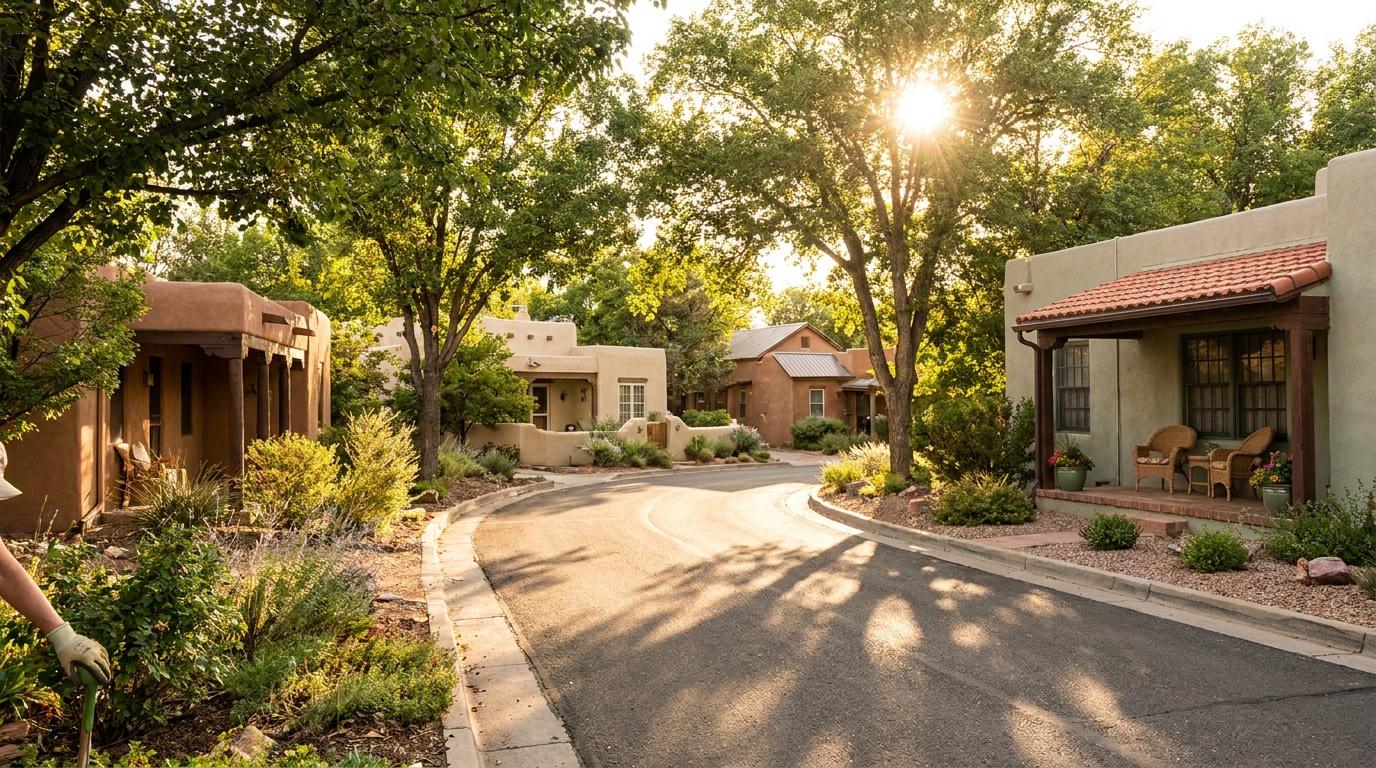
Every year, the U.S. Department of Housing and Urban Development (HUD) receives tens of thousands of fair housing complaints from renters across the country. In 2023 alone, HUD and its partner agencies processed over 25,000 housing discrimination complaints nationally — and housing advocates believe the true number of incidents is far higher, since most renters never formally report what happened to them. In New Mexico, a state with a rich multicultural heritage and a renter population that skews younger and more diverse than the national average, housing discrimination is not a distant or abstract threat. It is a lived reality for a meaningful portion of the state's renters. If you rent — or are trying to rent — anywhere in New Mexico, understanding your anti-discrimination rights is not optional. It is essential.
This article is designed to give you a clear, plain-language breakdown of exactly what housing discrimination is, which laws protect you as a New Mexico renter, what characteristics are legally protected, what discriminatory behavior actually looks like in practice, and — critically — what you can do about it if you believe your rights have been violated. We will walk through federal law, New Mexico state law, and in some cases local ordinances that may provide even stronger protections depending on where you live. By the time you finish reading, you will know more about your fair housing rights than the vast majority of renters in this state.
The Federal Foundation: Fair Housing Act of 1968
Before diving into New Mexico-specific law, it is important to understand the federal baseline that applies to every renter in the United States. The Fair Housing Act (FHA), signed into law by President Lyndon B. Johnson in 1968 and significantly strengthened by the Fair Housing Amendments Act of 1988, is the foundational federal statute protecting renters from housing discrimination. The FHA prohibits discrimination in the sale, rental, and financing of housing based on a specific list of protected characteristics. Under federal law, it is illegal for a landlord, property manager, real estate agent, or any housing provider to discriminate against you based on the following seven protected classes.
- Race — including any discrimination based on racial identity or perceived racial background
- Color — discrimination based on the shade or tone of a person's skin
- National origin — including ancestry, ethnicity, or where a person was born
- Religion — a landlord cannot refuse to rent to you or treat you differently because of your religious beliefs or practices
- Sex — this includes gender, and federal courts and HUD have interpreted this to include sexual orientation and gender identity in many contexts
- Familial status — landlords generally cannot discriminate against families with children under 18, pregnant women, or individuals in the process of obtaining legal custody of children
- Disability — this covers both physical and mental disabilities, and also requires landlords to make reasonable accommodations and allow reasonable modifications for tenants with disabilities
These seven categories represent the minimum floor of protection in every state. But here is what matters: states and cities can — and often do — expand that list. New Mexico has done exactly that, and in some important ways, New Mexico's protections are significantly stronger than what federal law requires.
New Mexico's Human Rights Act: A Broader Shield for Renters
The primary state-level law governing housing discrimination in New Mexico is the New Mexico Human Rights Act (NMHRA), codified at NMSA 1978, Sections 28-1-1 through 28-1-15. The NMHRA is administered by the New Mexico Human Rights Bureau (NMHRB), which is part of the New Mexico Department of Workforce Solutions. The NMHRA applies broadly to housing, employment, and public accommodations, and it lists a substantially longer set of protected characteristics than federal law alone.
Under the NMHRA, it is an unlawful discriminatory practice for any person or entity to refuse to rent or sell housing, to impose different terms or conditions on a rental, to falsely represent that a dwelling is unavailable, or to otherwise deny or withhold housing from any person because of any of the following protected characteristics.
- Race
- Color
- National origin
- Religion
- Sex
- Sexual orientation — New Mexico explicitly protects LGBTQ+ renters under state law
- Gender identity — transgender and nonbinary renters are explicitly protected
- Spousal affiliation — meaning you cannot be discriminated against because of who you are married to
- Physical or mental disability or serious medical condition
- Ancestry
- Familial status
- Age — New Mexico protects renters from age-based discrimination in ways that go beyond federal law
- Pregnancy
- HIV status — New Mexico explicitly includes HIV status as a protected characteristic, recognizing that people living with HIV face significant housing discrimination
New Mexico is one of a relatively small number of states that explicitly protects renters based on sexual orientation, gender identity, age, HIV status, and spousal affiliation under its human rights statute. If you have been denied housing or treated unfairly based on any of these characteristics, you have state-level legal remedies available to you — even if federal law alone would not cover your situation.
What Does Housing Discrimination Actually Look Like?
One of the biggest reasons renters do not report housing discrimination is that they do not recognize it when it happens. Discrimination is rarely someone saying out loud, 'I am not renting to you because of your race.' It is far more often subtle, indirect, or hidden behind pretextual reasons. Here are concrete examples of illegal discriminatory behavior that renters in New Mexico should know to look for.
During the Application Process
- A landlord tells you a unit is unavailable when it is actually still on the market — a practice known as 'steering away'
- A landlord uses different screening criteria for applicants of different races, national origins, or other protected characteristics — for example, requiring a higher credit score or larger security deposit from one group than another
- A landlord asks questions during the application process that are only legally appropriate in narrow circumstances, such as asking whether you have children, what country you are from, or whether you have a disability
- A landlord advertises a rental with language that signals a preference for or against certain groups — such as 'perfect for young professionals' (which can imply discrimination against families or older renters) or 'ideal for quiet Christian household'
- A landlord refuses to process your application or delays it without explanation after learning about your protected characteristic
During Your Tenancy
- A landlord provides slower or lower-quality maintenance service to tenants of certain backgrounds compared to others in the same building
- A landlord imposes stricter lease enforcement or issues more warnings or notices to tenants of one protected group than another for the same behavior
- A landlord refuses to allow a tenant with a disability to make a reasonable modification to the unit — such as installing grab bars in a bathroom — at the tenant's expense
- A landlord refuses to grant a reasonable accommodation request, such as allowing a tenant with a disability to keep an emotional support animal in a no-pets building
- A landlord sexually harasses a tenant — including making unwanted advances, conditioning lease renewal on sexual favors, or creating a hostile living environment based on sex or gender
During the Eviction Process
- A landlord selectively enforces lease provisions or initiates eviction proceedings against tenants of a protected class while ignoring similar behavior by tenants outside that class
- A landlord retaliates against a tenant who filed a fair housing complaint by suddenly seeking eviction on pretextual grounds
- A landlord uses the eviction process as a tool of intimidation or harassment against tenants of a particular national origin, religion, or other protected characteristic
Disability Rights and Reasonable Accommodations in New Mexico
Disability-related housing discrimination deserves special attention because it is one of the most common categories of fair housing complaints filed nationally — consistently representing 50% or more of all HUD complaints in recent years. For renters with disabilities in New Mexico, the law provides two specific and powerful tools: the right to reasonable accommodations and the right to reasonable modifications.
A reasonable accommodation is a change in a rule, policy, practice, or service that allows a person with a disability equal opportunity to use and enjoy a dwelling. Classic examples include allowing a service animal or emotional support animal despite a no-pets policy, reserving a specific parking spot close to the building entrance for a tenant who uses a wheelchair, or allowing a tenant with a mental health condition to pay rent on a different day of the month due to the timing of their disability benefits.
A reasonable modification is a physical change to the unit or common areas that allows a person with a disability to fully use the housing. Examples include installing a ramp, widening doorways, or adding grab bars in bathrooms. Under both federal and New Mexico state law, landlords must allow reasonable modifications, though in most cases the tenant (not the landlord) is responsible for the cost. The landlord may also require the tenant to restore the unit to its original condition at the end of the tenancy.
If you have a disability and your landlord denies your reasonable accommodation or modification request, that denial may constitute illegal housing discrimination under both the Fair Housing Act and the New Mexico Human Rights Act. You do not need to have a visible or obvious disability — mental health conditions, chronic illness, and HIV status are all covered. Document everything in writing.
The legal standard is that the accommodation or modification must be 'reasonable' — meaning it must not impose an undue financial or administrative burden on the landlord, and it must not fundamentally alter the nature of the housing program. Courts have generally interpreted 'reasonable' broadly in favor of tenants with disabilities. If your landlord refuses a request that seems clearly reasonable, do not accept that refusal as the final word.
Familial Status: Protections for Families with Children
Discrimination against families with children is more common than many renters realize. Under both federal law and the NMHRA, landlords generally cannot refuse to rent to families with children under 18, cannot charge higher rents or deposits because children will be living in the unit, and cannot impose unreasonable occupancy limits designed to exclude children. The only significant exception is for 'housing for older persons' — communities specifically designated for residents 55 and older (where at least 80% of occupied units must have at least one resident who is 55 or older) or 62 and older qualify for a narrow exemption from familial status protection.
Occupancy standards can be a gray area. HUD's general guidance suggests that a standard of two persons per bedroom is often reasonable, but landlords cannot apply overly restrictive occupancy policies that function as a pretext to exclude families. For example, refusing to rent a two-bedroom apartment to a family with three children when you would rent the same apartment to four unrelated adults is likely discriminatory. New Mexico renters who have been told a unit is 'too small' for their family, or who have been quoted different prices or deposit amounts after disclosing they have children, should take note.
Source of Income: A Critically Important Gap in New Mexico Law
Here is a protection that many renters assume exists in New Mexico but currently does not at the state level: source of income protection. Many states and cities prohibit landlords from refusing to rent to applicants who pay with housing vouchers (such as Section 8 / Housing Choice Vouchers), Social Security income, disability payments, or other non-employment income sources. As of this writing, New Mexico does not have a statewide source of income protection law.
This means that in most parts of New Mexico, a landlord can legally reject your application specifically because you plan to pay with a housing voucher — without that constituting illegal discrimination under state law. This is a significant gap that housing advocates have pushed to close, and legislation has been introduced in past sessions of the New Mexico Legislature, but no statewide protection is currently in effect.
However, renters should check local ordinances. The City of Albuquerque, for example, has taken steps toward stronger tenant protections. If you live in Albuquerque or another municipality, it is worth checking whether your city or county has enacted source of income protections that go beyond state law. This is an evolving area of New Mexico housing policy.
How to File a Housing Discrimination Complaint in New Mexico
If you believe you have experienced housing discrimination in New Mexico, you have multiple avenues for filing a complaint and seeking redress. The process may feel intimidating, but it is designed to be accessible to ordinary renters — you do not need a lawyer to file an initial complaint.
Option 1: File with the New Mexico Human Rights Bureau
The New Mexico Human Rights Bureau (NMHRB) is the primary state agency responsible for investigating housing discrimination complaints under the NMHRA. You can file a complaint online through the New Mexico Department of Workforce Solutions website, by mail, or in person at an NMHRB office. There is no filing fee. Complaints must generally be filed within 300 days of the discriminatory act. After you file, the Bureau will investigate your complaint, attempt mediation, and if discrimination is found, can order remedies including actual damages, injunctive relief, and civil penalties.
Option 2: File with HUD
You can also file a federal fair housing complaint directly with HUD's Office of Fair Housing and Equal Opportunity (FHEO). Federal complaints must be filed within one year of the discriminatory act. HUD will investigate and can refer the case to the Department of Justice or to an administrative law judge. Filing with HUD is free and you do not need an attorney. HUD's FHEO office covers all of New Mexico.
Option 3: File a Private Lawsuit
You have the right to file a private civil lawsuit in New Mexico state court or in federal district court regardless of whether you have filed an administrative complaint. Under the Fair Housing Act, private lawsuits must be filed within two years of the discriminatory act. If you win, you can recover actual damages (including emotional distress), punitive damages in egregious cases, injunctive relief, and attorney's fees. Many fair housing attorneys take these cases on a contingency basis, meaning you do not pay unless you win.
Option 4: Contact a Fair Housing Organization
New Mexico has fair housing advocacy organizations that can help you understand your rights, evaluate your situation, and navigate the complaint process. The New Mexico Center on Law and Poverty and the Albuquerque-based fair housing advocates are good starting points. HUD also maintains a list of approved fair housing organizations in New Mexico on its website.
Documenting Discrimination: What to Save and How
Whether or not you ultimately decide to file a complaint, the single most important thing you can do when you suspect housing discrimination is to document everything immediately. Memory fades, and evidence disappears. Here is a practical documentation checklist for New Mexico renters.
- 1Write down exactly what happened — who said what, when, where, and who else was present — as soon as possible after the incident
- 2Save all written communications with your landlord or property manager, including texts, emails, letters, and rental applications
- 3If you were told a unit was unavailable, check whether it continues to be advertised afterward — take screenshots of online listings with dates and timestamps
- 4If the discrimination happened in person or by phone, follow up in writing: 'As we discussed on [date], you told me that...' This creates a written record even when the original conversation was verbal
- 5Save all advertising materials, listings, and rental applications that you used or received
- 6Note the names of any witnesses and ask if they would be willing to provide a statement
- 7Keep a detailed journal or log of any ongoing pattern of discriminatory treatment during your tenancy
- 8Consult with a fair housing organization or attorney early — they can advise you on what evidence is most valuable for your specific situation
Retaliation Is Also Illegal
One important and often overlooked protection: it is illegal for a landlord to retaliate against you for exercising your fair housing rights. If you file a complaint, threaten to file a complaint, cooperate with a fair housing investigation, or simply tell your landlord that you believe their conduct is discriminatory — and your landlord responds by suddenly raising your rent, issuing a notice to vacate, filing for eviction, refusing to renew your lease, or making your living situation difficult — that retaliation is itself a separate violation of both federal and New Mexico state law. Document any retaliatory actions the same way you would document the original discrimination.
Retaliation for exercising your fair housing rights is independently illegal under both the Fair Housing Act and the New Mexico Human Rights Act. If your landlord turns against you after you assert your rights, that behavior can be the basis for an additional legal claim — do not be silenced by fear of retaliation.
Special Considerations for New Mexico's Diverse Renter Population
New Mexico is one of the most ethnically diverse states in the nation. As of recent U.S. Census data, approximately 49% of New Mexico's population identifies as Hispanic or Latino, and Native American residents make up roughly 11% of the population — the highest proportion of any state in the continental United States. These demographics mean that national origin and ancestry discrimination are particularly live concerns in New Mexico's rental market. Landlords who refuse to rent to individuals because of their Spanish surnames, their Indigenous heritage, their immigrant status, or the language they speak at home are engaging in potentially illegal discrimination under both the NMHRA and the FHA.
It is also worth noting that limited English proficiency does not strip you of your fair housing rights. HUD has long taken the position that discrimination based on a person's limited English proficiency can constitute national origin discrimination. If a landlord refuses to work with you, misrepresents lease terms, or provides materially different information because you are more comfortable in Spanish or a Native language than in English, that may be illegal discrimination. HUD and many state housing agencies can provide services and materials in multiple languages.
How Technology Can Help Renters Spot and Document Discrimination
Modern rental platforms can actually play a role in both preventing and documenting discriminatory practices. At VerticalRent, our AI-powered tenant screening tools — built in partnership with TransUnion — are designed to apply consistent, objective, legally compliant criteria to every applicant, reducing the opportunity for subjective bias to creep into the screening process. When every applicant is evaluated using the same standardized risk scoring criteria through VerticalRent's AI risk scoring engine, it is much harder for a landlord to claim they rejected you for objective reasons when the data tells a different story.
For renters, this matters because documentation of inconsistent screening criteria is powerful evidence of discrimination. If you applied through a platform that records application data, timestamps, and landlord responses, you have a richer evidentiary record than a renter who applied informally. When evaluating rental platforms, pay attention to whether the platform creates a transparent, documented record of your application and the landlord's response — that documentation could be invaluable if you ever need to file a fair housing complaint.
Key Takeaways for New Mexico Renters
- 1Federal law (the Fair Housing Act) protects you from discrimination based on race, color, national origin, religion, sex, familial status, and disability — this applies everywhere in New Mexico
- 2New Mexico state law (the Human Rights Act) goes further, also protecting you based on sexual orientation, gender identity, age, ancestry, spousal affiliation, pregnancy, serious medical condition, and HIV status
- 3New Mexico does not currently have a statewide source of income protection law — check your city or county for local protections
- 4Disability accommodations and modifications are powerful rights that apply to both physical and mental disabilities — landlords must engage with your requests in good faith
- 5You have multiple complaint options: the New Mexico Human Rights Bureau, HUD, private lawsuits, and fair housing organizations
- 6You must generally file a state complaint within 300 days and a federal complaint within one year of the discriminatory act
- 7Retaliation for asserting your fair housing rights is independently illegal
- 8Document everything immediately — written records, screenshots, and timelines are your most powerful tools
Take Control of Your Rental Experience with VerticalRent
Knowing your rights is the first step. Having the right tools to document your rental journey is the second. VerticalRent is built from the ground up to create transparent, fair, and well-documented rental experiences for renters and landlords alike. Whether you are searching for a new place to rent, keeping organized records of your tenancy, or communicating with your landlord in ways that create a written trail — VerticalRent's platform supports you at every step. Our AI assistant Frank can help you understand lease terms, flag potential red flags in a rental listing, and walk you through what to expect at each stage of the rental process. And if you ever find yourself in a situation where you need to show exactly what happened and when, the documentation tools built into VerticalRent make that easier. Visit VerticalRent.com today to create your free renter account and take control of your housing experience.
**Legal Disclaimer** *The information in this article is provided for educational purposes only and does not constitute legal advice. Tenant-landlord laws vary significantly by state, county, and city and may have changed since this article was written. VerticalRent is not a law firm and the author is not an attorney. If you have a specific legal situation, please consult a licensed attorney in your jurisdiction.*
Put this into practice
VerticalRent tools related to this guide
Legal Disclaimer
VerticalRent and its authors are not attorneys, CPAs, or licensed legal or financial advisors, and nothing on this site constitutes legal, tax, or professional advice. The information in this article is provided for general educational purposes only. Landlord-tenant laws, eviction procedures, security deposit rules, and tax regulations vary significantly by state, county, and municipality — and change frequently. Nothing on this site creates an attorney-client relationship. Always consult a licensed attorney or qualified professional in your jurisdiction before taking any action based on information you read here.
Co-founded VerticalRent in 2011, growing it from nothing to 100k landlords and renters. Sold it in 2019, then re-acquired it in 2026 to make it better than ever.


