Weed Control and Fertilization: Building a Recurring Chemical Services Business
Lawn chemical services are one of the highest-margin, most repeatable revenue streams in landscaping. Learn how to price, market, and scale a weed control and fertilization business serving landlords.

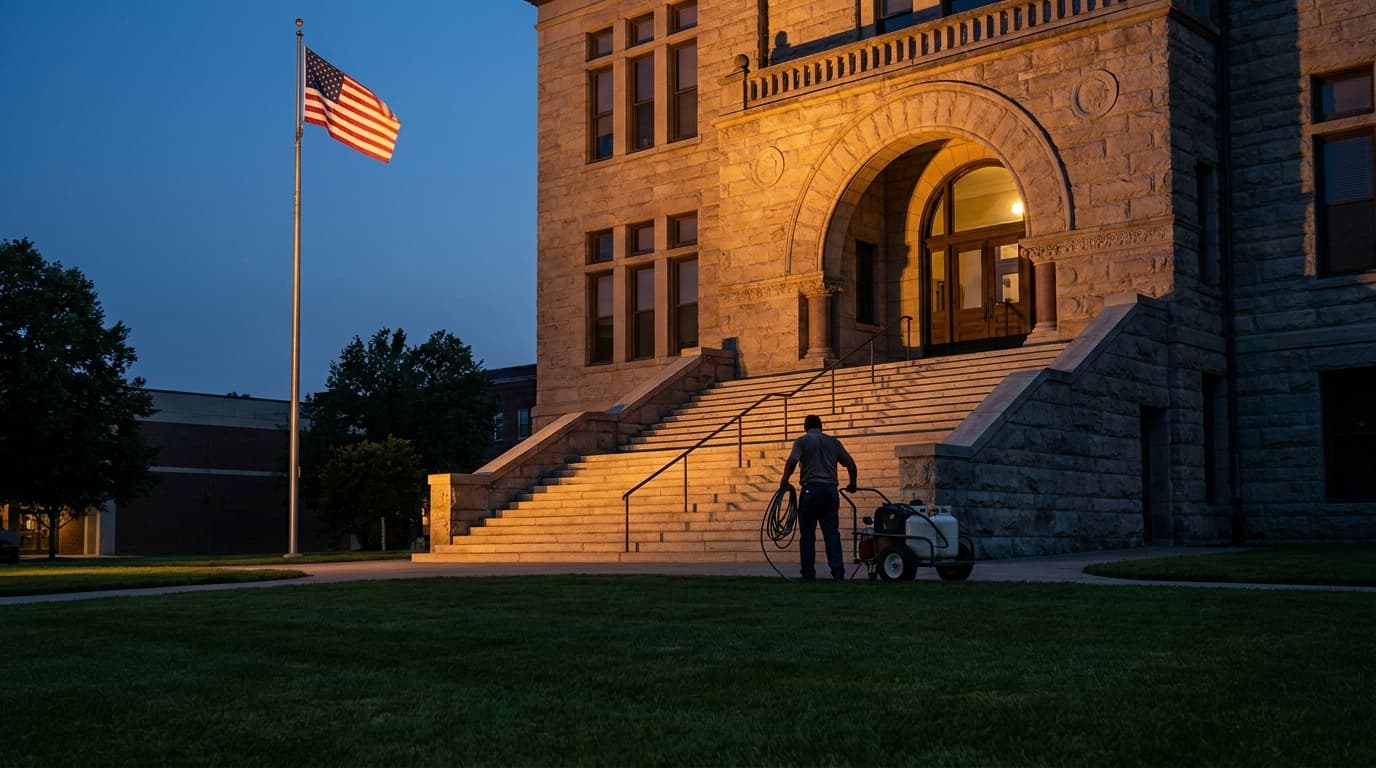
The U.S. lawn care industry generated over $176 billion in revenue in 2023, and a significant slice of that — roughly 40% by some estimates — comes not from mowing, but from chemical application services: weed control, fertilization, pre-emergent treatments, and pest management. These services are high-margin, technically defensible, and — crucially for any tradesperson trying to build a real business — they are inherently recurring. A yard fertilized in March needs retreatment in May, again in July, and again in the fall. That's four to six visits per property per year, booked automatically, billed predictably. If you're a landscaping professional who hasn't yet built a chemical services program into your business model, you are leaving substantial, compounding revenue on the table every single season.
This guide is written specifically for landscaping professionals — whether you're a solo operator with a spray rig in your truck bed or a crew of ten managing dozens of residential and commercial accounts. We'll walk through how to price chemical services profitably, how to market them to the most valuable client segment available to you (independent landlords managing rental properties), how to build a scalable recurring program, and how platforms like VerticalRent are actively connecting tradespeople with landlord clients through AI-powered job dispatch — at a fee structure that puts money in your pocket.
Why Chemical Services Are the Business Within Your Business
Let's talk about margins first, because that's what separates chemical application from the rest of your service menu. Mowing a standard residential lawn typically yields a gross margin of 40–50% after accounting for labor, fuel, and equipment depreciation. Fertilization and weed control programs, by contrast, routinely achieve gross margins of 60–75%. The math is simple: your inputs are product (fertilizer, herbicide) and roughly 20–30 minutes of skilled labor. You're not running heavy equipment for an hour. You're applying a technical service that most homeowners and landlords are legally or practically unable to do themselves — particularly when restricted-use pesticides or state-licensed applications are involved.
According to the Professional Landcare Network (PLANET), the average chemical lawn care customer spends $600–$900 per year on treatment programs. A client base of 100 accounts in an annual program generates $60,000–$90,000 in recurring revenue — and because these are pre-scheduled treatments, you can route-optimize your truck, batch your product orders for better pricing, and reduce the administrative overhead that eats into mowing revenue. The National Association of Landscape Professionals (NALP) reports that companies offering recurring chemical programs retain clients at a rate of 75–85% year over year, compared to 55–65% for mow-only service businesses.
Industry benchmark: Landscaping companies with a core chemical services program generate 2.3x the annual revenue per client compared to mow-only operations, according to NALP's 2023 State of the Industry Report.
Licensing, Insurance, and the Compliance Foundation
Before you spray a single ounce of herbicide commercially, you need to get your compliance foundation in place. This is non-negotiable, and it's also a competitive moat — a large percentage of unlicensed operators in this space create liability exposure for themselves and their clients, which means licensed, insured professionals are immediately more attractive to sophisticated buyers like property managers and landlords.
Licensing Requirements by Application Type
- General-use pesticide application: In most states, commercial applicators need a state-issued pesticide applicator license. Exam requirements vary, but most involve a core exam plus a category exam for ornamental/turf applications.
- Restricted-use pesticides (RUPs): Require a certified applicator license — a higher-level credential involving additional testing and, in some states, continuing education hours annually.
- Fertilizer application: Generally does not require a pesticide license, but some states (notably Florida with its fertilizer ordinances) regulate timing, nutrient content, and buffer zones near water bodies.
- Business licensing: Most states require a separate business-level pesticide license in addition to individual applicator credentials. Check with your state Department of Agriculture.
- Insurance: Carry at minimum $1 million general liability with a pesticide/herbicide endorsement, plus pollution liability coverage. Standard GL policies often exclude chemical application claims without an endorsement.
The licensing process typically takes 4–12 weeks depending on your state's exam schedule. Study materials are available through your state's Department of Agriculture and through organizations like the National Pesticide Information Center. The investment in licensing pays for itself quickly — licensed operators command a 15–25% price premium over unlicensed competitors, and more importantly, they're the only operators that large landlord portfolios and property management companies will consider hiring.
Building Your Service Program: The 5-Round Model
The backbone of any profitable chemical lawn care business is a structured annual program — typically 5 to 6 rounds of treatment spaced throughout the growing season. This model was pioneered by national chains like TruGreen but is absolutely replicable at the local level with better service and lower overhead. The key is packaging your treatments into a named, pre-sold program rather than offering one-off applications. Here's a standard 5-round program framework for temperate U.S. climates:
- 1Round 1 — Early Spring (March–April): Slow-release granular fertilizer + pre-emergent herbicide targeting crabgrass and annual grassy weeds. This is your most important round — pre-emergent timing determines the entire season's weed pressure.
- 2Round 2 — Late Spring (May–June): Balanced fertilizer application + post-emergent broadleaf weed control targeting dandelions, clover, and ground ivy. Spot-treat or blanket spray depending on weed density.
- 3Round 3 — Early Summer (June–July): Slow-release summer fertilizer formulated to reduce heat stress. Spot weed control as needed. Inspect for grub activity and include grub preventative if threshold conditions are met.
- 4Round 4 — Late Summer/Early Fall (August–September): Core aeration add-on opportunity + starter fertilizer to strengthen root systems heading into dormancy. Address any summer annual weeds that broke through.
- 5Round 5 — Late Fall (October–November): Winterizer fertilizer high in potassium to promote root hardiness. Final broadleaf weed treatment before dormancy. Pre-emergent for winter annuals in warmer climates.
Packaging these five rounds as a single annual program — priced and collected upfront or monthly — is the difference between a transactional service and a subscription business. Annual program clients are dramatically easier to plan around, easier to route, and far more likely to refer other clients. They're also the type of client that platforms like VerticalRent are actively trying to connect with qualified service professionals.
Pricing Your Chemical Services for Profit
Pricing is where most independent operators undercharge themselves out of a sustainable business. Let's build a real pricing model rather than guessing based on what competitors charge.
Cost-Per-Application Framework
For a standard 5,000 sq ft residential lawn, your cost inputs per application round typically break down as follows: granular fertilizer product cost $8–$14; herbicide product cost $4–$10 depending on product and coverage rate; labor at $25–$40/hour fully loaded (including employer taxes, workers comp) for approximately 20–30 minutes of application time, equaling $9–$20; vehicle and equipment allocation $5–$8 per stop. Total hard cost per application: $26–$52. Industry standard pricing for the same application: $55–$95. That yields a gross margin of 45–73% — well above the 50% gross margin target most service businesses aim for.
Annual Program Pricing by Property Size
- Up to 5,000 sq ft: $350–$550/year for a 5-round program (national average: $420)
- 5,001–10,000 sq ft: $500–$750/year
- 10,001–20,000 sq ft: $750–$1,100/year
- 20,001–40,000 sq ft: $1,100–$1,800/year
- Commercial/multi-family properties (rental communities): Bid on square footage with a minimum of $1,500/season for small complexes
For landlord clients with multiple properties — which is exactly the segment VerticalRent serves — build in a portfolio discount of 10–15% for 3+ properties under a single agreement. This sounds like you're leaving money behind, but the route density and single-invoice billing make multi-property landlord accounts among the most profitable per-hour accounts you'll ever run. One landlord with eight single-family rentals in the same zip code is potentially $3,500–$4,500 in annual recurring revenue with a single phone call, a single contract, and eight stops you can complete in a single efficient route day.
Pro pricing tip: Always quote annual programs in monthly installments in addition to the lump sum. A $480/year program sounds expensive. $40/month sounds like a utility bill. Many clients will choose monthly — and your payment processing costs are offset by improved cash flow predictability.
The Landlord Market: Your Highest-Value Client Segment
There are approximately 20 million individual landlords in the United States managing roughly 48 million rental units, according to the U.S. Census Bureau's Rental Housing Finance Survey. The majority — about 72% — are small independent landlords owning between 1 and 10 properties. These landlords are not Greystar or Equity Residential. They don't have in-house maintenance teams. They need reliable, licensed service professionals for every exterior service their properties require — and lawn care and chemical treatments are at the top of that list.
Why do landlords make exceptional lawn care clients? First, their properties must maintain curb appeal to attract and retain tenants. Weedy, unhealthy lawns directly impact vacancy rates and rental pricing power. Second, landlords are running businesses — they understand recurring expenses and are far more likely to enroll in annual programs than owner-occupants who make one-off decisions seasonally. Third, many landlords own multiple properties in similar geographic areas, creating the route density and volume that makes your business maximally efficient. Fourth, landlord relationships tend to be sticky: once you've established trust, they don't want to re-vet and re-onboard a new vendor every spring.
The challenge has historically been reaching landlords efficiently. Cold-calling doesn't scale, door-knocking rental properties is awkward and unreliable, and generic digital marketing doesn't allow you to specifically target property owners vs. owner-occupants. That's where purpose-built platforms are changing the game.
VerticalRent's Service Professional Marketplace: How AI Job Dispatch Works
VerticalRent is an AI-native property management platform built specifically for independent landlords. More than 100,000 landlords use VerticalRent to manage rental applications, leases, rent collection, and — increasingly — maintenance and exterior services for their properties. As part of the platform rebuild in 2026, VerticalRent launched a Service Professional Marketplace designed to connect verified, qualified tradespeople directly with landlords who need their services.
Here's how the AI job dispatch system works from a service professional's perspective: When a landlord logs a maintenance or service need — whether through Frank (VerticalRent's AI assistant), through a tenant-submitted maintenance request, or by proactively scheduling recurring exterior services — the platform's AI triage and dispatch system identifies qualified service professionals in the relevant geographic area based on their service profile, credentials, availability, and ratings. Landscaping professionals with chemical services credentials get surfaced for weed control, fertilization, and lawn treatment requests. You're not competing in a sea of random bids — you're being matched to relevant, pre-qualified job opportunities with clients who are actively looking for professional help.
The platform fee structure is straightforward and landlord-friendly for pros: VerticalRent charges a 3% platform fee on jobs completed through the marketplace. On a $480 annual chemical services program, that's $14.40 — less than the cost of one gallon of quality herbicide concentrate. Compare that to lead generation platforms that charge $30–$80 per lead regardless of whether you win the job, or referral networks that take 10–20% of every invoice. The 3% fee model only applies when you earn — no monthly subscription required, no per-lead charges, no pay-to-play visibility tiers.
VerticalRent's 3% platform fee is performance-based — you only pay when you get paid. On a $1,200 multi-property annual program, the platform fee is $36. That's less than a single tank of gas, for a client that may stay with you for 5+ years.
Marketing Your Chemical Services to Landlords
Whether you're leveraging a platform like VerticalRent or building your landlord client base through direct outreach, your marketing strategy for chemical services should look different from how you market to homeowners. Landlords respond to business language, ROI framing, and efficiency. Here's a proven multi-channel approach:
Direct Outreach to Landlords
- County property records: Most counties publish property ownership data. You can identify non-owner-occupied single-family homes (where the tax mailing address differs from the property address) and build a targeted direct mail list. A single well-timed postcard in February offering an early-enrollment discount on annual programs can generate 2–5% response rates — far above the 0.5–1% average for generic direct mail.
- Local landlord associations: NARPM (National Association of Residential Property Managers) chapters and local apartment associations hold regular events. Sponsoring a breakfast meeting or joining as an affiliate member gives you direct access to the people making purchasing decisions for dozens or hundreds of properties.
- Real estate investor meetups: BiggerPockets-style local meetup groups are full of landlords actively managing portfolios. A 5-minute presentation on the curb appeal ROI of a professional lawn treatment program can generate leads for months.
- Property management companies: A single partnership with a local PM company managing 200 units can transform your business. Position yourself as their preferred exterior services vendor with guaranteed response times and portfolio pricing.
Digital Marketing That Targets Property Owners
- Google Local Services Ads: Run campaigns with keywords like 'lawn fertilization rental property' and 'weed control property management.' These high-intent searches are lower competition than generic lawn care terms and attract clients who are spending money on multiple properties.
- Facebook/Instagram targeting: Use Facebook's detailed targeting to reach people who list 'real estate investing' or 'landlord' as interests, layered with your geographic service area. Video content showing before/after lawn transformations performs exceptionally well.
- Google Business Profile: Ensure your profile is categorized as 'Lawn Care Service' with 'Pest Control' and 'Fertilizer' as additional services. Actively request reviews from every completed job — 88% of consumers trust online reviews as much as personal recommendations.
- Your own website: A dedicated landing page for 'annual lawn treatment programs for rental properties' with a strong local SEO strategy can generate steady inbound leads at low cost.
Scaling from Solo Operator to Crew: The Route Density Formula
The economics of chemical services become dramatically better as you scale, because the dominant cost — labor and vehicle time — decreases per stop as your route density increases. A solo operator making 8 stops per day across a spread-out territory is roughly 40% as efficient as the same operator making 8 stops per day in a tight geographic cluster. Before you hire your first crew member or buy your second spray rig, focus obsessively on route density.
Route Density Strategy
- 1Define target zip codes: Choose 3–5 zip codes where you already have client density and commit to filling those routes before expanding geographically. Offer existing clients a referral discount ($25–$50 off next season) for every neighbor they refer.
- 2Set a minimum account threshold before expanding: Most operators find that 40–50 accounts per route day is the efficiency inflection point where adding a second truck becomes financially justifiable.
- 3Use route optimization software: Tools like OptimoRoute or Route4Me can reduce your daily drive time by 20–30%, which on a 5-truck operation translates to tens of thousands of dollars in recovered labor and fuel annually.
- 4Hire and license your applicators properly: Every commercial applicator must hold their own state license in most states — you cannot use a single licensed owner to cover an entire crew. Build licensing costs and exam fees ($200–$500 per applicator) into your hiring budget.
- 5Build chemical buying power: As your volume scales, negotiate direct accounts with regional distributors like Helena Agri-Enterprises, Univar Solutions, or SiteOne Landscape Supply. Volume accounts can reduce your product costs by 15–30% compared to buying from local retailers.
At 150 annual program accounts averaging $500/year, you're running a $75,000 recurring revenue business with a gross margin of 60–65% — roughly $45,000–$49,000 in gross profit before your own salary. At 400 accounts, the numbers approach $200,000 in recurring revenue with a lean two-person operation. This is the scalability that makes chemical services one of the most attractive business models in the trades.
Add-On Services That Multiply Revenue Per Property
Chemical lawn programs are the anchor, but they naturally create upsell opportunities that compound your revenue per property without adding proportional route time. Train yourself (and your crew) to identify and quote these add-ons during every service visit:
- Core aeration and overseeding: A $150–$350 annual add-on per property that dramatically improves fertilizer uptake and turf density. Best sold in fall alongside your Round 4 or Round 5 application.
- Tree and shrub fertilization: Deep-root liquid fertilization for ornamental trees and shrubs. A 90-minute visit generates $200–$400 and requires almost no additional product inventory beyond a root feeder attachment.
- Grub control: A $75–$150 preventative grub application applied in late spring. High perceived value, low product cost, minimal additional time.
- Mosquito and tick control: Perimeter spray programs priced at $50–$100 per application, typically 6–8 times per season. Increasingly in demand from landlords managing properties where tenants have complained about pest pressure.
- Dormant seeding and slice-seeding: Fall add-on service generating $200–$500 depending on lawn size. Pairs naturally with your fall fertilization round.
- Snow mold prevention: In northern climates, a late-fall fungicide application protecting against snow mold. A $75–$120 add-on that landlords with rental properties in HOA-governed communities will happily pay for.
Building Systems That Make Your Business Sellable
The ultimate measure of a real business — as opposed to a self-employed job — is whether it could run and grow without you. For a chemical lawn care business, that means documented systems, trained labor, and technology that handles the administrative overhead that consumes so many small operators. Think about these systems from day one:
- CRM and scheduling software: Use a dedicated field service management platform (Jobber, Service Titan, or similar) to manage client records, application histories, scheduling, and invoicing. This is not optional — it's foundational.
- Application records: Federal law (FIFRA) requires commercial applicators to maintain records of all pesticide applications for a minimum of 2 years. Your records must include product name, EPA registration number, application rate, date, location, and applicator name. Digital records are far easier to maintain and audit than paper.
- Employee training documentation: A written training program for applicators — covering safety, mixing procedures, label compliance, and customer interaction — protects you legally and improves service consistency.
- Annual program contracts: Every client should sign a written service agreement covering scope of services, pricing, cancellation terms, and liability limitations. One-page contracts are fine — they just need to exist.
- Marketing automation: Set up automated email sequences for program renewal reminders (90, 60, and 30 days before program expiration), seasonal upsell offers, and referral requests post-service. This alone can improve your renewal rate by 10–15 percentage points.
Recurring revenue businesses like annual lawn programs sell for 2–4x annual revenue when properly documented and systematized. A 300-account chemical program generating $150,000/year in recurring revenue has a market value of $300,000–$600,000. Build it right from the start.
Why Now Is the Best Time to Build This Business
Several market forces are converging to make 2025 and beyond an exceptional window for independent chemical lawn service professionals. First, the national lawn care chains — TruGreen, Scotts LawnService, and their competitors — have faced significant public criticism for inconsistent service, high turnover of applicators, and impersonal customer experiences. Independent operators who communicate well, show up on time, and explain what they're applying and why are winning clients back from the chains at a meaningful rate. Second, the rise of AI-powered property management platforms like VerticalRent is creating a new, efficient channel for service professionals to reach landlord clients directly — without expensive advertising or cold outreach. Third, environmental awareness is driving demand for precision application programs that minimize chemical use while maximizing results — a story that independent, knowledgeable operators tell better than any national brand.
The landlord market alone represents a multi-billion-dollar opportunity for lawn and chemical services professionals. With 20 million landlords across the U.S. managing properties that require regular exterior maintenance, and platforms like VerticalRent actively bridging the gap between landlords and qualified service professionals, the question isn't whether there's a market — it's whether you're positioned to capture it.
Get Connected with Landlord Clients Through VerticalRent
VerticalRent's Service Professional Marketplace is actively matching landscaping and chemical services professionals with independent landlords who need reliable, licensed vendors for their rental properties. When a landlord on the VerticalRent platform requests weed control, fertilization, or a full-season lawn program, the AI dispatch system surfaces qualified professionals in the area based on services offered, credentials, availability, and client ratings. You get connected to clients who are ready to hire — not tire-kickers browsing for quotes they'll never act on.
Creating a service professional profile on VerticalRent is free. You only pay the 3% platform fee when a job is completed and payment is collected — a true performance-based model. For landscaping professionals serious about building a recurring chemical services business, a steady pipeline of landlord clients is the single most powerful accelerant available. Landlords with multiple properties, predictable budgets, and a genuine need for professional exterior services aren't just good clients — they're the foundation of a real, recurring-revenue business.
Ready to start landing landlord clients for your chemical lawn services program? Create your free Service Professional profile on VerticalRent today at verticalrent.com and get discovered by independent landlords in your area. No monthly fees. No per-lead charges. Just a 3% fee when you get paid — and a direct pipeline to one of the highest-value client segments in landscaping.
Put this into practice
VerticalRent tools related to this guide
Legal Disclaimer
VerticalRent and its authors are not attorneys, CPAs, or licensed legal or financial advisors, and nothing on this site constitutes legal, tax, or professional advice. The information in this article is provided for general educational purposes only. Landlord-tenant laws, eviction procedures, security deposit rules, and tax regulations vary significantly by state, county, and municipality — and change frequently. Nothing on this site creates an attorney-client relationship. Always consult a licensed attorney or qualified professional in your jurisdiction before taking any action based on information you read here.
Co-founded VerticalRent in 2011, growing it from nothing to 100k landlords and renters. Sold it in 2019, then re-acquired it in 2026 to make it better than ever.


