Roof Inspection Services: Creating a Recurring Revenue Model
Roof inspections are one of the most overlooked recurring revenue opportunities in roofing. Learn how to package, price, and scale inspection services with landlords as your anchor clients.

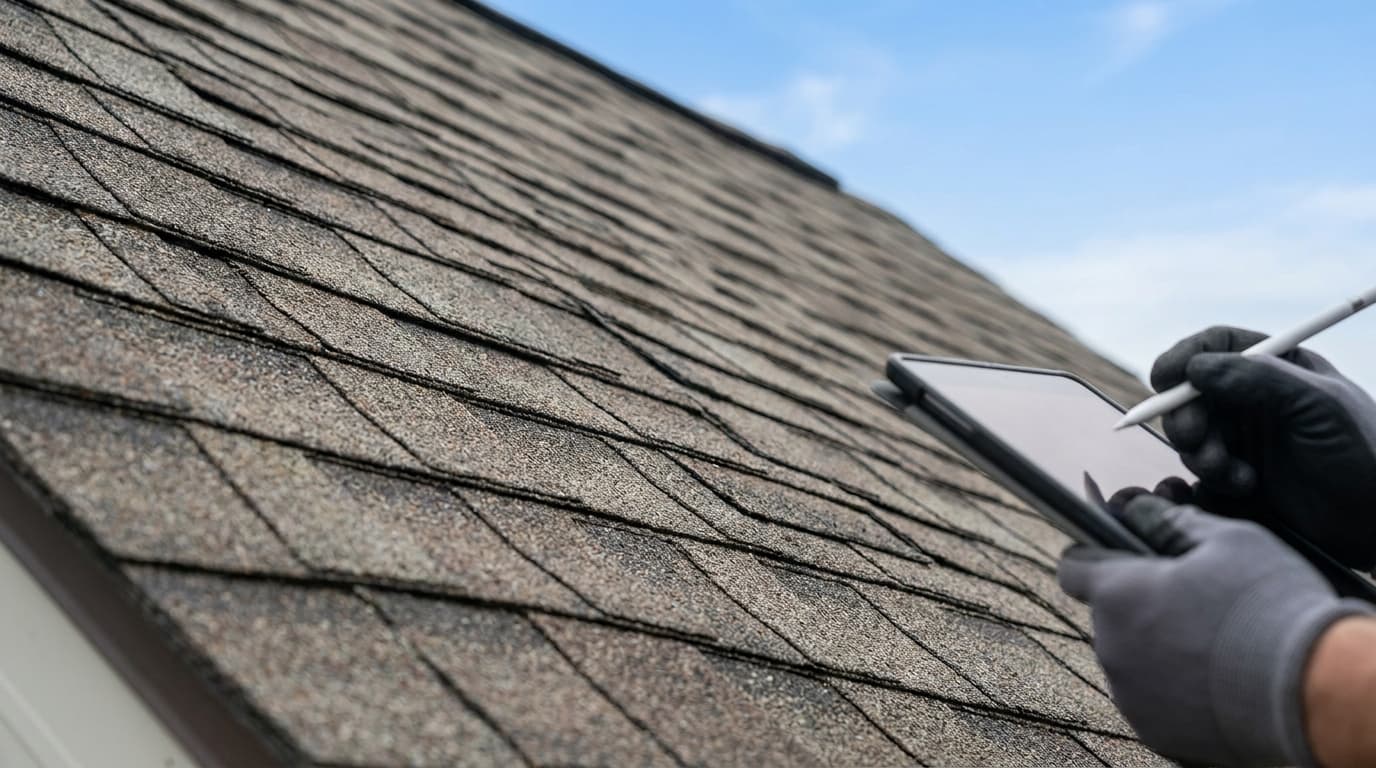
The roofing industry generates roughly $56 billion in annual revenue across the United States, yet the vast majority of that money flows through one-time replacement jobs — the big, chaotic, weather-driven projects that keep contractors scrambling for the next lead the moment the last shingle is nailed down. The boom-and-bust cycle is exhausting, and it leaves skilled roofing professionals at the mercy of hailstorms, seasonal slowdowns, and algorithm-driven lead platforms charging $80 to $200 per contact. There is a smarter path, and it starts with something almost every residential property owner needs but rarely schedules: a professional roof inspection.
Roof inspections are not glamorous. They don't generate the same ticket size as a full replacement. But they are repeatable, scalable, low-material-cost services that can anchor your business in steady monthly revenue — especially when your client base includes independent landlords managing two, five, or twenty rental properties. The landlord market alone represents a massive, underserved opportunity for roofing contractors willing to position themselves as long-term partners rather than emergency responders.
According to the National Roofing Contractors Association, 40% of building-related problems can be traced back to water intrusion through the roof or around the building envelope — most of which are preventable with routine inspection and maintenance.
Independent landlords own approximately 41% of all rental units in the United States, according to the Urban Institute. These are not institutional property managers with in-house maintenance crews. These are individual investors — often managing between one and ten properties — who rely entirely on outside tradespeople to keep their assets protected. A deteriorating roof represents one of the most catastrophic financial risks a landlord faces: insurance claim denials due to deferred maintenance, tenant displacement, structural damage cascading into drywall, insulation, and electrical systems. Yet the average landlord has no systematic roof inspection protocol in place.
That gap is your business opportunity. This article walks you through exactly how to build a recurring revenue model around roof inspection services, price it correctly, market it to landlords at scale, and use platforms like VerticalRent to get your services in front of property owners who are already looking for help.
Why Recurring Inspection Revenue Changes Everything for Roofing Contractors
Before diving into pricing and packaging, it's worth understanding why recurring revenue is structurally superior to project-based revenue — especially for a trade business. When you rely exclusively on replacement and repair jobs, your revenue is lumpy. You might book $180,000 in a single storm month and then struggle to cover payroll in February. Predictable monthly recurring revenue (MRR) from inspection contracts smooths that curve significantly.
Consider the math. If you sign 50 landlords to an annual inspection agreement at $400 per property per year — with each landlord averaging 2.5 properties — that's 125 inspections generating $50,000 in annual recurring revenue before you touch a single replacement project. Add in the upsell conversion: industry data suggests that 60 to 70% of professional roof inspections identify at least one repair recommendation. If even 40% of those recommendations convert to billable work at an average repair ticket of $650, you're generating an additional $32,500 from the same client base. Your inspection program becomes a self-funding lead engine for your core repair and replacement business.
- Recurring inspections reduce your dependence on paid lead generation and storm-chasing cycles
- Inspection clients convert to repair and replacement customers at dramatically higher rates than cold leads
- Documented inspection history makes insurance claims smoother for landlords — a genuine value-add that builds loyalty
- Inspection-based relationships position you as the first call when a tenant reports a leak or when a full replacement is needed
- Low material cost means inspection revenue carries strong margins — typically 65 to 80% gross margin per inspection
Building Your Inspection Service Packages
The single most important move you can make is to stop selling roof inspections as a one-off transaction and start selling them as a packaged service with clear deliverables and a defined cadence. Landlords respond to structure. They are running a business, and they want to work with contractors who operate like a business. Package-based selling also makes your services easier to explain, easier to compare, and easier to approve without a lengthy back-and-forth.
The Three-Tier Packaging Framework
A three-tier structure works exceptionally well for landlord-facing roofing inspection services. The tiers should be named clearly and priced to reflect the level of documentation, frequency, and priority access each landlord receives.
- 1Essential Inspection Plan ($199–$299 per property, annually): One annual inspection covering all primary roof surfaces, gutters, flashing, penetrations, and visible decking from accessible areas. Delivered with a photo report and a prioritized repair list. Best suited for landlords with newer roofs (under 8 years) and low-risk single-family properties.
- 2Professional Inspection Plan ($399–$550 per property, annually): Two inspections per year — one pre-winter and one post-winter — plus a drone or infrared thermal scan option for flat roofs or complex geometries. Includes a detailed written report with estimated remaining service life, insurance documentation packet, and a 10% discount on any repair work booked within 30 days of inspection. Ideal for landlords with mid-age roofs or properties in high-precipitation climates.
- 3Portfolio Protection Plan ($599–$850 per property, annually): Quarterly check-ins (two full inspections plus two visual drive-by assessments with photo logs), priority scheduling for any weather-related repairs, a dedicated contractor contact, and annual budget forecasting for capital expenditure planning. Designed for landlords managing five or more units who want a single trusted roofing partner across their entire portfolio.
Pro Tip: Always include a formal PDF inspection report with every tier. Landlords use these reports for insurance renewals, refinancing documentation, and tenant dispute resolution. The report is often worth more to them than the inspection itself — and it differentiates you from competitors who just show up and talk.
Bundle pricing for multi-property landlords is a powerful closing tool. A landlord with five properties who would pay $399 per property individually might commit to a portfolio agreement at $349 per property when you offer a slight volume discount and quarterly invoicing. You win because you've locked in $8,725 in predictable annual revenue from one client relationship. They win because they have a trusted vendor, consistent documentation, and a known annual roofing budget.
Pricing Your Inspection Services for Profitability
Roofing contractors frequently underprice inspection services because they're benchmarking against what they think the market will bear rather than what it actually costs to deliver the service properly. A professional inspection is not a free estimate. It is a skilled assessment conducted by a licensed professional that produces a documented deliverable with legal and financial implications. Price it accordingly.
Your cost basis for a single-family inspection should account for drive time (average 45 minutes round trip in suburban markets), on-roof inspection time (typically 60 to 90 minutes for a thorough assessment), report generation time (30 to 45 minutes if you're using standardized templates or software), and overhead allocation. At a fully loaded cost of $85 to $120 per inspection — including your time, insurance, vehicle expense, and software tools — pricing at $199 to $299 leaves you a healthy margin while remaining well below the $450 to $750 that most home inspectors charge for a comparable deliverable.
For commercial or multi-unit residential properties, pricing should shift to a square footage or unit count model. A reasonable benchmark is $0.03 to $0.06 per square foot of roof surface for annual inspection agreements, with a minimum engagement of $500. A 20-unit apartment complex with 18,000 square feet of roof surface would be priced at $540 to $1,080 annually — a figure that is easily justified when you explain the alternative: a missed repair that becomes a $40,000 structural remediation.
The Insurance Documentation Premium
One pricing lever that most roofing contractors leave on the table is the insurance documentation package. Landlords with properties in high-risk wind or hail zones are increasingly required by their insurers to provide documented evidence of roof condition at renewal — and some carriers are outright non-renewing policies on properties without recent inspection records. If you can provide a report that meets insurer documentation standards (typically including installation date verification, material condition rating, photo evidence, and contractor credentials), you can charge a premium of $50 to $150 per property for that package. It takes minimal additional effort and represents pure margin.
Marketing Roof Inspections to Independent Landlords
The landlord market requires a different marketing approach than consumer roofing. Landlords are not emotionally attached to their rental properties the way homeowners are. They are motivated by ROI, liability reduction, and operational efficiency. Your marketing message needs to speak to those drivers — not to curb appeal or pride of ownership.
Lead Generation Channels That Work for Landlord-Focused Roofers
- Local landlord associations and real estate investor meetups: Almost every metro area has an active landlord or real estate investor association. Monthly meetings are open to vendors. A 90-second pitch about your portfolio inspection program in front of 40 landlords is worth more than $2,000 in Google Ads spend.
- Property management company partnerships: Property managers who handle maintenance for landlords are always looking for reliable, documented vendors. Approach them with a co-branded inspection program — you do the work, they look good to their clients.
- Real estate attorney referrals: Attorneys who handle landlord-tenant disputes see firsthand how undocumented property conditions create legal liability. A roofer who provides court-ready inspection documentation is a referral source waiting to happen.
- Direct mail to rental property owners: County assessor records are public. In most jurisdictions, you can identify properties where the owner's mailing address differs from the property address — a reliable indicator of a rental property. A direct mail campaign targeting this list with a landlord-specific offer consistently outperforms general homeowner campaigns.
- Platform-based marketplace listings: Service professional marketplaces connected to property management platforms put your services in front of landlords at the exact moment they're thinking about their properties.
Digital marketing for landlord-focused roofing services should emphasize liability protection, asset preservation, and documentation rather than aesthetics or emergency response. Your Google Ads copy should read: 'Protect Your Rental Portfolio — Annual Roof Inspections with Insurance-Ready Reports' rather than 'Fast Roof Repair — Call Now.' The conversion intent is different, and your messaging needs to match it.
Content Marketing That Builds Landlord Trust
Landlords who find you through content — a blog post about roof maintenance schedules for rental properties, a YouTube walkthrough of a common landlord roofing mistake, a downloadable roof age reference guide — arrive with a level of trust that paid leads never have. A consistent content marketing effort targeting landlord search terms ('rental property roof inspection requirements,' 'how often should a landlord inspect the roof,' 'roof condition report for insurance') can generate a steady stream of high-quality inbound inquiries with zero per-lead cost after the initial content investment.
Using VerticalRent's Service Professional Marketplace to Scale
One of the most efficient ways to put your inspection services in front of landlords is to be listed where landlords are already managing their properties. VerticalRent's service professional marketplace connects vetted tradespeople — including roofing contractors — directly with independent landlords who are actively managing rental properties on the platform.
The platform's business model is straightforward and contractor-friendly: VerticalRent charges a 3% platform fee on jobs booked through the marketplace, with no monthly subscription required to be listed as a service professional. You pay only when you earn. That structure is radically different from lead aggregators who charge $100 to $200 per lead regardless of whether the job is won, and it aligns the platform's incentives with yours. VerticalRent only earns when you earn.
VerticalRent's AI maintenance triage system is a direct source of job dispatch for service professionals on the platform. When a tenant submits a maintenance request describing a roof leak or ceiling stain, the AI categorizes the issue, assesses urgency, and routes the job to qualified roofing professionals in the marketplace — putting you in front of a motivated landlord client without any marketing spend on your part.
This AI-powered job dispatch is a meaningful differentiator. Rather than waiting for a landlord to search for a roofer, the platform proactively surfaces your services at the moment a roofing-related maintenance issue is identified. For a contractor building a recurring inspection model, this creates a natural entry point: respond to a dispatched maintenance call, perform the repair, and introduce your annual inspection program to a landlord who now knows and trusts your work. The conversion from reactive repair to proactive inspection contract is a straightforward conversation once you've demonstrated competence on the job.
Building a complete, detailed service professional profile on VerticalRent — with your service area, inspection package descriptions, credentials, insurance information, and client reviews — costs nothing and takes less than an hour. That profile becomes a persistent, searchable asset that generates landlord inquiries around the clock without ongoing effort.
Operationalizing Your Inspection Program for Scale
The difference between a roofing contractor who does inspections occasionally and one who has built a real recurring revenue model is systems. Scalable inspection services require standardized processes that can be executed consistently by you, a trained employee, or a subcontractor without quality degradation.
Standardizing Your Inspection Checklist
Your inspection checklist should cover: field and ridge condition, flashing at all penetrations (vents, chimneys, skylights, HVAC equipment), gutter condition and attachment, fascia and soffit condition, visible decking integrity, attic ventilation adequacy (if accessible), any visible evidence of prior repairs or patches, and approximate remaining service life estimate. The checklist should be digital — completed on a tablet or smartphone app — and should automatically generate your client-facing report. Tools like CompanyCam, Jobber, or custom-built field service apps handle this well and cost between $30 and $100 per month.
Scheduling and Client Communication Systems
Annual inspection clients need automated reminders — 60 days before their inspection window, 14 days before, and day-of. This should be handled entirely by your CRM or scheduling software without manual intervention. Landlords who own multiple properties particularly appreciate coordinated scheduling: grouping all their properties into a single inspection day or consecutive days minimizes disruption and signals operational competence.
- 1Set up your inspection service packages in your invoicing software with recurring billing enabled — annual plans billed on the anniversary of signup, quarterly plans billed every 90 days.
- 2Create a standardized onboarding sequence for new inspection clients: welcome email, property information intake form, initial inspection scheduling link, and a brief explainer on what to expect from the report.
- 3Build a repair recommendation follow-up workflow: inspection reports should automatically trigger a follow-up email 7 days later asking if the landlord has questions about the recommendations and offering to schedule any approved repair work.
- 4Track your inspection-to-repair conversion rate monthly. If you're below 35%, your reports may not be communicating urgency clearly enough. If you're above 70%, you may be underselling the inspection price relative to the perceived repair need.
- 5Review your inspection client list quarterly and identify landlords who have not renewed. A personal phone call — not an automated email — from you or your office converts lapsed inspection clients at a significantly higher rate than any digital re-engagement campaign.
Hiring and Training Inspection Technicians
As your inspection program grows beyond what you can personally handle, you'll need to train and deploy inspection technicians. This is where many roofing contractors stall — they can't imagine trusting anyone else to represent their brand in a landlord's most valuable asset. The solution is rigorous standardization, not avoidance.
An inspection technician does not need to be a master roofer. They need to be comfortable on a roof, trained on your specific checklist, capable of operating your photo documentation tools, and professional enough to represent your company to a landlord or property manager. A two- to three-day field training program alongside an experienced inspector, followed by 10 to 15 supervised inspections, is typically sufficient to qualify a motivated apprentice for solo inspection work. Paying inspection technicians a per-inspection rate ($60 to $90 per completed inspection) plus a small bonus for any repair jobs that result from their inspections creates the right incentive alignment.
A single inspection technician running 6 inspections per day, 4 days per week, can complete 96 inspections per month. At $249 per inspection and $75 per inspection in technician cost, that's $16,704 in monthly revenue from one hire — before any repair upsells.
Financial Projections and Business Model Validation
Let's model a realistic 24-month build for a roofing contractor adding a structured inspection program to an existing repair and replacement business. In months one through six, the focus is on signing initial clients, refining the inspection report template, and establishing the basic scheduling and billing infrastructure. A realistic target is 20 to 40 inspection plan clients — representing 50 to 100 individual properties — generating $12,500 to $35,000 in annual contract value committed.
By month 12, with consistent landlord association networking, a VerticalRent marketplace presence, and referrals from satisfied clients, a target of 80 to 120 inspection plan clients across 200 to 300 properties is achievable for an actively marketing contractor. That represents $60,000 to $120,000 in recurring annual revenue — before repair and replacement work generated through inspection findings. At month 24, with one dedicated inspection technician and a mature referral network, 400 to 600 properties under inspection contract puts recurring inspection revenue between $120,000 and $240,000 annually.
These numbers are not theoretical outliers. They represent what contractors in established markets are building when they commit to the landlord inspection model with the same energy they previously directed at storm chasing and door-knocking. The difference is that inspection revenue compounds — each satisfied landlord client refers others, each inspection report becomes a marketing asset, and each repair conversion reinforces the value of the relationship.
Positioning Yourself as the Go-To Roofing Partner for Landlords
The roofing contractors who win the landlord market in the next five years will not be the ones with the lowest replacement price or the fastest storm response. They will be the ones who have established themselves as trusted partners — advisors who help landlords manage their roofing assets proactively, document their condition systematically, and budget for capital expenditures intelligently. That positioning commands premium pricing, generates consistent referrals, and creates a business that is genuinely sellable because it has contracted recurring revenue rather than project-to-project uncertainty.
The tools available today — digital inspection platforms, AI-powered maintenance dispatch, service professional marketplaces with built-in landlord audiences — make this model more accessible than ever. A roofing contractor who commits to building a landlord-focused inspection program in 2025 is entering a market where the competition is still primarily operating on emergency response and replacement cycles. The landlords who need systematic roofing partners are out there in enormous numbers. The contractors who build the right product, at the right price, and show up in the right places will capture a disproportionate share of a very large opportunity.
Ready to put your roofing inspection services in front of thousands of independent landlords who are already actively managing their properties? Create your free service professional profile on VerticalRent today. When landlords on the platform submit maintenance requests related to roofing — leaks, storm damage assessments, pre-winter inspections — VerticalRent's AI maintenance triage system dispatches jobs directly to qualified professionals in the marketplace. You pay a simple 3% platform fee only when jobs are booked, with no monthly subscription and no per-lead charges. List your inspection packages, set your service area, and start connecting with landlords who are looking for exactly what you offer. Create your free VerticalRent service professional profile at verticalrent.com and grow your roofing inspection business with the platform built for property professionals.
Put this into practice
VerticalRent tools related to this guide
Legal Disclaimer
VerticalRent and its authors are not attorneys, CPAs, or licensed legal or financial advisors, and nothing on this site constitutes legal, tax, or professional advice. The information in this article is provided for general educational purposes only. Landlord-tenant laws, eviction procedures, security deposit rules, and tax regulations vary significantly by state, county, and municipality — and change frequently. Nothing on this site creates an attorney-client relationship. Always consult a licensed attorney or qualified professional in your jurisdiction before taking any action based on information you read here.
Co-founded VerticalRent in 2011, growing it from nothing to 100k landlords and renters. Sold it in 2019, then re-acquired it in 2026 to make it better than ever.


