Using Social Media to Market Your Rental Properties Effectively
Social media has become one of the most powerful—and underused—tools in an independent landlord's marketing arsenal. Learn how to turn followers into tenants.

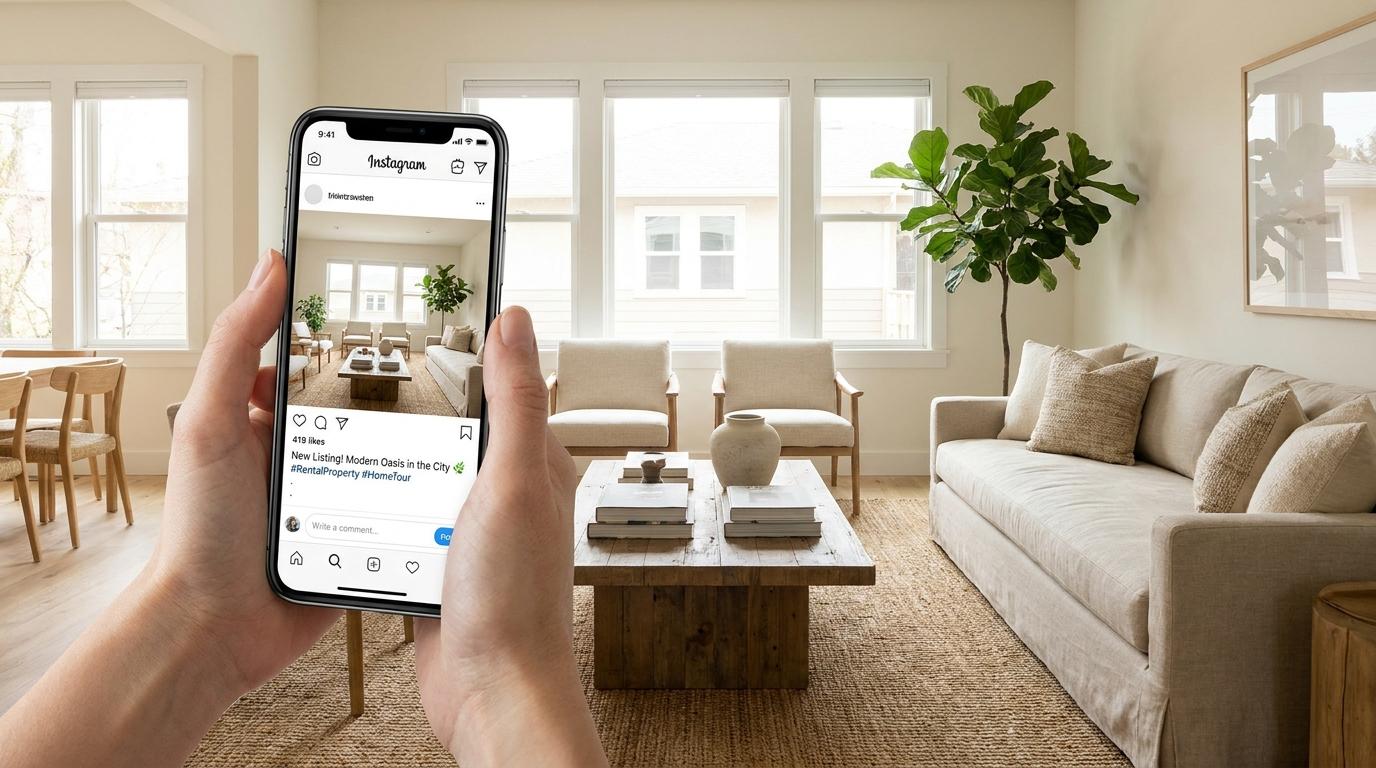
Here is a number that should reframe how you think about marketing your vacant rental: 4.9 billion. That is the number of active social media users worldwide as of 2024, according to DataReportal's Global Social Media Statistics. In the United States alone, roughly 72% of adults use at least one social media platform, per Pew Research Center. Meanwhile, a 2023 Zillow Consumer Housing Trends Report found that renters between the ages of 18 and 44 — the single largest renter demographic in America — overwhelmingly begin their housing searches online, with social platforms ranking second only to listing aggregators as discovery channels. If you are still relying exclusively on a Craigslist post and a yard sign to fill your vacancy, you are fishing in a pond while the ocean sits three blocks away.
For independent landlords managing one to twenty units, social media is not some exotic digital marketing tactic reserved for property management corporations with dedicated marketing teams. It is a free — or nearly free — distribution channel that can dramatically compress your vacancy period, attract higher-quality applicants, and build the kind of local brand presence that generates referrals for years. The average cost of a single vacant unit runs between $1,000 and $1,500 per month when you factor in lost rent, utilities, and turnover costs. Shortening a vacancy from 45 days to 20 days using social media is not a soft win — it is a measurable, bottom-line impact.
This guide breaks down exactly how to build a social media strategy for your rental portfolio, platform by platform, with actionable tactics you can execute today — no marketing degree required.
Why Social Media Works for Rental Marketing
Traditional rental advertising follows a passive model: you post, you wait, you hope. Social media inverts that model entirely. When you post a compelling listing on Instagram or Facebook, the platform's algorithm actively distributes it — first to your existing followers, then beyond them through shares, hashtags, and paid amplification. A single well-photographed Reel of a renovated kitchen can reach thousands of people in your target zip code within 48 hours, many of whom were not actively searching but suddenly find themselves interested.
Beyond reach, social media enables trust-building at scale. A renter scrolling Facebook Marketplace does not just see your listing — they can click your profile, see three years of satisfied tenant testimonials, photos of your well-maintained properties, and evidence that you respond to messages promptly. That credibility converts skeptical scrollers into serious applicants in a way a static Craigslist ad never can. According to BrightLocal's 2023 Local Consumer Review Survey, 88% of consumers trust online reviews as much as personal recommendations. Your social presence is essentially a living, breathing portfolio of your reputation as a landlord.
Vacancy math: A unit renting at $1,400/month left vacant for 30 extra days costs you $1,400 in lost revenue. Even spending 2 hours per week on social media marketing — at a hypothetical $50/hour value of your time — only costs $400/month. The ROI math strongly favors showing up online.
Choosing the Right Platforms for Rental Marketing
Not all social platforms are created equal for rental marketing. The right mix depends on your property type, target renter demographic, and how much time you realistically have. Here is an honest breakdown of the major platforms and what they deliver for independent landlords.
Facebook: Still the Workhorse
Despite predictions of its decline, Facebook remains the dominant social platform for rental marketing — particularly for landlords. Facebook Marketplace has evolved into a genuine real estate discovery engine, with over 1 billion monthly Marketplace users globally. More importantly, local Facebook groups — neighborhood associations, city-specific renters' groups, community boards — are extraordinarily active and represent high-intent audiences. A post in a "Chicago Renters Looking for Apartments" group reaches people who are literally looking right now. Facebook also offers the most sophisticated local advertising options among social platforms, letting you target by zip code, age range, income bracket, and even renter status for as little as $5–$10 per day.
Instagram: Visual Storytelling for Premium Properties
Instagram is the visual showcase platform. If your property is photogenic — a renovated Victorian, a modern loft, a charming bungalow with great curb appeal — Instagram can be a powerful differentiator. Instagram Reels in particular have outsized algorithmic reach, meaning short video tours of your property can land in front of non-followers in your geographic area. The platform skews younger (ages 18–34 account for 61.2% of Instagram's U.S. user base, per Statista 2024), making it ideal for landlords targeting millennials and Gen Z renters. The tradeoff is that Instagram requires more visual polish than other platforms — blurry, poorly lit photos will hurt more than help you here.
Nextdoor: The Hidden Gem for Hyperlocal Reach
Nextdoor is criminally underutilized by landlords. It is a neighborhood-specific social network where your audience is literally geographically defined — people who live within a mile or two of your rental. Nextdoor allows you to post listings in a dedicated Real Estate section, and because posts are inherently neighborhood-relevant, they tend to generate high engagement. People on Nextdoor are also often looking to refer friends and family moving to the area. Building a reputation as a good landlord on Nextdoor can generate word-of-mouth referrals that fill vacancies before you even post publicly.
TikTok: Higher Risk, Higher Reward
TikTok has become a surprisingly active real estate discovery platform, with the hashtag #ApartmentTour accumulating over 4 billion views. Some independent landlords have gone viral posting candid walk-throughs of their properties, renovation before-and-afters, or "day in the life of a landlord" content. The platform's algorithm is exceptionally generous with new accounts, meaning a great video from a landlord with zero followers can still reach tens of thousands of local users. The caveat: TikTok requires consistent content creation and a willingness to appear on camera. If that fits your personality, the upside is enormous. If not, it is better to focus your energy on Facebook and Instagram.
Building Your Rental Marketing Presence from Scratch
You do not need a massive following to market rentals effectively on social media. What you need is a credible, complete, professional profile. Here is how to build that foundation.
- 1Create a dedicated business profile — not a personal profile — for your rental business. Name it something simple and local: 'Smith Properties Chicago' or 'Riverside Rentals LLC.' This keeps your professional and personal life separate and signals legitimacy to prospective tenants.
- 2Complete every section of your profile. Upload a clean logo or professional headshot, write a clear bio that explains what you offer (e.g., 'Well-maintained 1-3BR rentals in Denver's Capitol Hill neighborhood'), and include your contact email and website or VerticalRent listing link.
- 3Post before you have a vacancy. The worst time to build a social following is when you desperately need tenants. Post neighborhood content, maintenance tips for renters, photos of your recently refreshed units, and community updates on a regular cadence — even twice per month — so that when you do have a vacancy, you have an audience ready.
- 4Gather and display social proof. Ask your current and departing tenants to leave you a Google review or Facebook recommendation. Screenshot and share positive feedback (with permission). Social proof is your most powerful marketing asset and costs nothing to collect.
- 5Pin your best content. On Facebook and Instagram, you can pin posts to the top of your profile. Pin your most compelling listing or a testimonial video so that every new profile visitor sees it immediately.
Crafting Listings That Actually Convert
Most landlords make the same mistake on social media that they make on listing sites: they post bare-bones information with subpar photos and wonder why they get low-quality inquiries. A social media listing is not a data sheet — it is a piece of content competing for attention against everything else in a person's feed. Here is what separates listings that generate 40 inquiries from listings that generate four.
Photography Is Non-Negotiable
According to Zillow, listings with professional photos receive 61% more views than listings without. You do not need to hire a professional photographer for every unit — a modern smartphone in good lighting can produce excellent results. The rules: shoot during the day with windows open and lights on, declutter completely before photographing, shoot from corners to maximize perceived space, and always shoot horizontally for wider framing. Take at least 10–15 photos covering every room, the exterior, parking, and any amenity that adds value. For social media specifically, also shoot 1–2 short vertical videos (60–90 seconds) for Reels and TikTok.
Writing Descriptions That Tell a Story
Your listing description should answer the question renters are actually asking: 'Could I picture my life here?' Start with the lifestyle, not the specs. Instead of 'Two-bedroom apartment, 850 sq ft, in-unit laundry,' try: 'Wake up two blocks from Riverside Farmers Market in a sun-drenched two-bedroom with the in-unit laundry you have always wanted.' Then follow up with the specs. Lead with what makes your property desirable and differentiated — natural light, a great location, recent renovation, flexible lease terms, pet-friendliness — before listing the standard facts.
VerticalRent's AI listing description writer can generate a compelling, neighborhood-specific listing description from a few property details in minutes — saving you time while making sure your vacancy stands out in a crowded feed. It is one of the fastest ways to go from 'just listed' to 'fully leased.'
Hashtags, Geotags, and Timing
On Instagram, use a mix of broad and hyperlocal hashtags: combine #ApartmentForRent with #ChicagoApartments, #LoganSquareLiving, and your neighborhood name. Aim for 8–12 hashtags per post — enough to expand reach without looking spammy. Always add a geotag to your posts; this places your content on Instagram's location explore page, which many renters actively browse when researching neighborhoods. As for timing, CoSchedule's 2024 analysis found that Tuesday through Thursday between 9 AM and 11 AM local time generates the highest engagement for real estate content on Instagram and Facebook. Schedule your listing posts accordingly.
Using Paid Social Advertising to Accelerate Results
Organic social media is powerful, but it has limits — particularly for accounts with smaller followings. Paid social advertising allows you to put your listing in front of a precisely targeted local audience regardless of your follower count. Facebook and Instagram ads for rental properties can be set up in under 30 minutes and run for as little as $5 per day.
For independent landlords, the most effective paid strategy is a simple two-step approach. First, boost your best organic listing post directly — this is a one-click process on Facebook that takes your existing post and shows it to a wider audience you define. Second, for properties that are harder to fill or in a slower market, run a targeted lead generation ad using Facebook's Lead Ads format, which lets renters submit their contact information without ever leaving Facebook. This can dramatically reduce friction and increase inquiry volume.
- Target by zip code or a custom radius around your property address — typically 5–15 miles for urban markets, broader for rural ones.
- Layer in demographic targeting: ages 22–45, interests in renting or apartment living, life events like 'recently moved' or 'likely to move.'
- Set a daily budget of $10–$20 for 7–14 days per vacancy. A $140–$280 ad spend that fills a vacancy 2 weeks faster has an enormous ROI.
- Always use your best photo as the ad creative — first impressions in social feeds are everything.
- Include a clear call-to-action: 'Schedule a Tour,' 'Apply Now,' or 'View Full Listing' with a direct link to your VerticalRent listing page.
- Track your results: Facebook's ad dashboard shows you cost per click, reach, and lead volume, so you can optimize over time.
Managing Inquiries and Converting Interest into Applications
One of the most common failures in social media rental marketing is not in the posting — it is in the follow-up. A 2022 Harvard Business Review study found that lead response time is one of the strongest predictors of conversion: leads contacted within 5 minutes are 100 times more likely to convert than those contacted after 30 minutes. When a potential renter messages you on Facebook or Instagram at 7 PM on a Tuesday, they are likely messaging three other landlords simultaneously. The first landlord who responds with a helpful, professional answer typically wins the showing.
Set up auto-replies on your Facebook Business page to acknowledge inquiries instantly, even when you are unavailable. Something simple: 'Thanks for reaching out about [Property Address]! I'll personally follow up within a few hours. In the meantime, here's a link to view full details and apply: [link].' This buys you time while keeping the prospect engaged. When you do follow up personally, have a standard set of pre-qualifying questions ready: desired move-in date, number of occupants, income range, and pet situation. This filters casual inquiries from serious prospects before you invest time scheduling showings.
Once a prospect is serious, the application process needs to be seamless. Sending someone a PDF application form in 2025 is a conversion killer. VerticalRent's online application and tenant screening tools — powered by a TransUnion partnership — let prospects apply directly from their phone in minutes, with full credit, criminal, and eviction checks returned quickly. When your social media marketing does its job and delivers a motivated applicant, your application-to-approval pipeline should not be the bottleneck.
Content Strategy Beyond the Vacancy Post
The landlords who get the best results from social media are not the ones who only post when they have a vacancy. They are the ones who have built an ongoing presence that keeps them top-of-mind in their community. Here is a simple content calendar framework any independent landlord can maintain with 1–2 hours of effort per week.
- Neighborhood spotlights: Post about local restaurants, parks, events, or businesses near your rental. This positions your property within a desirable lifestyle context and attracts followers who live in or want to live in that area.
- Maintenance and renter tips: Short posts like '3 things every renter should know about their heating system' or 'How to report a maintenance issue the right way' demonstrate that you are a thoughtful, communicative landlord — exactly what good tenants are looking for.
- Before-and-after renovation content: If you renovate between tenants, document it. Before-and-after photos and videos consistently generate high engagement and showcase your commitment to maintaining your properties.
- Tenant appreciation content: With permission, share anonymous positive feedback or milestone posts ('Another family just renewed their lease for Year 3 — grateful for great tenants!'). This social proof is powerful and costs nothing.
- Market education: Share local rental market data, neighborhood stats, or tips on what to look for in a lease. This establishes you as an authority, not just another landlord with a vacancy.
- Behind-the-scenes content: A quick video of you walking a freshly painted unit, or installing a new appliance, humanizes you and builds trust. People rent from people, not faceless property management companies.
Fair Housing Compliance on Social Media
This section is not optional reading. The Fair Housing Act applies fully to social media advertising, and violations can result in fines starting at $21,663 for first offenses, escalating significantly for repeat violations. The Department of Housing and Urban Development has been increasingly active in investigating social media-based fair housing complaints, and Facebook itself faced a landmark HUD complaint in 2019 over its ad targeting tools enabling discriminatory targeting.
As an independent landlord marketing on social media, you must be careful about several specific practices. First, never use Facebook's ad targeting to exclude renters based on race, color, national origin, religion, sex, familial status, or disability — even inadvertently through proxy demographic filters. Second, in your listing language, avoid any descriptors that imply preference for or exclusion of protected classes. 'Perfect for young professionals' or 'ideal for couples' are both Fair Housing red flags. Third, if you use neighborhood or lifestyle descriptors in your posts, be mindful that some hyper-specific neighborhood characterizations have been used as proxies for racial steering — a violation regardless of intent. When in doubt, focus your descriptions on the physical attributes of the property, not the type of person you imagine living there.
VerticalRent's AI lease generation tool produces state-compliant lease agreements that reflect current Fair Housing standards — giving you one less legal landmine to worry about as you scale your rental business.
Measuring What's Working and Optimizing Over Time
One significant advantage social media has over traditional rental marketing is measurability. Every major platform provides free analytics that show you exactly how many people saw your post, clicked your link, messaged you, and shared your content. Use this data to make smarter decisions over time.
- 1Track your vacancy source. When a new tenant applies, ask how they found your listing. If a significant percentage says 'Facebook' or 'Instagram,' that is validation to invest more in those channels. If none do, you need to revisit your strategy.
- 2Review your post analytics weekly. Facebook and Instagram both offer business account insights showing reach, engagement rate, and profile visits per post. High reach but low engagement means your content is appearing but not resonating — time to improve your photo quality or copy. High engagement but low inquiries means people like your content but are not converting — check your call-to-action and listing link.
- 3A/B test your listing posts. Post the same vacancy with two different lead photos on two different days and compare the inquiry volume. Over multiple vacancies, you will develop strong intuition for what visual and copy approaches perform best for your specific market.
- 4Track your days-on-market over time. If your average vacancy period decreases after implementing a social media strategy, that is the ultimate measure of success. Set a baseline before you start and measure against it every 6–12 months.
- 5Monitor your follower growth. Slow but steady growth in local followers means you are building an audience that will make every future vacancy easier to fill. Aim for 10–20% follower growth per quarter as a reasonable benchmark for a landlord account.
Putting It All Together: A 30-Day Launch Plan
If you are starting from zero, here is a practical 30-day roadmap to launch your rental social media presence and market your first vacancy through it.
- 1Week 1 — Foundation: Create or optimize your Facebook Business page and Instagram business profile. Complete every field. Post 3 pieces of neighborhood content to begin building your profile history.
- 2Week 2 — Content and Photography: Schedule a property photo session. Write a compelling listing description — use VerticalRent's AI listing description writer if you want to save time. Prepare 5–7 pieces of evergreen content (maintenance tips, neighborhood spotlights) to post over the coming weeks.
- 3Week 3 — Listing Launch: Post your vacancy on Facebook Marketplace, relevant local Facebook groups, Instagram feed with Reels walkthrough, and Nextdoor. Use strong photography, compelling copy, and all relevant hashtags. Set up an auto-reply on your Facebook page. Boost the Facebook post for $10/day targeting local renters.
- 4Week 4 — Follow-Up and Optimization: Respond promptly to all inquiries. Direct serious prospects to your VerticalRent online application. Review your post analytics and adjust your approach. Begin collecting tenant testimonials from your current renters to post as social proof.
Social media rental marketing is not a magic bullet — it is a compounding investment. The first vacancy you market this way might perform only marginally better than your old approach. The fifth vacancy will perform dramatically better, because by then you will have a following, a track record of posts, social proof from past tenants, and refined skills in creating content that converts. The landlords who dominate their local rental markets a decade from now are the ones building their social presence today.
Ready to pair your social media marketing with a backend that closes the loop from inquiry to signed lease? VerticalRent gives independent landlords everything they need: AI-powered listing descriptions, online applications, TransUnion-backed tenant screening with AI risk scoring, state-compliant AI lease generation, and automated ACH rent collection — all in one platform built specifically for self-managing landlords. Create your free account at VerticalRent.com and start filling vacancies faster.
Put this into practice
VerticalRent tools related to this guide
Legal Disclaimer
VerticalRent and its authors are not attorneys, CPAs, or licensed legal or financial advisors, and nothing on this site constitutes legal, tax, or professional advice. The information in this article is provided for general educational purposes only. Landlord-tenant laws, eviction procedures, security deposit rules, and tax regulations vary significantly by state, county, and municipality — and change frequently. Nothing on this site creates an attorney-client relationship. Always consult a licensed attorney or qualified professional in your jurisdiction before taking any action based on information you read here.
Co-founded VerticalRent in 2011, growing it from nothing to 100k landlords and renters. Sold it in 2019, then re-acquired it in 2026 to make it better than ever.


