Rent Control and Stabilization Laws in New Hampshire: What Renters Need to Know
New Hampshire has no statewide rent control, but renters still have protections worth knowing. Learn what the law says about rent increases, notice requirements, and your rights as a tenant.

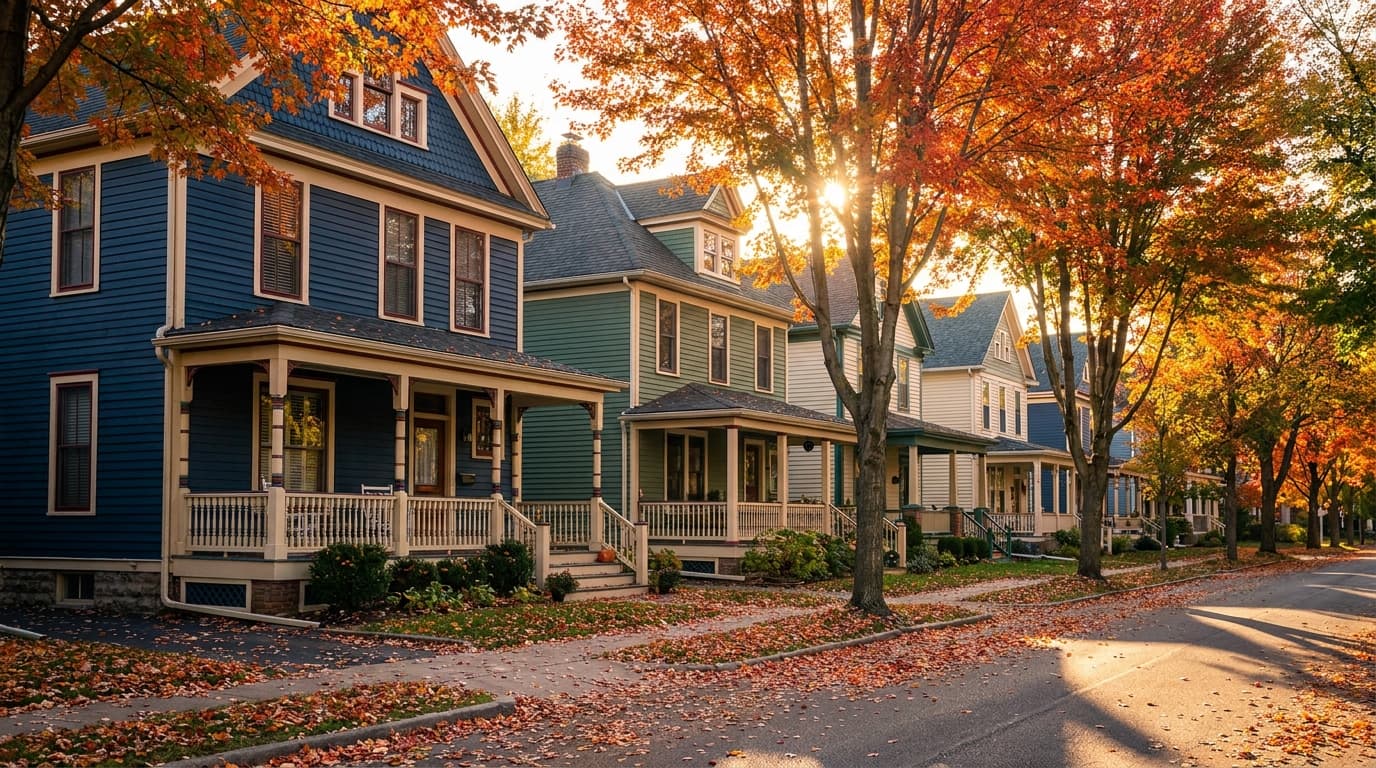
If you rent an apartment, house, or condo in New Hampshire, you may have wondered whether your landlord can raise your rent by any amount, at any time, for any reason. The short answer — in New Hampshire — is largely yes. The Granite State is one of dozens of states that does not have statewide rent control or rent stabilization laws, and unlike some states, New Hampshire actively prohibits local governments from enacting their own rent control ordinances. That puts renters in a unique and often misunderstood legal position. But that doesn't mean tenants are without any rights at all. From notice requirements to anti-retaliation protections to habitability standards, there is a meaningful framework of tenant law in New Hampshire — and understanding it can make a real difference in your housing security.
Across the United States, approximately 44 states have laws that either ban rent control outright or preempt local governments from passing it, according to the National Multifamily Housing Council. New Hampshire is squarely in that camp. With housing costs surging across the Northeast — average rents in the Manchester-Nashua metro area climbed more than 30% between 2020 and 2024, according to CoStar Group data — the absence of any rent cap has left many Granite State renters feeling financially vulnerable. This guide breaks down exactly what the law says, where protections do exist, and what every New Hampshire renter should know.
The Fundamental Reality: No Rent Control in New Hampshire
New Hampshire RSA 540-A (the statute covering landlord-tenant relations) does not contain any provision capping rent increases. More importantly, RSA 356-A — the state's real estate statute — effectively forecloses any municipality from establishing its own rent control policies. Unlike Massachusetts, which allows certain communities to explore rent stabilization under home rule authority, or Maine, which has seen recent debates about allowing Portland-style rent control, New Hampshire has not left any legal daylight for cities like Manchester, Concord, or Nashua to step in and regulate rent pricing on their own.
Key Fact: New Hampshire does not have statewide rent control, and state law prevents any city or town from enacting local rent control ordinances. There is no legal cap on how much a landlord can raise your rent in New Hampshire.
This means that if your lease expires — or if you're on a month-to-month rental agreement — your landlord can technically propose a rent increase of any amount. Whether it's 5% or 50%, the state does not prohibit it. However, the landlord cannot simply change your rent mid-lease without your agreement, and they must follow specific notice procedures before increasing rent. Those procedural requirements are where renters do have enforceable rights.
What Landlords Must Do Before Raising Your Rent
While New Hampshire doesn't limit the size of a rent increase, it does regulate the timing and notice a landlord must give. Understanding these rules is critical — a landlord who fails to follow proper notice procedures cannot legally enforce a rent increase, and you may have grounds to challenge it.
Notice Requirements for Month-to-Month Tenants
If you rent month-to-month, New Hampshire law (RSA 540:2) requires your landlord to give you at least 30 days written notice before a rent increase takes effect. This notice must typically align with your rent due date — meaning if you pay rent on the first of the month, a notice given on March 10th cannot raise your rent on April 1st; it would take effect on May 1st at the earliest. The written notice requirement exists to give tenants time to budget, negotiate, or make other housing arrangements. Verbal notices of rent increases are not considered legally sufficient under New Hampshire law.
Notice Requirements for Fixed-Term Lease Tenants
If you have a fixed-term lease — say a 12-month lease running from January 1 to December 31 — your landlord cannot raise your rent during that lease term unless your lease explicitly contains a rent escalation clause that you agreed to when signing. Your rent is locked in at the amount stated in your lease for the full term. The rent can only change when your lease is up for renewal. At that point, the landlord can offer a new lease at a higher rate, and you can accept, negotiate, or decline and move out. If you stay beyond your lease end date without signing a new agreement, you typically convert to a month-to-month tenancy, at which point the 30-day written notice rule applies.
- Landlords must provide at least 30 days written notice before a rent increase for month-to-month tenants (RSA 540:2).
- Rent cannot be increased mid-lease on a fixed-term rental agreement unless a rent escalation clause was included and agreed upon.
- Verbal or informal rent increase notices are not legally enforceable in New Hampshire.
- If your landlord raises rent without proper notice, you have grounds to dispute the increase and potentially stay at your current rate until proper notice is given.
- Transitioning from a fixed-term lease to month-to-month? Your landlord must still follow the 30-day notice rule before raising rent.
Security Deposits: Rules That Protect You
Even in the absence of rent control, New Hampshire has meaningful laws around security deposits that every renter should understand. Under RSA 540-A:6, landlords in New Hampshire cannot charge a security deposit of more than one month's rent. This is a hard cap — even if your landlord wants more financial protection, the law simply does not allow it.
Beyond the cap, there are strict rules about how deposits must be handled. Landlords are required to keep security deposits in a separate, interest-bearing bank account. They must provide you with written notice of the bank where the funds are held within 30 days of receiving your deposit. At the end of your tenancy, the landlord has 30 days to return your deposit (or send an itemized list of deductions). If they fail to do this within 30 days, New Hampshire law allows you to sue and potentially recover double the wrongfully withheld deposit amount — a powerful incentive for landlords to comply.
Security Deposit Tip: Always document the condition of your unit with photos and a written move-in checklist before you unpack a single box. This documentation is your primary defense if a landlord tries to make improper deductions at move-out.
Anti-Retaliation Protections for New Hampshire Tenants
One of the most important — and most underutilized — protections for New Hampshire renters is the anti-retaliation statute found at RSA 540:13-a. This law prohibits landlords from retaliating against tenants who exercise their legal rights. What does retaliation look like in practice? It can include a sudden, dramatic rent increase shortly after you complained about a maintenance issue, filed a housing code complaint, or organized with other tenants.
New Hampshire law creates a rebuttable presumption of retaliation if a landlord takes adverse action — including a rent increase — within six months of a protected tenant activity. That means if you complained to your local housing authority about mold on January 1st and your landlord sent you a notice of a significant rent increase on March 15th, you have a strong basis to claim retaliation. The landlord would need to demonstrate, with evidence, that the rent increase was not related to your complaint and was instead driven by a legitimate business reason — such as rising property taxes or a general market adjustment applied to all tenants in the building.
- Protected activities include: reporting housing code violations, filing complaints with local or state housing authorities, organizing with other tenants, or pursuing legal remedies for landlord violations.
- Retaliation can take the form of rent increases, eviction notices, service reductions, or harassment.
- The six-month window creates a legal presumption of retaliation — the burden shifts to the landlord to disprove it.
- Tenants who successfully prove retaliation can raise it as a defense in eviction proceedings and may be entitled to damages.
- Keep records of all communications with your landlord, including dates and content of any complaints you've made.
The Right to a Habitable Home: Implied Warranty of Habitability
New Hampshire recognizes an implied warranty of habitability in residential leases. This means that regardless of what your lease says, your landlord is legally obligated to maintain your rental unit in a condition that is fit for human habitation. This is governed by RSA 48-A, which requires local governing bodies to adopt housing standards, and has been affirmed repeatedly by New Hampshire courts. What does habitability actually require? Courts have generally held that rental units must have functioning heat, safe electrical systems, structural integrity, adequate plumbing and hot water, freedom from significant pest infestations, and working smoke and carbon monoxide detectors.
If your landlord fails to make necessary repairs that affect habitability, you have several options in New Hampshire. You can report the condition to your local health or housing official, who can inspect and cite the landlord. In serious cases, you may be able to pursue rent escrow — placing your rent payments into a court-administered account — until repairs are made. New Hampshire courts have also recognized the doctrine of 'repair and deduct' in limited circumstances, though this remedy must be approached carefully and ideally with legal advice before proceeding.
How to Document and Report Habitability Problems
- 1Put all maintenance requests in writing — text messages, emails, or written letters create a paper trail that protects you if a dispute arises.
- 2Take dated photographs or video of any defects, mold, pest evidence, broken systems, or hazardous conditions.
- 3Send a formal written notice to your landlord via certified mail describing the problem and requesting repair within a reasonable time (typically 14 days for non-emergency issues).
- 4If the landlord fails to act, contact your local code enforcement officer or health department to request an inspection.
- 5Keep copies of all official inspection reports, citations, and landlord correspondence in a dedicated folder.
- 6If retaliation follows your complaint, document the timeline carefully and consider consulting a tenant rights attorney.
Eviction Protections: What the Law Requires
New Hampshire is considered a relatively landlord-friendly state when it comes to eviction timelines, but tenants still have important procedural rights. Under RSA 540, a landlord cannot simply remove you from your home without going through a formal court process — self-help evictions (changing locks, removing belongings, cutting utilities) are illegal in New Hampshire and can expose a landlord to significant civil liability.
To lawfully evict a tenant, a New Hampshire landlord must first serve proper written notice. For non-payment of rent, the notice period is 7 days. For lease violations, it's typically 30 days. For month-to-month tenancies with no specific cause, the landlord must give 30 days notice to terminate. If you don't vacate after receiving notice, the landlord must file an eviction action (called an 'action for possession') in the local district court. You have the right to appear and defend yourself at that hearing. Common defenses include improper notice, retaliation, waiver (e.g., the landlord accepted rent after giving notice), or failure to maintain habitability.
Never ignore an eviction notice or a court summons in New Hampshire. Even if you believe the eviction is improper or retaliatory, failing to appear at your court hearing almost always results in a default judgment in favor of your landlord.
Subsidized and Income-Restricted Housing: Different Rules Apply
While New Hampshire has no general rent control, renters in federally subsidized or income-restricted housing have additional layers of protection that function similarly to rent regulation. If you live in a housing development funded through the Low-Income Housing Tax Credit (LIHTC) program, Section 8 project-based housing, or a HUD-assisted development, your rent is restricted by federal program rules — not New Hampshire state law. In these settings, landlords cannot charge above the program-allowable rent limit, which is typically set as a percentage of Area Median Income (AMI).
The New Hampshire Housing Finance Authority (NHHFA) administers many of these programs at the state level and publishes income and rent limits annually. As of 2024, New Hampshire had approximately 12,400 LIHTC units in service, providing rent-restricted housing to lower-income households across the state. If you live in one of these units and your landlord attempts to raise your rent beyond program limits, you have grounds to challenge the increase through the property's management company, the NHHFA, or HUD directly.
Mobile Home Park Residents: A Unique Set of Protections
New Hampshire has a notably strong set of protections for mobile home park residents, codified in RSA 205-A. This is one area where the state has gone further than many others to protect a vulnerable renter population. Mobile home park owners must provide 60 days written notice before a rent increase — double the requirement for traditional renters. Additionally, the state's Manufactured Housing Park law requires park owners to give residents at least 18 months notice if the park is being closed or converted to another use.
Even more significantly, New Hampshire law gives mobile home park residents — or a qualifying nonprofit — a right of first refusal to purchase the park if the owner decides to sell. Several mobile home parks in New Hampshire have been successfully converted to resident-owned communities (ROCs) under this framework, giving residents long-term control over their land costs. As of 2024, New Hampshire has more than 130 resident-owned manufactured housing communities, the highest per-capita count in the nation, according to ROC-USA. This is a remarkable achievement and a meaningful form of housing stability, even without traditional rent control.
The Broader Context: Why Rent Control Debates Matter in New Hampshire
New Hampshire's housing crisis is not a theoretical problem. Between 2015 and 2024, New Hampshire's rental vacancy rate fell to below 1% in several metro areas, according to the New Hampshire Housing Finance Authority's annual Housing Market Report. A vacancy rate below 5% is generally considered a landlord's market; below 2% is a crisis for renters. This extreme shortage has given landlords enormous pricing power, and without rent control, renters have few tools to resist large increases.
Housing advocates, including the New Hampshire Community Loan Fund and the New Hampshire Legal Assistance organization, have pushed for greater tenant protections — including longer notice periods for rent increases and just cause eviction requirements. As of the time of this writing, those measures have not passed the New Hampshire legislature, but the political conversation is evolving as housing affordability becomes a central issue for voters across party lines.
In the meantime, renters in New Hampshire must navigate the market with knowledge and preparation. Understanding your lease before you sign, knowing your notice rights, documenting everything in writing, and being aware of anti-retaliation protections are the most powerful tools available to you within the current legal framework.
Practical Steps Every New Hampshire Renter Should Take Right Now
- 1Read your lease carefully before signing — pay special attention to rent escalation clauses, lease renewal terms, and any provisions that restrict how you can use the unit.
- 2Confirm the length of your lease term and your rent renewal date. Mark your calendar 60 days before your lease ends so you're never caught off guard by a renewal offer.
- 3Get all landlord-tenant communications in writing. If your landlord tells you something important verbally, follow up with an email summarizing what was said.
- 4Document the condition of your unit at move-in with timestamped photos or video, and share a copy with your landlord.
- 5Know where your security deposit is held — your landlord must tell you within 30 days of receiving the deposit.
- 6Keep a file of every maintenance request you make, along with the date and the landlord's response (or non-response).
- 7If you receive a notice of a large rent increase, research comparable rents in your area using current listings. This gives you negotiating leverage.
- 8Contact New Hampshire Legal Assistance (nhla.org) if you face eviction, believe you are experiencing retaliation, or need help understanding your rights. Their services are free to qualifying low-income residents.
- 9If you live in a mobile home park, learn your specific rights under RSA 205-A, including the 60-day notice requirement and right-of-first-refusal protections.
Resource: New Hampshire Legal Assistance (nhla.org) provides free legal help to low-income renters facing eviction or landlord disputes. The New Hampshire Housing Finance Authority (nhhfa.org) publishes annual housing market data and administers affordable housing programs statewide.
How Technology Can Help Renters Stay Organized and Protected
In a state with no rent control, your best defense is documentation, awareness, and organized records. Many renters today use property management platforms not just from the landlord's side, but as a tool to manage their own rental life. Platforms like VerticalRent, which are built to bridge the gap between landlords and tenants, provide tools that create transparent, time-stamped records of payments, maintenance requests, and communications — all of which can be invaluable if a dispute arises. When you pay rent through an automated ACH system, for example, you have an ironclad digital record of every on-time payment, which protects you if a landlord ever tries to claim otherwise in an eviction proceeding.
Features like AI-powered maintenance triage can also give renters a more structured way to report and track repair requests — creating the kind of written paper trail that New Hampshire courts want to see when tenants claim a landlord has failed their habitability obligations. Even if you're not in a position to choose your landlord's platform, asking your landlord to use a system that provides tenant access to records is a reasonable and increasingly common request.
Summary: What New Hampshire Renters Need to Know
- New Hampshire has no statewide rent control, and state law (RSA 356-A) prevents cities and towns from enacting their own rent control ordinances.
- Landlords must give at least 30 days written notice before raising rent for month-to-month tenants; rent cannot be raised mid-lease on a fixed-term agreement.
- Security deposits are capped at one month's rent, must be held in a separate interest-bearing account, and must be returned within 30 days of move-out.
- Anti-retaliation protections (RSA 540:13-a) create a six-month window during which a landlord's adverse action is presumed retaliatory if you've exercised a protected tenant right.
- The implied warranty of habitability requires landlords to maintain rental units in livable condition regardless of lease terms.
- Evictions require formal court proceedings — self-help evictions are illegal in New Hampshire.
- Mobile home park residents have stronger protections, including 60-day rent increase notice requirements and right-of-first-refusal on park sales.
- Residents of federally subsidized or LIHTC housing have rent restrictions governed by federal program rules, not state law.
- Free legal help is available to qualifying renters through New Hampshire Legal Assistance.
New Hampshire may not offer the rent control protections that tenants in some other states enjoy, but that doesn't mean renters are powerless. Knowledge of your lease terms, procedural rights, anti-retaliation protections, and habitability standards can make the difference between being exploited and being protected. Stay informed, stay organized, and don't hesitate to seek legal help if you believe your rights are being violated.
Powered by VerticalRent: Whether you're a renter looking for a transparent landlord experience or a landlord managing properties in New Hampshire, VerticalRent's AI-native platform has tools built for both sides of the rental relationship. From AI lease generation that produces state-compliant documents in minutes, to automated ACH rent collection that creates clear payment records, to Frank — VerticalRent's built-in AI assistant who can answer your property questions anytime — VerticalRent is designed to make renting fairer and more transparent for everyone. Visit VerticalRent.com to learn more.
**Legal Disclaimer** *The information in this article is provided for educational purposes only and does not constitute legal advice. Tenant-landlord laws vary significantly by state, county, and city and may have changed since this article was written. VerticalRent is not a law firm and the author is not an attorney. If you have a specific legal situation, please consult a licensed attorney in your jurisdiction.*
Put this into practice
VerticalRent tools related to this guide
Legal Disclaimer
VerticalRent and its authors are not attorneys, CPAs, or licensed legal or financial advisors, and nothing on this site constitutes legal, tax, or professional advice. The information in this article is provided for general educational purposes only. Landlord-tenant laws, eviction procedures, security deposit rules, and tax regulations vary significantly by state, county, and municipality — and change frequently. Nothing on this site creates an attorney-client relationship. Always consult a licensed attorney or qualified professional in your jurisdiction before taking any action based on information you read here.
Co-founded VerticalRent in 2011, growing it from nothing to 100k landlords and renters. Sold it in 2019, then re-acquired it in 2026 to make it better than ever.


