Professional Property Photos: Why They Pay for Themselves
Bad photos cost landlords thousands in extended vacancies. Here's the data on why professional photography is the highest-ROI marketing investment you can make.

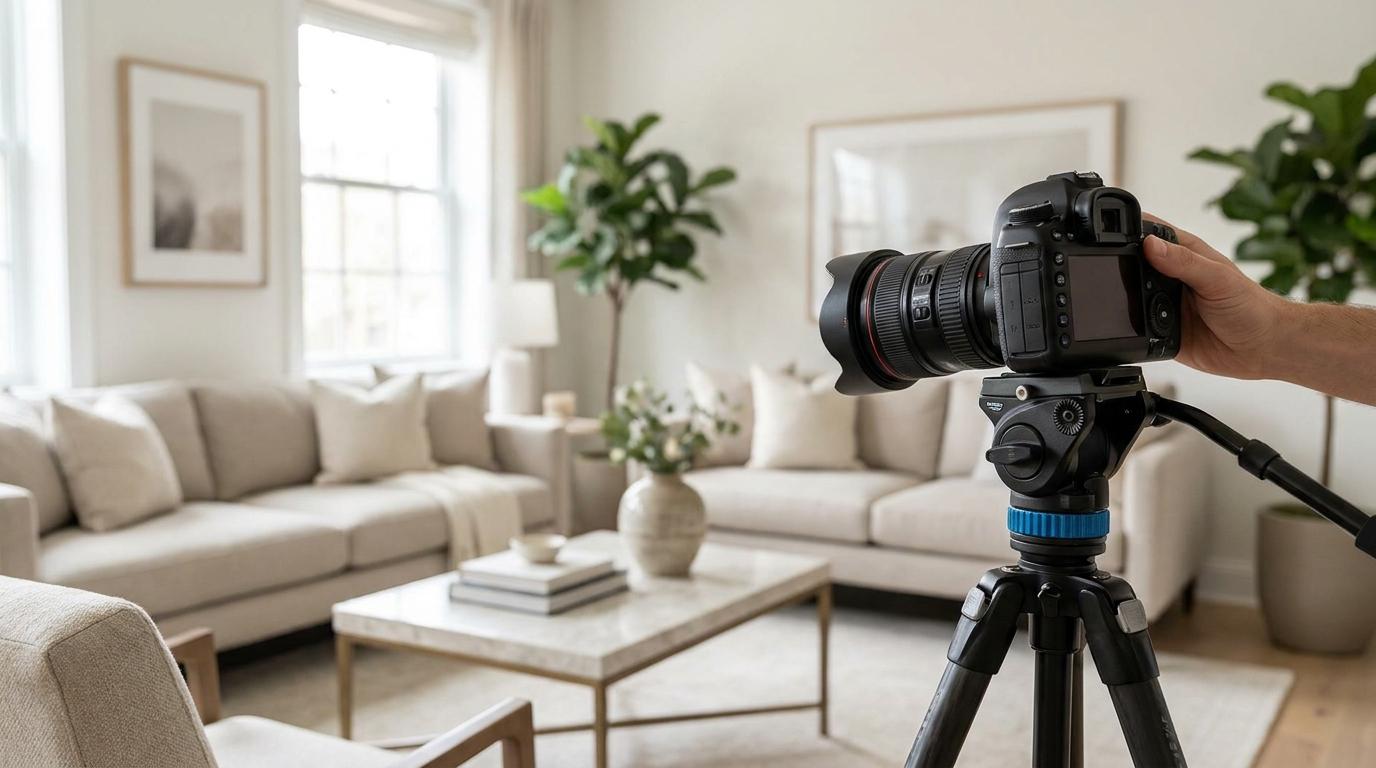
Here is a number worth sitting with: the average vacant rental unit costs its owner between $50 and $200 per day in lost revenue, depending on market and rent level. If your unit rents for $1,800 per month, every single day it sits empty is $60 out of your pocket — not counting the mortgage, insurance, utilities, and carrying costs that keep accumulating regardless. Now consider that the average rental listing in a mid-sized U.S. market takes 30 to 45 days to lease when using amateur or no photography, versus 15 to 20 days with professional images. That gap — 15 to 25 days — represents $900 to $1,500 in pure, preventable revenue loss. A professional real estate photographer charges between $150 and $400 for a standard residential shoot. The math is not complicated. The question is not whether professional photos pay for themselves. The question is why so many independent landlords are still skipping them.
The Data Is Overwhelming — And Most Landlords Are Ignoring It
The rental housing market has undergone a seismic shift in the past decade. According to a 2023 Zillow Consumer Housing Trends Report, 95% of renters use online platforms as their primary tool for finding a new home. That means your listing photo is not just a nice-to-have — it is the front door. It is the curb appeal, the first handshake, the entire first impression compressed into a single JPEG. And renters are making split-second decisions based on what they see in those images.
Research from the National Association of Realtors consistently shows that homes — and rental properties — with professional photography receive significantly more online views than those with amateur photos. In the for-sale market, professionally photographed homes sell 32% faster and for prices closer to asking. The rental market data mirrors this pattern. A 2022 CoStar Group analysis found that multifamily listings with high-quality photography leased 15% to 20% faster than comparable units with low-quality images. For independent landlords managing just a few units, that efficiency difference is the margin between a profitable year and a stressful one.
95% of renters search online first. Your listing photo is your property's first impression — and renters decide whether to click or scroll in under 3 seconds.
Why Amateur Photos Actively Hurt You
It is tempting to grab your iPhone, snap a few shots in the living room, and call it done. Many landlords do exactly this, and they suffer for it in ways that are often invisible to them. Poor photos do not just fail to attract tenants — they actively signal negative things about you as a landlord and about the property itself. Here is what renters actually see when they encounter amateur listing photos.
Dark, Cramped Rooms That Look Half the Size
Smartphone cameras, without proper technique and equipment, produce images that make rooms look dramatically smaller and darker than they are in real life. This is because wide-angle lenses — the kind professional photographers use — capture a broader field of view, making spaces feel open and airy. A bedroom that comfortably fits a king bed and dresser can look like a closet in an amateur photo taken from the doorway with a phone. Renters who see that photo immediately filter your listing out, even if the room would have suited them perfectly in person.
Poor Lighting That Suggests Neglect
Lighting is everything in real estate photography. Amateur photos taken with ceiling lights on, curtains closed, or in mixed natural and artificial light often produce yellow, uneven, muddy images. To a prospective renter scrolling through listings, that yellow-tinted kitchen does not look like a room with incandescent bulbs — it looks like a neglected, poorly maintained space. Professional photographers use a combination of flash, ambient light control, HDR techniques, and post-processing to deliver images that are bright, clean, and accurate to what the space actually looks and feels like.
Clutter and Distracting Elements Left in Frame
Professional photographers know how to stage a shot — or at least direct you on what to move before they shoot. Amateur landlord photos frequently include toilet seats left up, cleaning supplies visible under sinks, cords draped across floors, or personal items from the previous tenant. These details do not go unnoticed by renters. They create a subconscious impression of carelessness that can undermine even a genuinely well-maintained property.
- Listings with dark or blurry photos receive up to 60% fewer inquiries than those with bright, professional images
- Renters spend an average of 60% of their listing browsing time looking at photos before reading a single word of description
- Properties with fewer than 5 photos receive significantly less engagement than those with 10 or more high-quality images
- Amateur photos with visible clutter or poor lighting correlate with higher rates of lowball rent offers from prospective tenants
- Professional photos increase the likelihood of a renter scheduling an in-person showing by up to 40%, according to real estate marketing research
What Professional Real Estate Photography Actually Includes
Many independent landlords have never hired a professional real estate photographer and are not entirely sure what they are paying for. The deliverable goes far beyond someone showing up with a nicer camera. Here is what a standard professional shoot for a residential rental typically includes — and why each element matters.
- 1Wide-angle interior photography: Professional photographers use lenses in the 10mm to 20mm range that capture rooms from corner to corner, making every space feel larger and more inviting without distorting proportions into something unrealistic.
- 2HDR processing: High Dynamic Range photography blends multiple exposures to capture both the bright outdoor light through windows and the indoor ambient light simultaneously — something a single smartphone exposure cannot achieve.
- 3Exterior and curb appeal shots: First impressions often start with the building exterior. A professional will shoot at the right time of day — often late afternoon or early evening for warm, flattering golden-hour light.
- 4Pre-shoot staging guidance: Before the photographer arrives, most professionals provide a checklist for how to prepare the space — what to remove, what to add, how to arrange furniture for best visual flow.
- 5Post-processing and color correction: Professional editing removes color casts, corrects exposure, straightens lines, and enhances brightness to produce images that look polished and consistent across all rooms.
- 6High-resolution digital delivery: You receive files sized appropriately for web listings, social media, and print materials, often delivered within 24 to 48 hours of the shoot.
- 7Optional add-ons: Many photographers offer virtual tours (Matterport 3D), aerial drone photography, floor plan diagrams, and twilight exterior shots for an additional fee.
For a standard 1,000 to 1,500 square foot rental unit, expect to pay between $150 and $350 for a quality professional shoot in most U.S. markets. Larger properties, premium markets like New York or San Francisco, or packages that include drone footage and virtual tours will run higher — anywhere from $400 to $800. Even at the top of that range, the investment is recovered the moment you lease even a week faster than you otherwise would have.
The ROI Calculation Every Landlord Should Run
Let us walk through the return on investment calculation in concrete terms, using three different rent levels that represent a broad cross-section of the independent landlord market.
Scenario 1: $1,200/Month Rent — Lower-Tier Market
Daily revenue loss from vacancy: $40. If professional photos reduce your vacancy by 15 days (a conservative estimate), that is $600 in recovered revenue. Photography cost: $175. Net gain: $425. ROI: 243%.
Scenario 2: $1,800/Month Rent — Mid-Tier Market
Daily revenue loss from vacancy: $60. Vacancy reduction of 15 days: $900 in recovered revenue. Photography cost: $250. Net gain: $650. ROI: 260%.
Scenario 3: $2,800/Month Rent — Premium Market
Daily revenue loss from vacancy: $93. Vacancy reduction of 20 days: $1,860 in recovered revenue. Photography cost: $350. Net gain: $1,510. ROI: 431%.
Even in a low-rent market, professional photography returns 2x to 4x its cost in recovered vacancy revenue — often within the first leasing cycle.
And here is the compounding factor that most landlords miss: you do not just use these photos once. A well-shot set of professional images can be reused across multiple leasing cycles for two to three years, as long as the property does not undergo significant changes. The $250 you spend today is not just recovering this vacancy faster — it is recovering every future vacancy faster, too. Amortized across three leasing cycles, the cost per use drops to under $85.
Professional Photos Also Attract Better Tenants
This is the dimension of the ROI conversation that rarely gets discussed, and it may be the most valuable of all. Professional photography does not just attract more applicants — it attracts a different quality of applicant. Here is why.
Renters who are financially stable, employed, and accustomed to well-maintained housing have higher expectations and more options. They are comparing your listing against dozens of others in real time on Zillow, Apartments.com, Facebook Marketplace, and similar platforms. When your listing looks polished, well-lit, and professionally presented, it signals that you are a professional, detail-oriented landlord who takes pride in the property. That signal attracts renters who, themselves, take pride in where they live.
Conversely, listings with dark, blurry, or cluttered photos tend to attract renters who have fewer options — sometimes because of credit issues, rental history problems, or instability. This is not a universal rule, but it is a documented pattern in property management circles: the quality of your marketing tends to correlate with the quality of your applicant pool. And a stronger applicant pool means better tenant screening outcomes.
Speaking of tenant screening — once those quality applications start rolling in, VerticalRent's AI risk scoring analyzes each applicant's full profile, including credit, criminal background, eviction history, and income verification through our TransUnion partnership. The combination of great photos driving better applicants and AI-powered screening identifying the best among them is a one-two punch that dramatically reduces your landlord risk.
How to Find and Hire a Real Estate Photographer
If you have never hired a real estate photographer before, the process is simpler than you might expect. Here is a practical step-by-step approach.
- 1Search platforms first: Start with Google ('real estate photographer + your city'), Thumbtack, or Bark.com. Look for photographers who specifically list real estate or architectural photography as a specialty — not just general portrait or event photographers.
- 2Review portfolios critically: Ask to see interior shots specifically. Look for brightness, wide angles, clean lines, and consistent color temperature across rooms. If their sample photos look dark or cramped, keep looking.
- 3Ask about HDR and turnaround time: Any professional real estate photographer should be using HDR processing as standard. Turnaround of 24 to 48 hours for edited images is the industry norm.
- 4Get a quote that specifies deliverables: Confirm the number of photos included, file resolution, usage rights, and what add-ons cost. For a standard rental, 15 to 25 photos is typical.
- 5Prepare your property before the shoot: This is critical. Declutter every room thoroughly. Remove personal items. Clean all surfaces. Add fresh flowers or a bowl of fruit to kitchen counters. Open every curtain and blind to maximize natural light. Turn on all interior lights.
- 6Consider a virtual tour for premium units: If your rental is priced at the top of your local market, adding a Matterport 3D virtual tour for an additional $150 to $300 can dramatically increase engagement from out-of-town renters who cannot easily visit in person.
What to Budget by Property Type
- Studio or 1-bedroom apartment: $150 to $225 for 15 to 20 photos
- 2 to 3 bedroom apartment or townhome: $200 to $325 for 20 to 30 photos
- Single-family home (3+ bedrooms): $275 to $450 for 25 to 40 photos
- Add-on: Aerial drone exterior: $100 to $200 additional
- Add-on: Matterport 3D virtual tour: $150 to $350 additional
- Add-on: Twilight/dusk exterior shots: $75 to $150 additional
Pairing Great Photos With a Listing Description That Converts
Professional photos get renters to stop scrolling. A compelling listing description gets them to pick up the phone or submit an inquiry. These two elements work together, and neglecting either one leaves money on the table. Most landlords underestimate how much their listing copy affects conversion rates.
Effective listing descriptions lead with the most compelling features — updated kitchen, in-unit laundry, hardwood floors, walkability — not generic boilerplate like 'cozy space perfect for young professionals.' They include specific details renters actually care about: square footage, natural light, storage, parking situation, pet policy, proximity to transit, and what utilities are included. They use active, sensory language that makes a renter visualize living there.
This is exactly what VerticalRent's AI listing description writer is built for. Feed it the basic details of your property — bedrooms, bathrooms, amenities, neighborhood — and it generates a polished, compelling listing description in seconds. No copywriting experience required. Pair that with your professional photos, and your listing stands out from the 90% of independent landlord listings that look and read like they were written in five minutes.
Common Objections — And Why They Do Not Hold Up
'My phone camera is good enough.'
Modern smartphones take impressive photos in many situations. Real estate interiors are not one of them. The challenge is not camera sensor quality — it is lens focal length, lighting control, and post-processing expertise. A professional photographer with a mid-range DSLR and a wide-angle lens will produce interior photos that dwarf what any smartphone delivers, regardless of how many megapixels it claims.
'My rental will lease regardless — the market is tight.'
In a hot rental market, this may feel true. And technically, yes — your unit will eventually lease. But 'eventually' is the operative word. Even in tight markets, properties with better photos lease faster and attract stronger applicants. And when the market softens — as it inevitably does — landlords who built the habit of professional marketing will weather the transition far better than those who relied on market conditions to do their marketing for them.
'I only have one unit. It is not worth the expense.'
If anything, one-unit landlords have more to gain from professional photography, not less. A single vacancy represents 100% of your rental income going to zero. The stakes of a prolonged vacancy are existential in a way that a 50-unit operator does not feel. That $200 photography investment is protecting $1,500 to $3,000 in potential lost revenue. The math is even more compelling at small scale.
'I will just reuse the old photos from the previous listing.'
If those photos were taken professionally and the property has not changed significantly, this is entirely reasonable — and smart asset reuse. If those photos were taken with a phone three years ago in poor lighting, reusing them is costing you money every time you list.
The Full Marketing Stack: Photos Are the Foundation, Not the Ceiling
Professional photography is the highest-leverage single investment in rental marketing, but it works best as part of a cohesive marketing approach. Once you have your photos, here is how independent landlords should think about deploying them.
- List on all major platforms: Zillow, Apartments.com, Zumper, Facebook Marketplace, and Craigslist. Each platform has a different renter demographic, and cross-posting costs nothing but a few minutes.
- Use all available photo slots: Most platforms allow 25 to 40 photos. Use every single one. More photos means more time spent on your listing, which signals relevance to platform algorithms.
- Lead with your best exterior shot: The thumbnail photo is your billboard. Use the most flattering exterior or the most impressive interior feature as your lead image.
- Include a floor plan: Many professional photographers now offer simple floor plan diagrams. Renters who cannot visit in person find these invaluable, and listings with floor plans see higher engagement.
- Refresh your listing every 7 to 10 days: On platforms like Craigslist and Facebook Marketplace, listings age quickly. Renewing or reposting keeps you visible to new searchers.
- Link to a virtual tour if you have one: Embed the Matterport link prominently in your listing description and in direct messages to serious inquiries.
Once your marketing is working and inquiries are coming in, the operational side of leasing needs to be just as professional as your photos. That means fast application processing, clear and comprehensive lease agreements, and a smooth move-in experience. VerticalRent handles all of it — from AI-generated state-compliant leases that take minutes to produce, to automated ACH rent collection that starts the moment your new tenant signs.
The Bottom Line: Stop Leaving Money on the Table
The independent landlord who spends $250 on professional photography and leases their unit 15 days faster has made a 260% return on that investment in the first leasing cycle alone. Over three leasing cycles, that same photo set has quietly recovered $2,700 in vacancy revenue that otherwise would have evaporated. And that landlord's listing has attracted better applicants, generated more inquiries, and built a reputation — through the signal of professionalism — that carries forward into every future tenant interaction.
The landlord who skips professional photos saves $250 this month and loses $900 or more over the course of a typical vacancy. That is not frugality. That is an expensive false economy that repeats itself every single time a unit turns over.
Professional property photography is not a luxury for large operators with big marketing budgets. It is the single highest-ROI marketing tool available to independent landlords, full stop. If you are managing one unit or twenty, the math works in your favor every single time.
Ready to cut vacancy times, attract better tenants, and manage your rentals like a professional? VerticalRent gives independent landlords AI-powered tools for screening, leasing, rent collection, and marketing — all in one platform. Sign up free at VerticalRent.com and see why thousands of self-managing landlords trust us to protect their investment.
Put this into practice
VerticalRent tools related to this guide
Legal Disclaimer
VerticalRent and its authors are not attorneys, CPAs, or licensed legal or financial advisors, and nothing on this site constitutes legal, tax, or professional advice. The information in this article is provided for general educational purposes only. Landlord-tenant laws, eviction procedures, security deposit rules, and tax regulations vary significantly by state, county, and municipality — and change frequently. Nothing on this site creates an attorney-client relationship. Always consult a licensed attorney or qualified professional in your jurisdiction before taking any action based on information you read here.
Co-founded VerticalRent in 2011, growing it from nothing to 100k landlords and renters. Sold it in 2019, then re-acquired it in 2026 to make it better than ever.


