What Is CMMS Maintenance Software: A Landlord's Guide
What is CMMS maintenance software? Learn its benefits for landlords, how it simplifies rental property management, and why it outperforms spreadsheets in 2026.

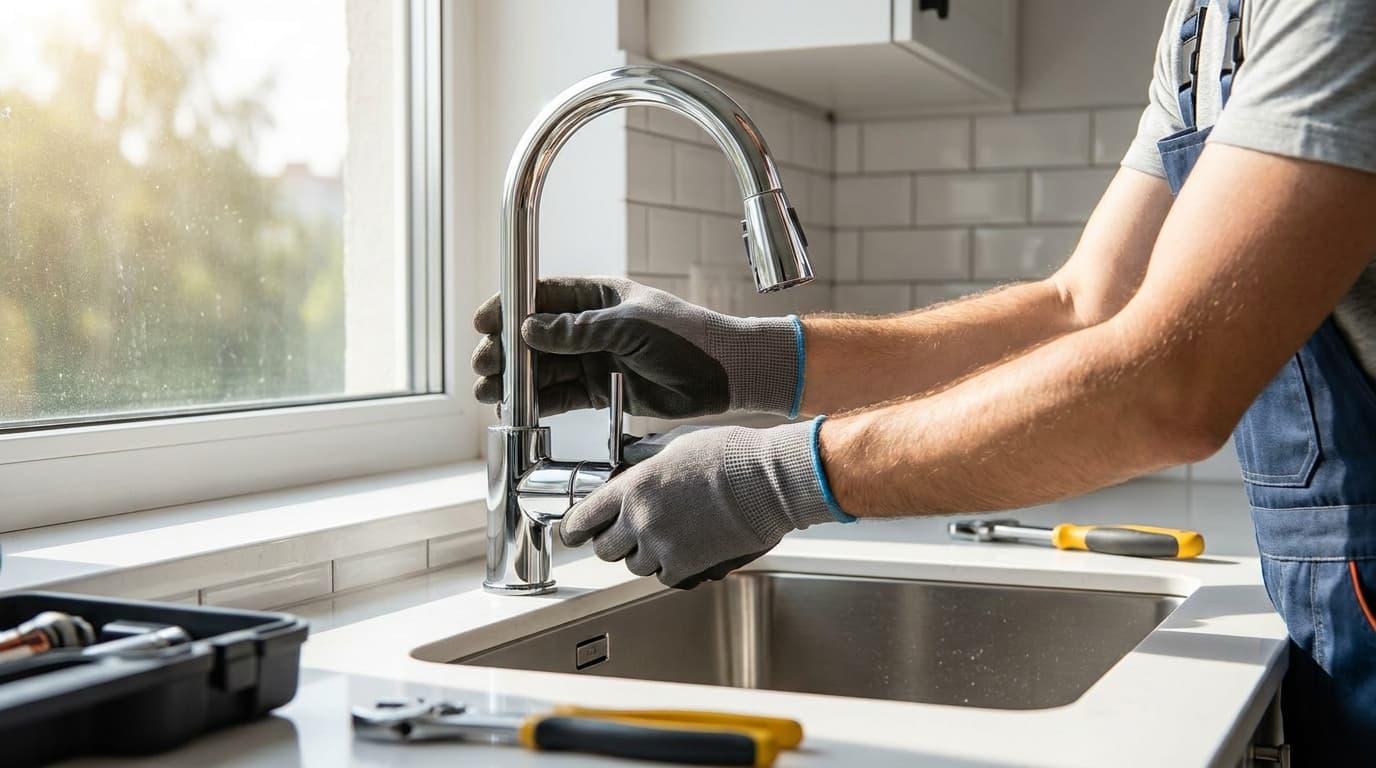
A tenant texts about a dripping sink. Another emails about a dead outlet. Your handyman calls back while you're driving, and you promise to send the unit number when you get home. By that evening, the sink issue is buried under newer messages, the outlet email is still unread, and you can't remember whether the water heater in Unit 2 was replaced last year or three years ago.
That setup feels normal because a lot of small landlords still run maintenance that way. But normal isn't the same as efficient. Research shows 68% of small property managers still rely on spreadsheets or paper notes for maintenance, largely because they believe better systems are too complex for a small portfolio, according to research on CMMS adoption barriers for smaller operators.
For a landlord with 1 to 10 units, CMMS software isn't enterprise bloat. It's a practical way to stop losing maintenance history across texts, emails, notebooks, and memory. If you've been asking what is CMMS maintenance software and whether it makes sense for a small rental business, the short answer is yes. The better question is how long you can afford to keep operating without one.
Beyond Sticky Notes The Modern Landlord's Dilemma
Small landlords rarely have a maintenance "system." They have a collection of habits.
A tenant sends a text with no photo. A contractor sends an invoice by email. You jot "check furnace filter" on the back of a receipt. Two weeks later, the tenant asks why nobody came, and now you're searching three places for the same issue. That's how routine repairs turn into stress, delays, and preventable friction with tenants.
The problem isn't that landlords don't care. The problem is that manual tracking breaks down fast, even with only a few units. Once you manage several leases, a couple of vendors, and recurring items like HVAC service, gutter cleaning, smoke detector checks, or plumbing calls, memory stops being a reliable tool.
Small portfolio doesn't mean small complexity
A three-unit portfolio can still produce overlapping work orders, recurring inspections, appliance histories, and emergency coordination. One missed note can mean a second trip fee, water damage, or a frustrated tenant who's repeating the same issue for the third time.
Practical rule: If maintenance details live in your phone, inbox, and head at the same time, you don't have a system. You have a risk.
That's where a CMMS, or Computerized Maintenance Management System, comes in. For a landlord, the simplest definition is this: it's software that keeps every maintenance request, asset record, schedule, and repair history in one place.
Why the old approach feels cheap but isn't
Spreadsheets and text threads look free because you already have them. But they create invisible costs:
- Missed follow-up: A tenant assumes you're ignoring them when in fact the message got buried.
- No repair history: You pay a vendor to diagnose the same issue because last year's notes are missing.
- Weak documentation: If a dispute comes up, your records are incomplete or scattered.
- Reactive decisions: You replace equipment late, after failure, instead of servicing it earlier.
For years, landlords heard CMMS described as something for factories and giant facilities teams. That's outdated. Modern cloud tools are lighter, easier to use, and much better suited to the pace of a small rental business.
What Is a CMMS A Central Brain for Your Properties
When landlords ask what is CMMS maintenance software, I explain it this way. It's the central brain for your rental maintenance. Instead of keeping requests in texts, vendor names in your contacts, appliance details in a spreadsheet, and reminders on a calendar, a CMMS pulls those pieces into one working system.
The market is moving in that direction. The global CMMS software market was valued at USD 1.15 billion in 2024 and is projected to reach USD 2.06 billion by 2033, driven by increased cloud adoption among smaller businesses, according to CMMS market data from Business Research Insights.

What CMMS actually means for a landlord
You don't need industrial jargon to use one. In a rental business, a CMMS acts like a command center for four things you already deal with every month:
- incoming repair requests
- the equipment inside each property
- recurring preventive tasks
- the people and materials involved in repairs
A good system doesn't just store information. It connects it. The leaking faucet request is tied to a specific unit, a specific fixture, a prior repair history, the assigned plumber, photos, notes, and completion status.
That's why landlords who move away from manual tracking usually feel relief first, then savings later.
For example, if you're evaluating platforms that combine request intake and dispatch workflows, it's helpful to review how modern maintenance management tools for rental operations are structured around requests, tracking, and communication instead of loose message chains.
The four pillars that matter in small rentals
Work order management is the front door. A tenant reports an issue, you create or receive the request, assign it, set a priority, track progress, and close it with notes. No hunting through old texts.
Asset management is the memory. Your furnace, water heater, refrigerator, roof, and plumbing fixtures all have histories. You can record model numbers, serial numbers, install dates, warranty details, and prior repairs. That matters when a vendor asks, "How old is this unit?" and you can answer immediately.
Preventive maintenance is where landlords stop living in reaction mode. Instead of waiting for an HVAC complaint in peak season, you schedule routine service. Instead of discovering a leak after damage spreads, you create repeat inspections for problem areas.
Vendor and inventory tracking is the part many landlords don't realize they need until things go wrong. You keep approved plumbers, electricians, HVAC techs, and handymen attached to the jobs they handled. If you stock common items like filters, smoke detectors, or supply lines, the system tracks what was used and when to reorder.
A CMMS isn't a fancy repair log. It's a system that helps you run maintenance with less guessing.
For a small landlord, that's the value. Less guesswork. Faster handoffs. Better records. Fewer dropped balls.
Key CMMS Benefits That Boost Your Bottom Line
The strongest argument for CMMS isn't that it looks organized. It's that the numbers behind it are hard to ignore.
Industry research cited by MaintainX reports that CMMS usage delivers a 28.3% increase in maintenance productivity, a 20.1% reduction in unplanned downtime, and a 17.8% reduction in MRO inventory costs in organizations that use it well, based on CMMS performance data summarized by MaintainX.

The savings show up in everyday operations
For a landlord, maintenance productivity doesn't mean factory throughput. It means your vendors and handymen waste less time figuring out what the issue is, where to go, what happened last time, and whether anyone approved the job.
A reduction in unplanned downtime translates into fewer ugly surprises. In rentals, downtime often looks like an unusable appliance, a failed water heater, a cooling issue in summer, or a recurring plumbing problem that escalates because nobody handled it early enough.
A reduction in MRO inventory costs matters too, even for small operators. You may not run a warehouse, but you probably rebuy common parts, filters, batteries, or safety items. Without tracking, landlords often overbuy, underbuy, or forget what was already purchased for a property.
Here's a practical complement to CMMS: a solid vendor management platform for landlords helps keep contractor communication and accountability tied to the work itself instead of spread across calls and messages.
A short overview can help if you want to see the workflow in action:
Why small landlords feel the impact faster
Large organizations save money at scale. Small landlords often save sanity first.
When you only own a handful of units, one missed repair has an outsized effect. One HVAC failure can dominate your week. One bad tenant communication chain can damage the relationship for months. A better maintenance system has a very visible payoff because the business is personal and the margin for error is thinner.
Bottom line: The benefit isn't abstract efficiency. It's fewer after-hours calls, faster repair completion, and better control over recurring property costs.
That's why CMMS often moves from "nice to have" to "I should've done this sooner" once a landlord sees how many repair decisions were being made with incomplete information.
CMMS vs Spreadsheets Why Your Old System Is Costing You
Most landlords don't choose spreadsheets because they love spreadsheets. They choose them because they seem simple.
The problem is that simple tools become fragile systems. A spreadsheet can list open issues. It can't reliably manage the full life of a maintenance request across intake, assignment, updates, attachments, reminders, status changes, and historical analysis. A text thread is even worse. It's fast in the moment and unreliable later.
According to eMaint, a true CMMS is built on a relational database that creates a single command center, and that foundation is associated with a 25% to 30% reduction in unplanned downtime and a 15% to 20% reduction in overall maintenance costs through optimized scheduling, as explained in eMaint's overview of how CMMS systems work.
The side by side difference
| Feature | Manual Method (Spreadsheet/Text) | CMMS Software |
|---|---|---|
| Request intake | Tenant texts, emails, or calls. Details arrive in different places. | Requests land in one system with status tracking. |
| Photos and documents | Stored in separate messages or not saved at all. | Attached to the work order and tied to the property record. |
| Repair history | Depends on how carefully you update notes. Often incomplete. | Stored by unit, asset, and job, with searchable history. |
| Reminders | Manual calendar entries or memory. Easy to miss. | Recurring schedules and automated task visibility. |
| Vendor coordination | Phone calls and scattered texts. | Assignment, notes, and completion records live with the job. |
| Accountability | Hard to prove who said what and when. | Clear timeline of updates, actions, and closure. |
| Trend analysis | Limited. Usually requires manual review. | Built to surface repeat issues and recurring costs. |
Why a database matters more than most landlords think
"Relational database" sounds technical, but the landlord version is simple. It means the software connects related information instead of leaving it scattered.
The sink leak isn't just a line item. It's connected to Unit 3, that tenant, the kitchen faucet, the plumber who handled the last call, the photo of the cabinet base, and the invoice from completion. That's something a spreadsheet doesn't do well because it wasn't built for live workflows.
If your current method depends on you remembering where the last note lives, the system will fail exactly when you're busiest.
Manual methods also create legal and operational blind spots. If a tenant claims you ignored an issue, your defense shouldn't depend on whether you still have the old phone, whether the text thread was deleted, or whether your spreadsheet was updated after the call. Good records don't just help you repair faster. They protect you when memories differ.
For small landlords, that's the hidden cost of "keeping it simple." The process isn't simple once something gets missed.
Three Common Scenarios Where a CMMS Shines
The easiest way to understand a CMMS is to watch what it changes in ordinary situations. Not big disasters. Just the stuff that shows up every week.

A slow leak that shouldn't become a cabinet replacement
Before CMMS, the tenant sends a short text: "Sink leaking again." You're at work, reply later, and mean to contact the plumber after dinner. Then another message comes in about a garage door remote, and the sink issue slips.
Three days later, the tenant sends a photo of warped particleboard under the vanity. Now you're not just fixing a leak. You're dealing with water damage, a tenant who's annoyed, and a repair bill that got bigger because the first report wasn't captured and tracked.
With CMMS, the tenant submits the issue with a photo, the request is logged against the unit, and you assign it immediately. The plumber sees the image before arriving. When the job is done, the fix and notes stay attached to that property record.
The annual HVAC visit that keeps getting postponed
A lot of small landlords know they should schedule seasonal HVAC service. Many still don't do it consistently because the reminder lives in memory or a general calendar that competes with everything else.
In a CMMS, preventive work sits in the same place as reactive work. That matters. The service reminder isn't floating in a personal calendar with dentist appointments and school events. It's tied to the actual property asset.
That creates a cleaner pattern:
- Schedule recurring service: The system creates the task on the interval you choose.
- Assign the vendor quickly: Your preferred HVAC technician is already in the workflow.
- Keep the history: You can see when it was serviced last and what was found.
A tenant may never notice that process directly. They will notice fewer heating and cooling surprises.
The water heater failure that needs coordination fast
Emergency repairs expose weak systems immediately.
A water heater dies. The tenant calls, you contact a plumber, the plumber asks for the model, then asks for photos, then asks if there's shutoff access, then asks whether replacement is authorized. Every answer happens in separate messages, often while you're juggling something else.
In a CMMS workflow, the request, photos, unit information, vendor assignment, and completion notes stay together. You can also see whether that heater had prior issues, whether it was nearing replacement territory, and what the last repair cost looked like.
Fast maintenance isn't just about speed. It's about having the right information in one place when the pressure is highest.
For small landlords, these aren't edge cases. They're the business. A good CMMS doesn't eliminate repairs. It keeps routine issues from turning into expensive, frustrating ones.
How to Implement a CMMS in Your Rental Business
The biggest mistake small landlords make is assuming implementation has to be massive. It doesn't. If you own a few units, your setup can be lean and still be effective.
Effective use matters. Benchmark data discussed in a maintenance forum summary notes that effective CMMS implementation can decrease Mean Time to Repair by approximately 20%, and that PM Compliance above 90% directly correlates to a 3x to 5x reduction in emergency repair calls, according to benchmark discussion on CMMS implementation outcomes.

Start small and set it up around real work
Don't begin by entering every hinge, blind, and doorknob in your portfolio. Start with the assets that create the most cost and tenant disruption when they fail.
Use a short rollout list:
- Pick one property first: Test the workflow where the stakes are manageable.
- Enter major assets only: HVAC units, water heaters, refrigerators, ranges, and any system with recurring service.
- Create a few repeat tasks: Filter changes, seasonal HVAC service, safety checks, and inspections.
- Add your core vendors: Plumber, electrician, HVAC tech, general handyman.
- Standardize request intake: Train tenants to submit maintenance one way, not five ways.
If you want a deeper framework for rollout, Forge Reliability has a useful guide to effective CMMS implementation strategies that maps the setup process to actual maintenance workflows rather than abstract software steps.
A landlord-focused maintenance work order system guide can also help when you're deciding how requests should be submitted, assigned, and closed in day-to-day operations.
What good rollout looks like
A good implementation is boring in the best sense. People know where to report issues. Vendors know where to look. You know where the record lives.
Introduce it to tenants as a service upgrade, not a policy burden. Tell them it's the fastest way to get repairs documented and handled. Encourage photos. Clearer intake produces better dispatch.
Field-tested advice: The best CMMS for a small landlord is the one you'll actually use every time a repair comes in.
What doesn't work is overbuilding early. Don't chase advanced features before the basics are consistent. If tenants still text repairs randomly and vendors still close jobs by voicemail, the software won't save you. The process has to tighten first. Then the data becomes useful.
The Smart Landlord's CMMS Selection Checklist
For a small portfolio, the right CMMS isn't the one with the longest feature list. It's the one that solves your actual maintenance bottlenecks without adding friction.
What to insist on before you buy
Use this checklist when comparing options:
- Simple mobile use: Can you open a work order, assign it, review a photo, and close it from your phone without fighting the interface?
- Tenant request intake: Can tenants submit issues directly, ideally with photos and written detail?
- Unit and asset history: Can you quickly see what happened in that property before, including prior repairs and notes?
- Recurring maintenance: Can you set repeat tasks for HVAC service, inspections, and other routine work?
- Vendor communication: Can you dispatch work cleanly to your regular plumber, electrician, or handyman?
- Clear status tracking: Can you tell what's new, in progress, waiting on parts, and completed without opening five apps?
- Scalable pricing: Does the pricing make sense for a landlord with only a handful of units, and can it still work if you add more later?
What usually doesn't matter for a small portfolio
Some features sound impressive and won't matter much on day one.
You probably don't need deep enterprise configuration, multi-layer approval chains, or complex industrial dashboards. You do need reliability, ease of use, and a clean audit trail. For a small landlord, the winning software is usually lightweight, cloud-based, and easy to maintain.
The test is simple. If a tenant reports a problem tonight, will this tool help you move from report to resolution faster than your current mix of texts, notes, and spreadsheets? If the answer is yes, it's not overkill. It's overdue.
If you want a practical way to bring maintenance requests, vendor dispatch, rent collection, tenant screening, and lease workflows into one place, VerticalRent gives independent landlords a lightweight system built for small portfolios. It's a strong fit for owners who want faster maintenance coordination without stitching together separate tools.
Put this into practice
VerticalRent tools related to this guide
Legal Disclaimer
VerticalRent and its authors are not attorneys, CPAs, or licensed legal or financial advisors, and nothing on this site constitutes legal, tax, or professional advice. The information in this article is provided for general educational purposes only. Landlord-tenant laws, eviction procedures, security deposit rules, and tax regulations vary significantly by state, county, and municipality — and change frequently. Nothing on this site creates an attorney-client relationship. Always consult a licensed attorney or qualified professional in your jurisdiction before taking any action based on information you read here.
Co-founded VerticalRent in 2011, growing it from nothing to 100k landlords and renters. Sold it in 2019, then re-acquired it in 2026 to make it better than ever.


