Carbon Monoxide Alarm in Rented Property: A 2026 Guide
Learn who is responsible for a carbon monoxide alarm in rented property, where to place it, and how to stay compliant in 2026.

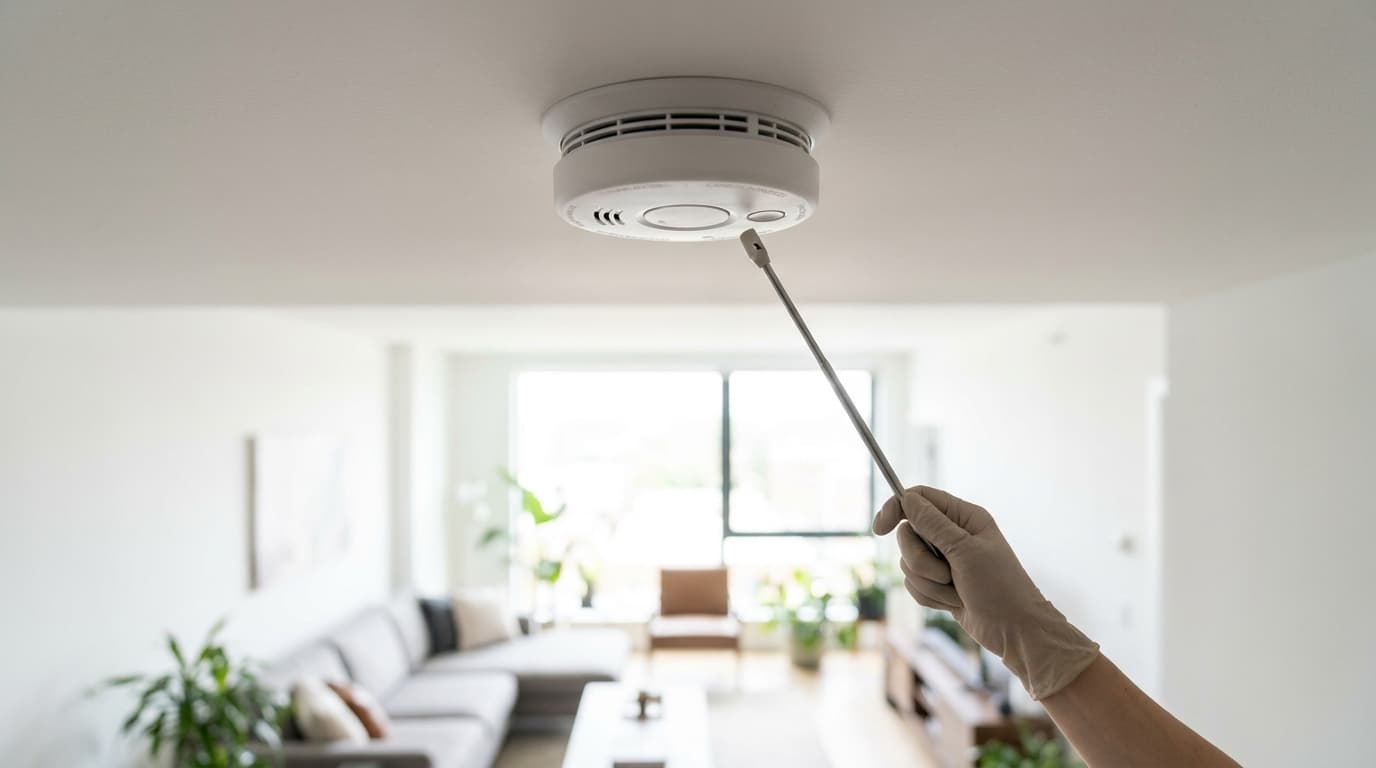
You've got a tenant complaint about headaches, a missed inspection note, and a dead battery you meant to replace last quarter. Or worse, the alarm was installed, but nobody recorded the model, expiry, or handover test, so now you're trying to prove compliance after the fact. That's the core problem with a carbon monoxide alarm in rented property, it's rarely the purchase that fails, it's the follow-through.
In England, the private rented sector started from a weaker baseline than other tenures, with 83% of private renters having at least one working smoke alarm when the Smoke and Carbon Monoxide Alarm regulations were introduced, compared with 88% of owner occupiers, 89% of local authority tenants, and 92% of housing association tenants consultation PDF. That gap is why landlords keep getting caught out on the same mistake, treating CO compliance like a one-time install instead of an ongoing handover and recordkeeping duty.
Why Carbon Monoxide Alarms in Rentals Keep Tripping Up Landlords
A tenant calls late at night about headaches and dizziness. You check the unit the next morning and realize the CO alarm is dead, expired, or missing entirely, and the last person to live there probably inherited the same problem. At that point, you're not dealing with a hardware issue anymore, you're dealing with an inspection risk, a tenant trust problem, and maybe a habitability fight.
That's why the carbon monoxide alarm in rented property conversation has to start with process, not product. The installation matters, but so does the move-in test, the date stamp, the replacement plan, and proof that someone checked the alarm before the tenancy began.
Practical rule: If you can't show when the alarm was installed, tested, and handed over, you're not really compliant, you're just hoping nobody asks.
A lot of landlords still think in terms of “I bought the detector, so I'm done.” That mindset fails as soon as a tenant complains, an inspector asks for documentation, or an appliance service call reveals the alarm was never tested in front of the occupant. The legal exposure comes from the gap between possession and proof.
The rest of this guide is built to close that gap. You'll get the legal trigger in plain English, the right alarm type to buy, placement rules that don't invite false alarms, state-by-state nuance, and a lease clause you can adapt tonight.
What Carbon Monoxide Is and Who Is Legally on the Hook
Carbon monoxide is a clear, odorless, poisonous gas that can build up when fuel-burning appliances do not vent properly. Tenants often notice the effects only after they have slept in the unit, which is exactly why landlords should treat CO alarms as part of the handover, not as optional extras.
The legal trigger is narrower than the common assumption that any fuel-burning device requires an alarm
In England's private rented sector, the trigger is not every appliance that uses fuel. It applies to any room used as living accommodation that contains a fixed combustion appliance, and the rule explicitly excludes gas cookers government Q&A booklet. Boilers, furnaces, water heaters, fireplaces, wood burners, and similar fixed appliances are the rooms you need to focus on, not every room in the property.
England broadened the legal standard on 1 October 2022 so the carbon monoxide alarm requirement now reaches any room used as living accommodation that contains a fixed combustion appliance, again excluding gas cookers. Landlords should treat that as a handover change, because it affects properties that once relied on the older solid-fuel-only approach.
If a gas odor or combustion problem is suspected, do not guess from the hallway. Use a qualified gas leak professional immediately, and keep a separate emergency response contact list for tenants. A useful reference on when to call a gas leak professional helps set the point where a tenant should stop troubleshooting and start evacuating.
Who is actually responsible
In rental housing, the landlord is almost always the party responsible for installation and first-day working order. The tenant should not be told to “keep an eye on it” as a substitute for compliance. In England, the landlord must also verify that the alarm is in proper working order on the first day of a new tenancy, which makes this an installation-and-handover control, not a one-time retrofit.
That distinction matters because landlord duties sit in layers. Statutes and regulations set the minimum, local ordinances can tighten it, and habitability rules can create consequences even where the wording is less specific. The safest model is simple, install the alarm, test it at move-in, document the result, and keep the record with the lease file.
Bottom line: The legal duty is not just to own the alarm, it is to prove the tenant received a working one on day one.
Choosing the Right Alarm Type and Certification Standard
Don't buy the cheapest plug-in alarm and call it a day. Rentals need units that are harder for tenants to tamper with and easier for you to defend in a dispute. That points most landlords toward hardwired alarms with battery backup or sealed 10-year lithium units, not loose plug-ins that invite battery removal and casual neglect.
Sensor type matters more than marketing copy
Electrochemical sensors are the industry default for a reason, they're generally the most accurate and longest-lived option for CO detection. Biomimetic sensors are cheaper, but they tend to respond more slowly, which isn't what you want in a rental with overnight occupancy. Metal oxide semiconductor sensors react quickly, but they can be more power-hungry, so they're less attractive if you're trying to reduce maintenance touchpoints.
The certification standard matters just as much as the chemistry. In the US, look for UL 2034. In Canada, look for CSA 6.19. In the UK, BS EN 50291 is the relevant benchmark. If a listing doesn't clearly name a recognized standard, skip it.
The feature list I'd actually buy against
At the store or on Amazon, I'd use a short checklist, not a brand name:
- Digital display, so you can see status at a glance.
- End-of-life signal, so the unit tells you when it's done.
- Peak memory, which helps show whether the alarm has detected high levels.
- Test and reset button, because that's the button tenants will touch.
- Sealed battery or hardwire backup, because tamper resistance matters in rentals.
A cheap unit that's easy to silence is a bad deal in a rental. Spend for the features that reduce false confidence, tenant interference, and replacement disputes.
Where to Place the Alarm and How to Verify on Move-In Day
Placement is where landlords get sloppy, and sloppy placement creates both false alarms and missed events. The standard guidance is to install the alarm in the same room as the appliance, at about head height and roughly 1 to 3 metres from the source Shelter guidance. Keep it away from windows, doors, direct exhaust, and spots where humidity or airflow can distort readings.
Match the placement to the layout
A utility closet with a boiler needs a unit in or near that room, not three rooms away in a hallway. A basement water heater calls for a placement that catches CO where it's generated, not upstairs where the tenant might never hear or see it in time. A living room woodstove deserves a nearby alarm at the right height, because that's where the combustion risk lives.
An attached garage adjacent to a bedroom is a different problem. You still need to think in terms of the combustion source and sleeping area, because garage exhaust migration is one of the situations landlords most often underestimate. Don't rely on a single hallway detector to cover a more complicated layout.
Move-in day is your proof point
The most important habit is to test the alarm with the tenant present. Press the test button, confirm the sound, and note the result right there at handover. Then record the install date, the model, and the expiry date on a one-page form and put that form in the lease file.
That form is what saves you when a tenant later claims the alarm was missing or broken. A signature or acknowledgement at move-in beats a memory six months later.
State-by-State Rules Every Independent Landlord Should Know
A tenant calls about a beeping alarm, and the real problem is worse. The property has a fuel-burning appliance, the lease file says nothing clear, and the local rule is different from the one the landlord used at the last building. That is how CO compliance turns into a dispute.
The right approach is simple. Check the state rule, check the local rule, then write down what you installed, where you installed it, and who acknowledged it at handover. Some states tie the duty to sleeping areas, some to fuel-burning appliances, and some local ordinances or smoke alarm rules fill the gap even when the state statute is thinner. If you also manage UK property, England's broadened standard shows how far the duty can reach, especially where a fixed combustion appliance is involved England guidance.
| Jurisdiction | Trigger | Landlord Responsibility | Tenant Responsibility |
|---|---|---|---|
| California | Check state and local requirements for sleeping-area or fuel-appliance coverage before listing. | Install, verify, and document according to the applicable rule. | Report faults and avoid tampering. |
| New York | Check state and local requirements for sleeping-area or fuel-appliance coverage before listing. | Install, verify, and document according to the applicable rule. | Report faults and avoid tampering. |
| Massachusetts | Check state and local requirements for sleeping-area or fuel-appliance coverage before listing. | Install, verify, and document according to the applicable rule. | Report faults and avoid tampering. |
| Maryland | Check state and local requirements for sleeping-area or fuel-appliance coverage before listing. | Install, verify, and document according to the applicable rule. | Report faults and avoid tampering. |
| Connecticut | Check state and local requirements for sleeping-area or fuel-appliance coverage before listing. | Install, verify, and document according to the applicable rule. | Report faults and avoid tampering. |
| Oregon | Check state and local requirements for sleeping-area or fuel-appliance coverage before listing. | Install, verify, and document according to the applicable rule. | Report faults and avoid tampering. |
| Washington | Check state and local requirements for sleeping-area or fuel-appliance coverage before listing. | Install, verify, and document according to the applicable rule. | Report faults and avoid tampering. |
| Colorado | Check state and local requirements for sleeping-area or fuel-appliance coverage before listing. | Install, verify, and document according to the applicable rule. | Report faults and avoid tampering. |
| Minnesota | Check state and local requirements for sleeping-area or fuel-appliance coverage before listing. | Install, verify, and document according to the applicable rule. | Report faults and avoid tampering. |
| England | Fixed combustion appliance in a room used as living accommodation, excluding gas cookers. | Install, verify on day one, and keep records of handover. | Report faults, avoid disabling the alarm, and cooperate with access. |
The traps that create most disputes
A basement bedroom next to a furnace is a common miss. The landlord assumes a hallway detector covers it, but the actual risk sits closer to the appliance and the sleeping area. A property converted from single-family use to a multi-unit setup creates the same kind of problem, because the appliance layout and the sleeping layout no longer match the old placement plan.
Short-term rentals can be regulated differently, so the rules in a long-term lease file may be useless on their own. Check the local rule before you list anything, then write down exactly what you checked and where you checked it. That record matters when a tenant or inspector asks why the device was placed where it was.
For a state-by-state reference, keep VerticalRent's landlord obligations by state guide with your local housing code. If you also handle Ontario property, TSSA gas tag compliance helps when appliance problems and detector obligations show up in the same inspection.
Inspection, Testing, and the Records That Save You in a Dispute
A detector that worked on move-in day can still become a problem if nobody tests it, tracks it, or replaces it on schedule. Treat CO compliance like a maintenance calendar, not a faith-based exercise. The point isn't to generate paperwork for its own sake, it's to create a record that stands up when someone challenges you.
Build a simple maintenance rhythm
Press the test button monthly. Check replaceable batteries on a regular schedule if you're using units that allow user replacement. Inspect the appliance itself annually, because the alarm doesn't solve venting or combustion problems by magic.
I'd also track a hard replacement date on every device. VerticalRent's compliance documentation tools can keep lease files, maintenance tickets, and tenant notices in one place so the record doesn't vanish into a dead email thread, but any system works if it's consistent and searchable compliance documentation guide.
Keep these records on file
- Install date and expiry date, written down for each unit.
- Model and serial number, so you can identify the exact device involved.
- Test log, with dates and initials or digital confirmation.
- Tenant acknowledgement, showing the alarm was working at handover.
- Service invoices, when the appliance or venting system gets attention.
Those records are your defense when an inspector or tenant says the alarm was missing, expired, or broken. Without them, you're arguing from memory, and memory loses.
A clean file beats a long explanation every time.
Writing the Lease Clause and Handling Tenant Reports
A good lease clause makes the tenant part of the process without pretending the landlord can dump the legal duty on them. The clause should name your install and handover obligation, prohibit tampering, require immediate reporting of an alarm activation, and set a clear response window for you.
Here's a clause you can adapt:
Carbon Monoxide Alarm Clause. Landlord will install and verify at move-in all required carbon monoxide alarms in working order. Tenant must not remove, disable, cover, or tamper with any alarm, and must report any alarm activation, malfunction, or low-battery signal immediately. Landlord will respond to a reported alarm issue within a reasonable time, arrange inspection or service as needed, and document the outcome in the maintenance file. Tenant acknowledges that alarm testing and replacement dates may be logged by Landlord for compliance purposes.
If you want a broader lease template workflow, VerticalRent's required lease clauses guide is a practical reference for folding safety language into the rest of the agreement without turning it into legal spaghetti.
What to do when a tenant reports activation
First, verify the report. Second, if anyone has symptoms, treat it as an emergency and get the unit evacuated. Third, dispatch the right HVAC or appliance tech to inspect the source, because the alarm is often telling you about the appliance, not just the device.
What to do when a tenant disables or removes the alarm
Send written notice immediately. Document the date, the condition, and the demand to restore the unit, then move to lease enforcement if they refuse. Don't let a tenant frame tampering as a harmless battery issue, because that's how small violations turn into expensive disputes.
What to do when the tenant claims injury
Refer the matter to insurance and preserve every record you have. Don't admit liability in a hallway conversation or a text thread. Your job is to show that you installed, tested, documented, and responded, not to improvise a legal defense after the fact.
A clear lease clause and a documented response process are two of the cheapest protections a landlord can buy. They won't stop every complaint, but they'll keep a complaint from turning into a messy credibility fight.
Your Carbon Monoxide Compliance Checklist

Use this as the checklist you keep in the lease folder, not as a reminder you hope to remember later.
- Confirm your rule. Check your state, local ordinance, and any special short-term rental requirements before you list the unit.
- Map the appliances. Identify every fixed combustion appliance and every room used as living accommodation around it.
- Buy the right unit. Choose a certified alarm, and don't skip the move-in proof step.
- Place it correctly. Keep it in the same room as the source, at about head height and roughly 1 to 3 metres away.
- Test on handover. Press the button with the tenant present, then log the install and expiry dates.
- Keep the paper trail. Save the test log, tenant acknowledgement, service records, and replacement schedule.
If you want to automate that recordkeeping, use a system that ties maintenance, leases, and tenant notices together. A tool like LegesGPT's AI legal document generator can help you draft the clause faster, but the primary win is still the same, a landlord who treats CO safety like a standing obligation, not a one-time purchase.
The habit that prevents most failures is simple, treat the detector like part of the move-in handover, then keep proving it stayed compliant. If you want a cleaner way to store lease clauses, maintenance records, and tenant acknowledgements in one place, visit VerticalRent and set up a workflow that keeps your compliance file ready before anyone asks for it.
Put this into practice
VerticalRent tools related to this guide
Legal Disclaimer
VerticalRent and its authors are not attorneys, CPAs, or licensed legal or financial advisors, and nothing on this site constitutes legal, tax, or professional advice. The information in this article is provided for general educational purposes only. Landlord-tenant laws, eviction procedures, security deposit rules, and tax regulations vary significantly by state, county, and municipality — and change frequently. Nothing on this site creates an attorney-client relationship. Always consult a licensed attorney or qualified professional in your jurisdiction before taking any action based on information you read here.
Co-founded VerticalRent in 2011, growing it from nothing to 100k landlords and renters. Sold it in 2019, then re-acquired it in 2026 to make it better than ever.


