Maintenance Work Order Guide for Small Landlords
Create and manage a maintenance work order with our step-by-step guide. Learn templates, workflows, and tracking to save time and protect your rental business.

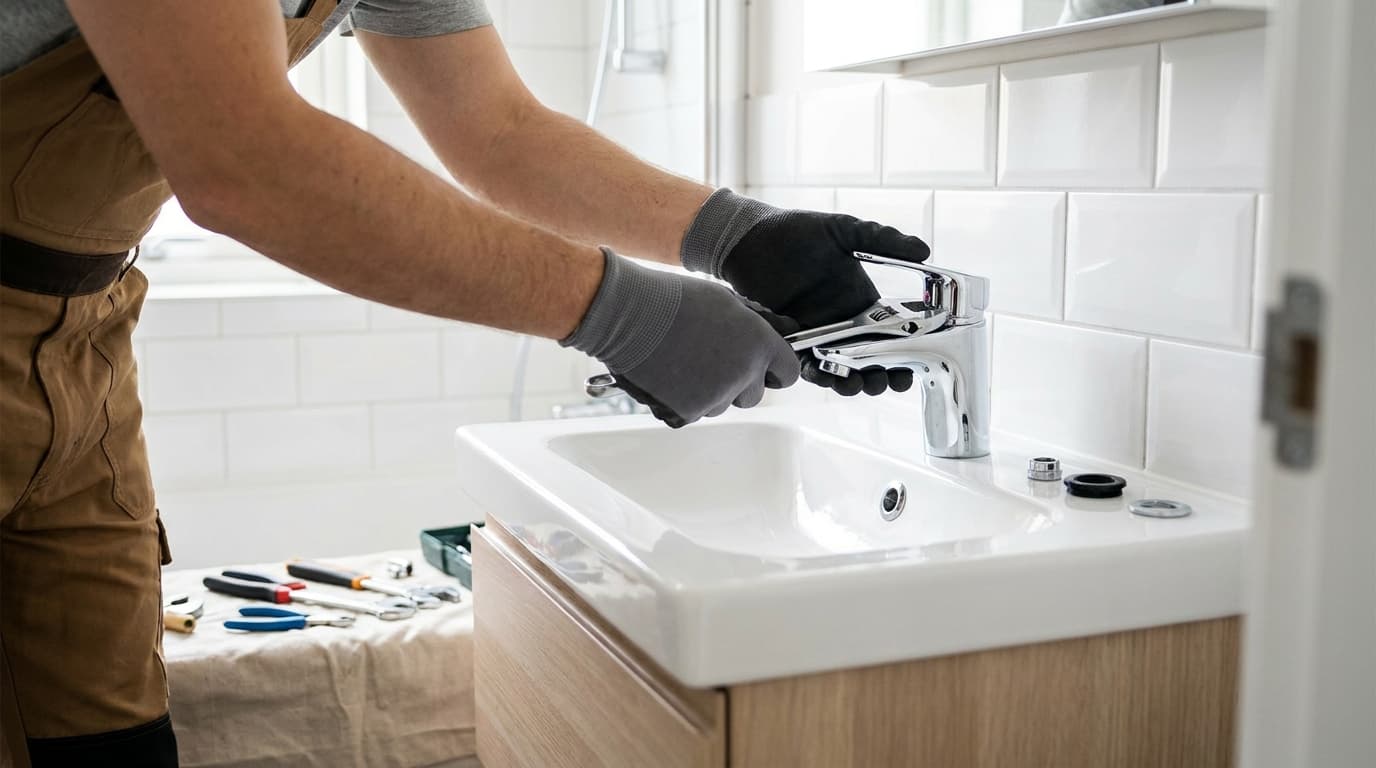
The maintenance problem usually starts the same way. A tenant sends a text at night that says, “There's a leak.” No unit detail. No photo. No note on whether water is hitting the floor, the ceiling, or a sink cabinet. You wake up, start asking questions, wait for replies, call a plumber, then learn the tenant can't give access until tomorrow afternoon. By then, what could have been a quick repair has turned into a coordination mess.
Small landlords feel this harder than large property teams. If you manage a handful of units, you are the dispatcher, the approver, the bookkeeper, and the person tenants call first. A formal maintenance work order sounds like corporate overhead until you spend half a day chasing missing details for a simple repair.
The fix is not more hustle. It's a cleaner process. A good work order system captures the right information up front, routes the issue correctly, and leaves a record you can use later when a bill is disputed, a tenant says nobody responded, or you need to see whether the same appliance has been repaired three times already.
Beyond the Tenant Text Why You Need a Formal Process
A vague maintenance text creates three problems at once. You don't know the severity, you don't know what trade to call, and you don't have a clean record of what was reported and when. That's how small issues become expensive ones.
One landlord mistake I see often is treating every message as a personal conversation instead of an intake event. A tenant writes “dishwasher leaking.” The landlord texts back for photos, then asks whether the leak happens during a cycle, then asks if water is coming from the supply line or the door, then forwards fragments of that thread to an appliance tech. The tech arrives without the right part, leaves, and bills for the trip anyway. The tenant feels ignored. The landlord feels buried.
A maintenance work order fixes that by turning scattered messages into one controlled record. It tells you what happened, where it happened, who reported it, how urgent it is, whether entry is allowed, and who owns the next step.
Practical rule: If a maintenance issue matters enough to text about, it matters enough to log formally.
This isn't bureaucracy. It's operational control. It also helps with the practical side of streamlining field operations, especially when you rely on outside vendors instead of in-house staff. A cleaner handoff means fewer calls, fewer missed appointments, and less improvisation.
Paper notes and text threads break down fast once you have even a few units. If you've ever searched your phone for “water heater” and found six unrelated conversations, you've already seen the problem. That's why many landlords move away from ad hoc methods after dealing with the failures of paper-based maintenance tracking.
What the formal process protects
A real process protects more than your calendar.
- Your time: You stop repeating the same intake questions.
- Your vendor relationships: Contractors get useful details before they drive out.
- Your tenant communication: The request has a visible status instead of disappearing into a text thread.
- Your legal position: You can show when the issue was reported, what action was taken, and whether access was granted.
What doesn't work
Landlords usually get in trouble with one of these habits:
- Inbox management: Letting email or text act as the work order system.
- Memory-based dispatch: Calling “the usual plumber” before confirming the actual issue.
- Loose follow-up: Assuming the job is done because the vendor says it's handled.
- No closeout record: Keeping the invoice but not the photos, notes, or tenant confirmation.
If you want less chaos, start by refusing vague requests as the final form of communication. The text can alert you. It should never be the complete record.
Anatomy of an Effective Maintenance Work Order
A strong maintenance work order is built to prevent wasted trips, avoid delays, and leave no doubt about who does what next. Most landlords don't need a long form. They need a disciplined one.

The fields that should never be optional
When a request comes in, certain fields need to be mandatory. That matters because required-field enforcement reduces lost maintenance requests by preventing technicians from arriving without the needed parts or context.
Here are the core fields I'd treat as essential for a small rental:
Work order ID
You need a unique reference so the request doesn't get confused with earlier repairs in the same unit.Date and time reported
This creates a clean timeline. If a tenant later says the issue sat for days, you can verify when it was submitted and when action started.Tenant contact information
Vendors need the right phone number when they're parked outside and can't get in.Property address and unit
This sounds obvious until a contractor is sent to the wrong duplex door or the wrong building in a small portfolio with similar addresses.Problem description
“Sink leak under kitchen cabinet when faucet is on” is useful. “Leak” is not.Permission to enter
This one saves reschedules and legal headaches. If entry requires the tenant present, your dispatch options change immediately.Priority level
You need a first-pass urgency label, even if you revise it later.Assigned vendor or tech
Ownership matters. A request with no assignee is just a to-do item pretending to be a system.Estimated cost
Even a rough estimate helps you decide whether to approve now, combine with another visit, or get a second quote.
Why each field saves money
Most landlords focus on the description field and ignore the rest. That's a mistake. Cost control comes from the combination.
| Field | Cost-saving reason |
|---|---|
| Address and unit | Prevents wrong-site dispatch |
| Photos or video | Helps the vendor pre-diagnose before rolling |
| Permission to enter | Avoids no-access charges and repeat visits |
| Priority level | Keeps routine jobs from displacing actual emergencies |
| Vendor assignment | Prevents requests from stalling in limbo |
Incomplete information rarely looks expensive in the moment. The bill shows up later as a second trip, after-hours dispatch, or tenant complaint.
A landlord-friendly intake standard
If you only change one thing, require tenants to submit these items for every non-emergency issue:
- Exact location in the unit
- What happened before the issue started
- Photo or short video
- Whether the problem is active right now
- Whether they allow entry if they're away
That's enough to improve dispatch quality without making the form so long that tenants avoid it.
For small landlords, shorter and stricter beats longer and optional. The goal isn't a beautiful form. The goal is a work order that lets the right person show up prepared.
The Modern Workflow From Tenant Request to AI Triage
The old workflow depends on your phone. The modern one depends on rules.

For a landlord with one to ten units, that difference is huge. You don't need a giant maintenance department. You need a system that sorts incoming requests before they consume your attention.
Old way versus modern intake
The manual version usually looks like this: tenant texts, landlord asks follow-up questions, landlord searches prior conversations, then starts calling vendors one by one. Every request begins from scratch.
A modern workflow starts with one submission path. Tenant enters the issue in a portal or app. The platform requires the key fields. The request is tagged, classified, and pushed into a queue with enough information to act.
The gap in most work order advice is that it's written for larger teams. It doesn't acknowledge that independent landlords need automation, not just documentation. One reason this matters is that 80% of maintenance failures stem from 20% of common issue types such as HVAC, plumbing, and appliances. If the same categories drive most requests, your intake should be designed around those categories.
That's where AI maintenance triage for landlords becomes useful. Instead of reading every message like it's a fresh mystery, you can route recurring issue types through structured templates and decision rules.
What AI triage actually does
AI triage isn't magic. It's disciplined sorting.
A useful system does things like these before you touch the request:
- Flags urgency clues: “Water on floor,” “no heat,” or “sparking outlet” should not wait in the same pile as “cabinet hinge loose.”
- Requests missing details automatically: If there's no photo, no unit number, or no access instructions, the system asks before dispatch.
- Routes by trade: Plumbing requests go one direction. Appliance problems go another.
- Suggests vendor type: Handyman, licensed plumber, HVAC tech, appliance repair, electrician.
- Keeps communication in one thread: Tenant updates, vendor notes, and status changes stay attached to the same record.
Here's a quick visual of how that handoff can work in practice:
The biggest trade-off is that structured intake can feel less personal than texting. That's fine. Maintenance coordination is not the place to optimize for casual tone. It's the place to optimize for speed, clarity, and a complete record.
A tenant doesn't need a friendly guessing game. They need a clear way to report the problem and confidence that someone is acting on it.
Prioritizing Scheduling and Dispatching Vendors
Once a request is logged, the next question is simple: what gets handled now, and what gets scheduled? If you answer that inconsistently, your maintenance work order system will fail even if your forms are good.
High-performing maintenance programs use a formal priority structure. In industrial settings, Emergency P1 orders require an immediate response, and healthy programs target emergency work orders at less than 5% of total volume. Small landlords can use the same logic without copying a factory playbook.

A simple priority model that works
Use three levels and stick to them.
| Priority | What it means | Typical rental example | Action |
|---|---|---|---|
| P1 Emergency | Immediate risk to safety, habitability, or major property damage | Burst pipe, active sewage backup, no heat during severe cold | Dispatch urgently |
| P2 High | Serious inconvenience or risk of getting worse soon | Fridge failure, toilet not functioning in a one-bath unit, minor active leak | Schedule promptly |
| P3 Routine | Repair can wait without immediate damage or safety risk | Dripping faucet, torn screen, loose cabinet pull | Batch and schedule efficiently |
The mistake new landlords make is upgrading everything to emergency because the tenant is upset. Tenant frustration matters, but urgency should be based on risk first. If everything is P1, nothing is.
What vendors need before they roll
Good dispatch is less about speed than preparation. A vendor who arrives informed can often solve the issue in one visit. A vendor who arrives blind often turns your calendar into a relay race.
Send these details with the work order:
- Exact issue summary: Not the whole tenant story. A usable summary.
- Property and unit details: Include gate, lockbox, parking, or building access notes.
- Photos or video: Especially for leaks, appliance issues, and visible damage.
- Permission to enter: Confirm whether entry is approved if the tenant isn't home.
- Known constraints: Pets, preferred time windows, shutoff access, prior failed repair.
Don't dispatch a vendor with only “tenant says leak.” That's not a work order. That's a handoff of confusion.
Scheduling with fewer disruptions
For non-emergencies, group work when you can. If the handyman already has a stop in that neighborhood, add the loose towel bar and sticking closet door to the same route. If an appliance tech is going out, check whether the tenant has another unresolved appliance issue before confirming the appointment.
If you outsource maintenance, this discipline matters even more. About 88% of plants outsource some or all maintenance operations, which highlights why clean external work order tracking matters when outside vendors do the job. Landlords face the same practical issue on a smaller scale. You need records that show who was assigned, what they were told, and what they completed.
Tracking Progress and Creating an Audit-Proof Record
A job is not finished when the vendor says, “All set.” It's finished when the record is complete.
That means your maintenance work order needs status updates during the job and a formal closeout after the job. A structured process matters here. The standard flow includes identification, creation, approval and prioritization, planning, execution with real-time documentation, and formal close-out with verification. In that process, emergency orders should be actioned within 2 hours, and execution should capture labor hours, parts used, and root cause in real time.
What to document before closing the job
At closeout, collect enough detail that another person could understand what happened without calling the vendor back.
Use a closeout checklist like this:
- Status of the repair: Completed, temporarily stabilized, or needs follow-up.
- Labor logged: Hours worked and by whom.
- Parts and materials: What was used, what was ordered, and what remains pending.
- Photos: Before and after, when relevant.
- Cause notes: Leak source found, thermostat replaced, drain cleared, tenant misuse suspected, and so on.
- Final cost: Invoice amount and any approved change from estimate.
- Tenant confirmation: Was access successful, and does the tenant confirm the issue is resolved?
If a repair is only temporary, say that plainly. “Restored function pending part replacement” is better than closing the order and hoping nobody notices the callback.
Why the record matters months later
Most landlords think about documentation only when there's a dispute. By then, they're usually trying to rebuild the file from memory.
A complete record helps in routine situations too:
- Tax prep: You can sort repairs by property and match invoices quickly.
- Security deposit disputes: You can separate wear-and-tear repairs from documented tenant-caused damage.
- Repeat failures: You can see whether the same unit, appliance, or plumbing line keeps generating calls.
- Replacement decisions: A repair history often tells you when patching is no longer the smart move.
The industrial data is dramatic, but the lesson carries over. The average annual cost of unplanned downtime per facility is estimated at $129 million, up 50% from 2020 to 2022, and 42% of facilities cite aging equipment as the primary cause. A small landlord won't face factory-scale losses, but the same pattern applies. Aging assets cost more when records are weak and repairs stay reactive.
The audit-proof record isn't about paperwork for its own sake. It's how you stop every repair from becoming a brand-new mystery.
Work Order Examples and Templates for Landlords
The easiest way to improve your process is to compare a bad request with a usable one. Most tenant messages aren't intentionally vague. They're just missing the details a vendor needs.

If you need a starting point, use a landlord maintenance request form template and customize it around your most common issue types.
Example one running toilet
Poor request:
“The toilet keeps running.”
Useful work order:
Unit 2B, hall bathroom toilet runs continuously after flushing. Issue started this morning. Tenant uploaded video showing tank refill not shutting off. No overflow yet. Entry allowed between noon and 4 p.m. Priority set to high because ongoing water waste is active. Assigned to handyman first, with plumber as backup if fill valve replacement doesn't resolve.
This is the kind of issue that often gets solved fast when the intake includes a video. Without it, you're guessing whether it's a flapper, fill valve, handle chain, or overflow problem.
Example two no heat in winter
Poor request:
“Furnace broken.”
Useful work order:
Unit 1A reports no heat. Thermostat set correctly, system blowing cold air. Outside temperature is low, tenant has children in the unit, and no alternate heat source is available. Furnace closet is accessible. Tenant approved entry immediately. Priority set to emergency. HVAC vendor dispatched now. Request includes thermostat photo and short video of startup attempt.
In a structured workflow, this issue moves through all six phases fast: identification, creation, approval, planning, execution, and close-out. For urgent jobs, the process standard calls for emergency orders to be actioned within 2 hours.
Example three smoke detector chirping
Poor request:
“Annoying beep in hallway.”
Useful work order:
Upstairs hallway smoke detector chirping every few minutes. Tenant believes battery is low. No visible damage and device is still mounted. Entry allowed after 5 p.m. Priority set to routine unless detector fails test or tenant reports multiple alarms. Technician instructed to replace battery, test unit, and note manufacturer date in case full replacement is due.
This example matters because not every safety-related issue is automatically the same level of urgency. A chirping detector is different from a detector that won't test, has been removed, or shows visible damage.
For landlords who want less manual coordination, a platform such as VerticalRent can centralize tenant-submitted requests, AI triage, and direct vendor dispatch in one record. The main advantage isn't the software itself. It's that the process stays consistent every time a tenant reports a problem.
A simple maintenance work order process will save you time almost immediately. It gives tenants a clear reporting path, gives vendors the details they need before they drive out, and gives you a record you can trust later. If you want one system that combines maintenance intake with leasing, screening, rent collection, and property records, VerticalRent is built for independent landlords who need automation without enterprise complexity.
Put this into practice
VerticalRent tools related to this guide
Legal Disclaimer
VerticalRent and its authors are not attorneys, CPAs, or licensed legal or financial advisors, and nothing on this site constitutes legal, tax, or professional advice. The information in this article is provided for general educational purposes only. Landlord-tenant laws, eviction procedures, security deposit rules, and tax regulations vary significantly by state, county, and municipality — and change frequently. Nothing on this site creates an attorney-client relationship. Always consult a licensed attorney or qualified professional in your jurisdiction before taking any action based on information you read here.
Co-founded VerticalRent in 2011, growing it from nothing to 100k landlords and renters. Sold it in 2019, then re-acquired it in 2026 to make it better than ever.


