Generate a Compliant Landlord Lease Agreement Template
Find & customize a compliant landlord lease agreement template. Our guide covers state laws, common pitfalls, and helps you generate your lease in seconds.

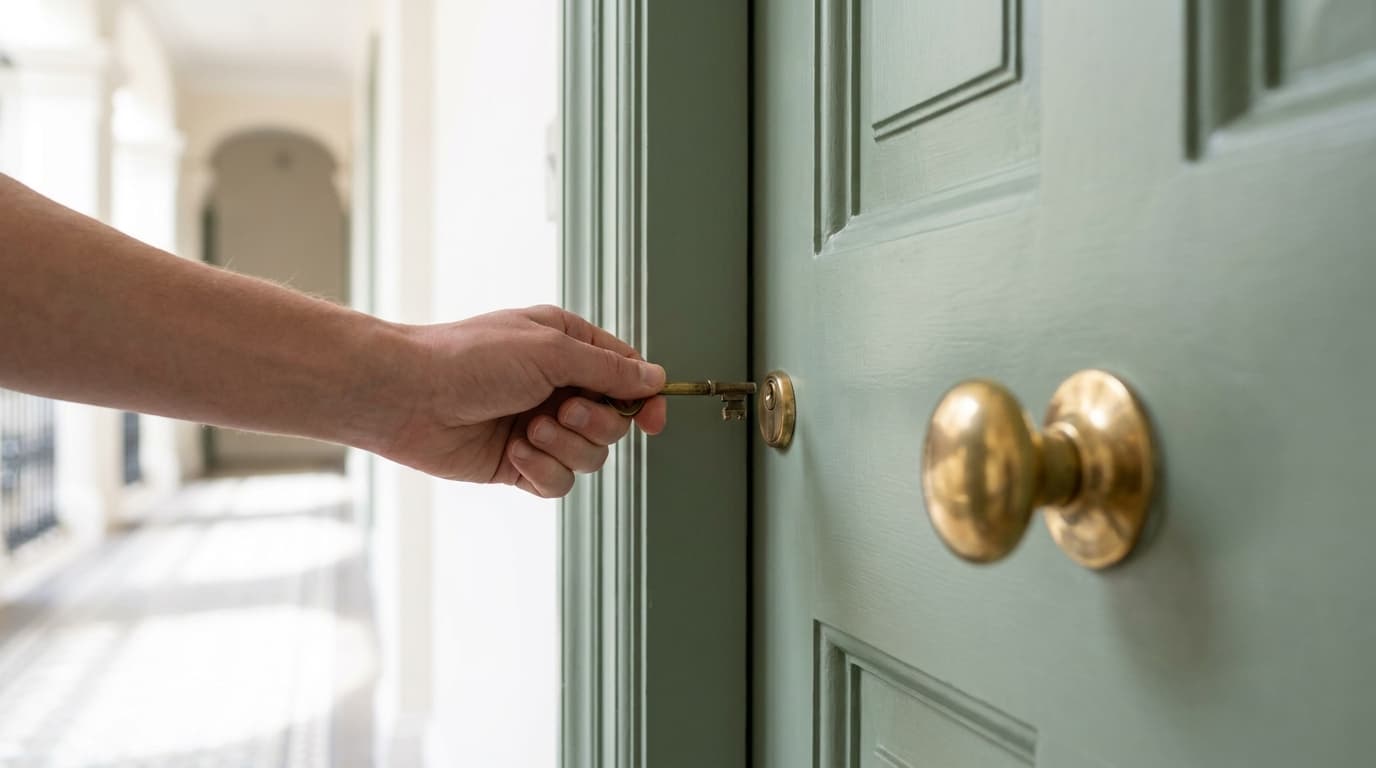
You've got a tenant lined up, the unit is ready, and the easy part feels done. Then the lease lands on your desk and the pressure shifts. One downloaded form stands between a smooth tenancy and a long list of preventable problems.
New landlords often assume a landlord lease agreement template is just paperwork. It isn't. It's the operating manual for the rental, the evidence file you'll rely on if a dispute starts, and the document that needs to match the rules where the property is located. The biggest mistake isn't forgetting to include rent or signatures. It's using a template that looks complete but doesn't fit your state, county, or city.
Beyond the Handshake The Role of a Lease Agreement
A good tenant interview can fool a landlord into thinking trust is enough. It isn't. People can agree on the big things in person and still end up in conflict over late fees, repairs, guests, pets, parking, utility bills, or move-out expectations once real life starts.
That's why the lease matters more than the screening call. The lease takes assumptions and turns them into written obligations. If it's vague, outdated, or copied from the wrong jurisdiction, it stops doing its job right when you need it most.
Practical rule: A lease isn't there for the month when everything goes well. It's there for the month when rent is late, a repair turns into an argument, or a tenant says, “That's not what we agreed.”
Many generic forms fail in the same way. They list standard clauses, but they don't explain how those clauses need to change by location. That gap is a major source of landlord mistakes, especially around security deposits, late fees, and notice periods, as noted in this discussion of free lease agreement templates. The main issue isn't whether your lease mentions those topics. It's whether the language fits your specific county.
A lease also shapes day-to-day operations. If the document is clear, you spend less time negotiating after move-in. If it's sloppy, every issue becomes a fresh argument. That includes cleaning at the end of the tenancy, which landlords often handle poorly because the lease never set expectations in plain language. If you manage rentals in markets where end-of-lease cleaning standards matter, this explainer on what is bond cleaning in Australia is useful because it shows how detailed move-out obligations can become when they're handled properly.
What a strong lease actually does
- Sets the ground rules early so both parties know what's required before the first problem appears.
- Reduces avoidable disputes by defining payment timing, property use, access, maintenance responsibility, and move-out procedures.
- Protects enforceability because courts and attorneys look first at the written agreement, not at verbal understandings.
- Creates consistency when you manage more than one unit and need the same process every time.
A handshake starts a relationship. A compliant lease protects the asset.
The Anatomy of a Bulletproof Lease Agreement
Before you worry about local legal quirks, the lease needs a solid skeleton. Every landlord lease agreement template should capture the same foundational facts. If those facts are missing, you don't have a strong lease. You have a rough draft.
According to the Consumer.gov sample rental agreement, a basic lease can specify a 1-year term, running from July 1, 2012 to June 30, 2013, with rent of $685 per month due on the 1st day of each month and payable by check, cashier's check, or money order. Those aren't universal terms for every property. They do show how precise a lease needs to be.

What every lease must identify
At minimum, your lease should clearly state the parties, property, term, rent, security deposit, and signatures. If even one of those is fuzzy, the rest of the document gets harder to enforce.
Here's the practical version of each field:
- Names of all parties. Every adult occupant who is legally responsible for the tenancy should be named correctly. Nicknames and incomplete names create headaches later.
- Property description. Use the exact address and unit identifier. If there's parking, storage, yard space, or shared areas tied to the tenancy, identify those too.
- Lease term. State whether the arrangement is fixed-term or month-to-month, and write the dates clearly.
- Rent terms. Include the amount, due date, accepted payment methods, and what happens if payment is late.
- Security deposit terms. State the deposit arrangement and the conditions for deductions and return, subject to local law.
- Signature lines. A lease becomes much harder to defend if the execution is incomplete.
The best leases answer basic questions so clearly that neither side needs to guess what the document means.
Why the operational clauses matter
The core data fields aren't enough on their own. A functional lease also needs the working clauses that govern daily use of the property. Template providers regularly include terms for maintenance responsibilities, utilities, termination conditions, and access to the premises. Those clauses matter because most disputes don't start with the rent line. They start with expectations.
A few examples:
| Clause area | Why it matters |
|---|---|
| Utilities | Prevents arguments over who pays for electricity, water, gas, trash, or internet |
| Maintenance | Clarifies what the tenant handles versus what the landlord repairs |
| Access | Sets the framework for lawful entry and notice |
| Rules and conduct | Helps with guests, smoking, pets, noise, and parking |
| Termination language | Reduces confusion when the tenancy is ending |
Some landlords overcomplicate these provisions with legal jargon copied from multiple templates. That usually makes the document worse. Plain, specific language works better than bloated wording.
If a clause changes how the tenant lives in the unit or how you manage the unit, put it in writing. If it's important enough to enforce, it belongs in the lease or a clearly attached addendum.
Navigating State and Local Compliance Variations
A common pitfall in DIY leasing is this: A generic landlord lease agreement template can look polished and still be wrong for the property it's meant to govern.
The biggest compliance problem isn't missing obvious sections. It's missing the local rules that control how those sections must be written. State law may shape one set of requirements, county practice may shape another, and city-level ordinances can add a third layer.
Where generic templates break down
Massachusetts is a good example of why there's no true one-size-fits-all lease. As MassLandlords explains, there is no state-sanctioned standard lease in Massachusetts, and landlords generally use either a tenancy at will or a longer lease. In a tenancy at will, either party can end the arrangement with 30 days' notice or one full rental period, whichever is longer. That single rule changes how a landlord should think about term language, termination wording, and operational flexibility.
That's the broader lesson. The clause headings might look familiar from state to state, but the legal effect can differ.
Areas that often require local review include:
- Security deposit language tied to handling and return rules
- Late fee wording and whether the lease language fits local limits
- Notice provisions for entry, renewal, nonrenewal, or termination
- Mandatory disclosures that may apply by jurisdiction
- Habitability and repair obligations that can't be waived with boilerplate
- Eviction-related language that may be unenforceable if copied from another state
If you want a broad legal starting point for checking your own location, review landlord laws by state. Use it as a screening tool, not as permission to skip local review.
A lease can be complete on paper and still noncompliant in practice.
Fire safety is another good example. Many landlords paste in a generic maintenance clause and assume they've covered safety. They haven't. Requirements can become highly specific depending on property type and location. For a practical look at that issue, this guide to fire safety rules for landlords is a helpful reminder that compliance isn't just about collecting signatures.
A comparison mindset that actually helps
The useful way to compare jurisdictions isn't to memorize every statute. It's to identify which clauses are likely to vary and treat them as review points.
| Clause | California Example | Texas Example | Florida Example |
|---|---|---|---|
| Security deposit | Must be customized to local and state rules | Must be customized to local and state rules | Must be customized to local and state rules |
| Late fees | Generic wording may not fit local requirements | Generic wording may not fit local requirements | Generic wording may not fit local requirements |
| Notice periods | City and state rules may both matter | State and local practice can differ | County and state requirements can differ |
| Disclosures | Property-specific disclosures may be required | Property-specific disclosures may be required | Property-specific disclosures may be required |
| Entry language | Boilerplate may not reflect local standards | Boilerplate may not reflect local standards | Boilerplate may not reflect local standards |
That table is deliberately qualitative. The point is method, not trivia. If you own in more than one market, don't treat “rent,” “deposit,” and “notice” as fixed language blocks. Treat them as jurisdiction-sensitive clauses that need review every time you generate a lease.
Common Pitfalls When Customizing a Template
Most lease mistakes don't look dramatic when they happen. They look like skipped fields, copied paragraphs, and assumptions that “close enough” will hold up later. It often won't.

A lease should be treated as a stepwise data-capture workflow, not a form you half-complete and rush out the door. According to PandaDoc's rental lease template guidance, missing party names, property address, term dates, rent amount, or signatures are common failure points that can make an agreement ambiguous or harder to enforce.
The small omissions that create big disputes
The first category of errors is simple incompleteness. A landlord forgets to list one adult tenant, leaves the unit number off the property address, or sends a lease with a blank field meant to be completed later. That seems minor until there's a dispute over who is bound.
The second category is vague language. Terms like “repairs will be handled promptly” or “guests may stay temporarily” sound harmless, but they don't give either side a clear standard. Ambiguity is expensive.
Common trouble spots include:
- Unfinished blanks that were meant to be filled in before signing
- Conflicting clauses copied from different templates
- Illegal or outdated wording carried over from another state
- Missing addendums for pets, smoking, parking, or special property rules
- Incomplete tenant identification when only one of several adult occupants signs
- Loose house rules that can't be enforced because they were never documented clearly
If a rule matters after move-in, it matters before signing.
What good customization looks like
A clean customization process is more disciplined than most landlords expect. It starts by capturing the mandatory facts in order, then layering in property-specific rules, then checking the local legal fit.
A practical workflow looks like this:
- Confirm the legal names first. Don't draft around “we'll fix that later.”
- Lock down the exact premises. Include unit identifiers and any included spaces or rights.
- Write the term precisely. Avoid loose wording about start dates or renewal assumptions.
- Spell out payment operations. Tenants should know how, when, and where rent is paid.
- Attach specialized addendums. Pets, smoking, parking, HOA restrictions, and appliance rules often need separate treatment.
- Review for local compliance before signature. Many landlords skip this most important step.
One more problem is version control. A landlord edits one Word file for one unit, another PDF for another unit, and an older lease sits in a downloads folder ready to be reused by mistake. Once that starts happening, compliance becomes accidental.
Generate a Compliant Lease in Seconds with VerticalRent
By the time landlords understand how many points can go wrong, the next question is obvious. Why are people still building leases by stitching together old PDFs, notes from prior tenancies, and generic online forms?
The answer is habit. The better answer is automation.

VerticalRent is built for independent landlords who need more than a blank landlord lease agreement template. Instead of starting from a generic document and manually editing it for each property, the platform is designed around structured data entry and location-based lease generation. That means the landlord enters the core deal terms, and the system handles the heavy lifting of building a document that fits the property's jurisdiction.
Why automation beats copy and paste
Manual drafting fails in predictable ways. You reuse an old lease because the property is “basically the same.” You miss a clause that should change for a different county. You forget which addendum was attached last time. You export too early, then notice after signing that one field was left blank.
Automation fixes those operational problems because it treats lease creation like a controlled workflow:
- Data goes in once instead of being retyped across multiple files.
- Required fields can be validated before the document is finalized.
- Property location drives document logic instead of relying on memory.
- Addendums can be generated consistently rather than attached ad hoc.
- Digital records stay centralized instead of scattered across folders and inboxes.
That's especially useful for small landlords. When you only have a few units, you usually don't have an in-house legal team or an assistant checking every document. The platform has to reduce the chance of human error.
For landlords comparing tools before changing their workflow, VerticalRent's AI lease agreement generator buyer's guide is a useful place to evaluate what modern lease automation should do.
What a better lease workflow looks like
A strong system should guide the landlord through the lease in the same order an experienced property manager would.
Start with the parties. Then confirm the exact premises. Then set the term. Then enter rent details, including due date and payment method. Then handle deposit terms, property rules, and supporting addendums. Finally, move into signature and storage.
That process matters because it removes guesswork at each step. Instead of asking, “Did I remember everything?” the landlord works through a sequence built to catch missing or conflicting information.
This walkthrough gives a sense of what a digital lease workflow should feel like in practice:
Value isn't just speed. It's consistency. A landlord using the same structured process across units is less likely to create accidental exceptions, miss required fields, or send out the wrong version of a lease. That's what makes automation worth adopting.
E-Signatures and Secure Storage Best Practices
A lease isn't finished when the wording looks right. It's finished when it's executed cleanly and stored where you can retrieve it fast.
Paper files still exist, but they create avoidable friction. Pages go missing. Tenants claim they never received the final copy. The signed addendum ends up in a different folder than the main lease. Digital execution fixes most of that, but only if the process is disciplined.
How to execute the lease cleanly
Use one final version. Not “nearly final,” not “the one with a couple edits in email,” and not a PDF that was manually changed after review. Every signer should receive the same document package, including any addendums.
Before sending for signature:
- Verify all required fields are complete and there are no blank spaces waiting for later edits.
- Match the signers to the named parties so every responsible adult executes the agreement.
- Include attached addendums in the signing packet rather than sending them separately.
- Deliver a completed copy to the tenant after signing so there's no confusion about what controls.
If you're moving to digital execution, this guide on digital lease signing for landlords is a practical reference for setting up a cleaner signing process.
Keep the signed lease, all addendums, and the delivery record together. A scattered file is almost as bad as a missing one.
How to store it so you can actually use it later
Good storage is boring until you need it. Then it becomes urgent. If a tenant disputes a rule, asks for a copy, or moves out under stress, you need the exact signed version immediately.
Use a storage system that keeps:
- The signed lease
- Every signed addendum
- A clear file naming convention
- A backup copy
- Access records for your own team, if anyone else helps manage the unit
Don't rely on one laptop, one email chain, or one downloads folder. Store leases in a centralized system with backup and easy retrieval. The point isn't just safekeeping. It's operational readiness.
A compliant lease shouldn't depend on memory, copy-paste edits, or guesswork. VerticalRent gives independent landlords a practical way to generate state- and county-specific leases, collect e-signatures, and keep every document organized in one place. If you want a landlord lease agreement template process that's faster, cleaner, and far less risky, it's a smart place to start.
Put this into practice
VerticalRent tools related to this guide
Legal Disclaimer
VerticalRent and its authors are not attorneys, CPAs, or licensed legal or financial advisors, and nothing on this site constitutes legal, tax, or professional advice. The information in this article is provided for general educational purposes only. Landlord-tenant laws, eviction procedures, security deposit rules, and tax regulations vary significantly by state, county, and municipality — and change frequently. Nothing on this site creates an attorney-client relationship. Always consult a licensed attorney or qualified professional in your jurisdiction before taking any action based on information you read here.
Co-founded VerticalRent in 2011, growing it from nothing to 100k landlords and renters. Sold it in 2019, then re-acquired it in 2026 to make it better than ever.


