Difference Between Single Family and Multi Family Home
Learn the difference between single family and multi family home types, from financing and taxes to rent potential and landlord fit.

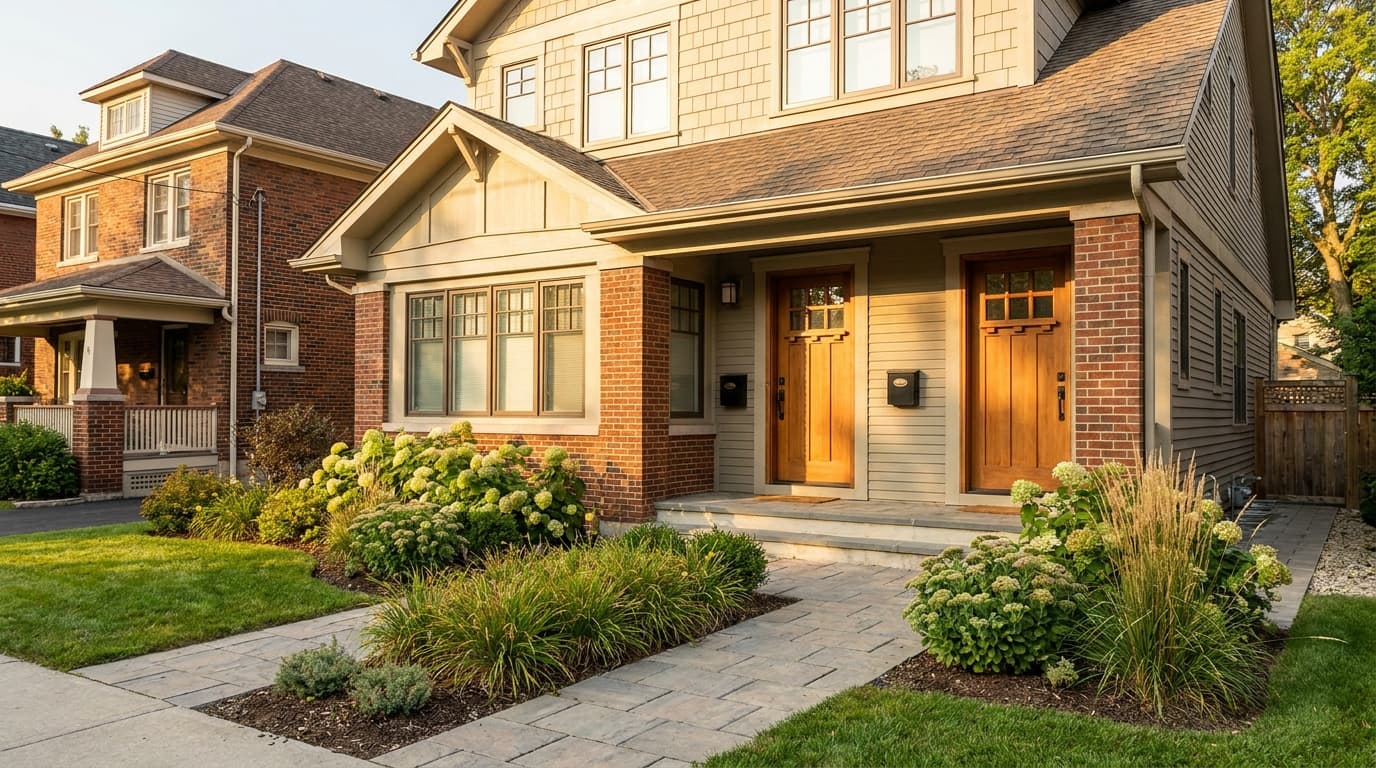
You're weighing a quiet single-family rental against a duplex that promises two rent checks. The house looks easier. The duplex looks more efficient. Both impressions can be misleading once you account for financing, legal classification, maintenance, tenant coordination, and the cost of an empty unit.
The difference between single-family and multifamily homes isn't just one door versus several. It's how each additional unit changes your exposure to vacancy, your daily workload, your lender's underwriting, and the local rules that determine whether the property can legally operate as you expect.
Why This Decision Matters for Independent Landlords
A first-time landlord often reaches this decision after finding two plausible deals. One might be a detached house with a single tenant, one lease, and a familiar residential mortgage. The other might be a duplex with more rent potential but shared systems, more frequent tenant interaction, and a property that needs closer review before closing.
Neither choice is automatically superior. The right property depends on how much capital you can commit, how many hours you have each week, and whether you want a simple asset or a small operating business. A single-family rental can be remarkably manageable, but one vacancy removes the entire rent stream. A duplex or fourplex can spread that exposure across units, yet it creates more leases, more inspections, more repair coordination, and more opportunities for tenant conflict.
My rule for first-time landlords: Buy the property you can manage on your worst month, not the one that looks most attractive on your best month.
The practical questions are more important than the headline rent. Will the lender count projected rental income the way you expect? Does the insurance policy match the building's legal use? Are the taxes, utilities, repairs, and reserves being modeled per unit? Does local zoning permit the unit count shown in the listing? If an accessory dwelling unit is present, is it legal, permitted, and financeable?
A useful independent landlord survival guide can help you think about systems before you buy. That mindset matters because the first property establishes your habits. If you start with an asset that requires more attention than your life can provide, the investment can become a second job before it becomes a portfolio.
What Counts as a Single-Family vs. Multi-Family Property
Start with the structure, not the listing headline. The U.S. Census Bureau's housing definitions classify attached homes as single-family only when each unit has a ground-to-roof wall, separate heating, individual utility meters, and no unit above or below it. If those conditions aren't met, the building is classified as multifamily.
That means a townhouse or row house can still fall within the single-family category when each dwelling functions as a separate unit from top to bottom. A detached house is the familiar example, but appearance alone doesn't settle the question. A building that looks like one home may contain multiple legal units, while an attached building may contain separately classified single-family dwellings.
The practical unit-count test
For landlord analysis, use three categories:
- Single-family rental: One legal dwelling unit, detached or attached.
- Small multifamily: Two to four legal dwelling units, including duplexes, triplexes, and fourplexes.
- Larger multifamily: A building containing more than four units, commonly evaluated under a different financing and operating framework.
The legal unit count matters more than the number of kitchens you can physically install. A basement apartment without the required permits may be an illegal conversion rather than a legitimate second unit. Before relying on additional rent, verify the certificate of occupancy, zoning records, permits, utility arrangement, and fire or building-code requirements.
An accessory dwelling unit can blur the line. Some jurisdictions allow an ADU on a single-family lot, but local rules still determine whether it counts as a separate legal dwelling, whether it can be rented independently, and what upgrades are required. Never underwrite an unverified ADU as income.
Shared entry systems and controlled parking also become more important as residents multiply. For owners evaluating practical building operations, a resource on multifamily gate access control can help frame how access, visitors, and resident security differ from managing one house.
For a property-specific process, use this step-by-step multifamily property analysis workshop before making an offer. The classification decision should happen before you compare returns, not after.
Ownership, Financing, Tax, and Insurance Differences
The financing line is where many investors discover that two similar-looking properties aren't treated alike. A single-family rental usually fits a simpler residential underwriting process. A two-to-four-unit property may still qualify for residential financing, but the lender examines unit configuration, market rents, operating expenses, and the borrower's ability to manage a more complex asset.
Owner occupancy can also change the available loan path. A buyer who lives in one unit may have access to residential programs that don't apply to a purely investment purchase. A five-plus-unit building generally moves into commercial underwriting, where the property's income and operating performance carry more weight than they do in a standard one-unit loan.
| Dimension | Single-Family Rental | Small Multi-Family, 2–4 Units |
|---|---|---|
| Ownership structure | One dwelling unit on its own parcel or attached single-family structure | Multiple legal dwelling units in one building or property |
| Underwriting | Primarily borrower income, credit, property value, and projected rental income | Borrower qualifications plus unit count, rent roll, expenses, and property operations |
| Loan options | Conventional, FHA, and VA options may be available when the borrower meets program rules | Residential options may remain available through four units, especially for owner-occupants, while larger properties often require commercial financing |
| Rental income analysis | One lease and one projected rent stream | Multiple rents, vacancy assumptions, unit condition, and operating costs |
| Insurance | Landlord coverage designed for a single rental dwelling | Broader landlord or commercial coverage may be needed for multiple units and shared areas |
| Tax reporting | Rental income and expenses tracked for the property | Same core categories, but records must be separated by unit and shared expense |
| Operational exposure | One tenant relationship and one income stream | Multiple tenant relationships, shared systems, and staggered turnover |
Tax treatment still requires professional advice, but the basic bookkeeping categories overlap. Mortgage interest, insurance, repairs, management fees, and depreciation may be relevant rental expenses for either property type when handled under applicable tax rules. Multiple units can create more detailed allocation work, particularly when an expense serves the whole building rather than one unit.
Read a practical Schedule E rental income tax guide before closing, then have a qualified tax professional review your actual structure. Don't assume that a larger building automatically creates a better tax outcome. It creates more records, more allocation decisions, and more room for sloppy documentation.
Insurance deserves the same attention. A landlord policy for one house isn't automatically sufficient for a duplex or fourplex, especially where residents share stairs, roofs, mechanical systems, yards, laundry areas, or parking. Ask the insurer how liability, loss of rents, code upgrades, water damage, and shared structures are treated. The cheapest quote is useless if it excludes the risks your building presents.
Rent Potential, Cash Flow, and Vacancy Risk Compared
More doors can make income steadier, but they don't guarantee higher profit. A single-family rental has one tenant and one rent payment. If that tenant leaves, the property can produce no rental income until the next resident takes possession. A fourplex can absorb one vacancy through the other occupied units, but it may also carry more repairs, utilities, common-area costs, and turnover events.
Recent market data makes the risk difference visible. In Q2 2026, the national rental vacancy rate was 7.3%, compared with a homeowner vacancy rate of 1.2%, according to CBRE's multifamily market outlook. That comparison isn't a direct forecast for your property, but it reinforces the underwriting lesson: rental assets operate with more vacancy exposure than owner-occupied housing.
One door versus four
| Metric | Single-Family, 1 Unit | Fourplex, 4 Units |
|---|---|---|
| Income sources | One lease and one rent stream | Four leases and several rent streams |
| Effect of one vacancy | Can remove all scheduled rental income | Reduces income while other units may continue paying |
| Tenant contact | One household | Several households, with possible shared-area disputes |
| Maintenance pattern | Fewer recurring requests, but one property-wide repair can be significant | More routine requests, plus shared-system and common-area obligations |
| Management cost | Simple to coordinate, but management is concentrated in one asset | More coordination, with some tasks spreading across several units |
| Underwriting question | Can one rent support the property and reserves? | Do all unit rents support debt service, expenses, and realistic vacancy? |
Rent growth doesn't settle the debate either. Zillow reported in early 2025 that single-family rents were 20% higher than typical apartments and 41% above pre-pandemic levels, while multifamily rents were up 26% over the same period. The same source reported that single-family rental growth outpaced multifamily in 75 of the 100 largest U.S. markets in 2025.
Those figures argue against the lazy claim that apartments always produce better returns. A detached rental may command stronger rent because households value privacy, outdoor space, and fewer shared walls. A multifamily property may still win where land is expensive, demand supports smaller units, and several moderate rents combine into reliable coverage for the building's costs.
Model each unit separately. Include realistic vacancy, repairs, capital expenditures, insurance, taxes, utilities, management, and leasing costs. If the deal only works when every unit stays occupied and every repair is minor, it doesn't work.
Tenant Screening, Leasing, and Day-to-Day Management
A single-family rental gives you a narrow workflow. You screen one applicant household, prepare one lease, hand over one set of keys, and communicate with one resident group. Maintenance can still be inconvenient, but the relationship is comparatively contained.
A small multifamily property multiplies each step. You may be reviewing several applications during the same leasing period, coordinating different move-in dates, and responding to unrelated requests from residents who share walls, parking, trash areas, exterior lighting, or laundry facilities. The work doesn't just increase by unit count. It becomes more interruptive because one resident's issue can affect another.
Build the operating system before the tenants arrive
Use written, consistently applied screening criteria. Decide in advance how you'll evaluate income, credit, rental history, eviction history, identity, and references, then apply the same process to every applicant. Consistency protects the business and helps reduce Fair Housing risk.
A workable multifamily system should include:
- Standardized leases: Use a state-appropriate template and document unit-specific terms, utilities, parking, storage, guests, and maintenance duties.
- A shared maintenance log: Record the request, urgency, vendor, access arrangements, cost, and completion date.
- Scheduled inspections: Use lawful notice procedures and inspect units and common areas consistently rather than reacting only to complaints.
- A property rulebook: Put noise, smoking, parking, trash, pets, shared spaces, and emergency procedures in writing.
- Centralized communication: Keep requests in a trackable channel instead of relying on scattered texts and memory.
Management reality: The first extra unit adds more coordination than most new landlords expect. The second and third require repeatable systems, not just more enthusiasm.
Pest control illustrates the difference. In one house, a pest complaint usually involves one household and one structure. In a multifamily building, an infestation can move between units, making inspection, notice, treatment, and resident cooperation more complicated. Review the landlord's pest management responsibilities before you assume residents will handle every issue themselves.
The biggest mistake is buying multifamily for its income while planning to manage it like a single house. You'll need clearer records, faster response routines, and firmer boundaries. If you don't want that responsibility, budget for professional management before you buy, not after the first difficult turnover.
Zoning and Regulatory Classification That Change the Math
A property can look like a duplex and still fail as a duplex investment if local records recognize only one legal dwelling. Zoning, building permits, occupancy limits, fire requirements, parking rules, and utility standards determine whether the unit count shown in an advertisement can support rent.
Many lower-density residential districts restrict construction to detached single-family homes, while duplexes and larger formats may require a different zoning designation or special approval. The exact labels vary by municipality, so never treat an R-1, R-2, or R-3 label as universal. Read the local code and confirm the parcel's permitted use with the planning or building department.

Why the unit threshold matters
A single-family property with a permitted ADU may create additional income without the owner purchasing a separate multifamily building. But that option depends on local rules, site constraints, access, parking, utility capacity, egress, and building-code compliance. A separate kitchen or entrance doesn't make an ADU legal by itself.
The two-to-four-unit range is especially important because it can remain within residential financing programs, subject to the borrower, occupancy, property, and program requirements. Once a building reaches five or more units, lenders commonly evaluate it as commercial real estate, which changes documentation, underwriting, reserves, and often the financing structure.
That line matters more than the physical difference between four and five doors. A new unit may require additional parking, fire separation, utility work, or a different approval path. Those costs can erase the rent advantage before you collect the first payment.
Verify these items before underwriting
- Legal unit count: Confirm the certificate of occupancy and municipal records.
- Permitted use: Ask whether the current use is allowed by right, grandfathered, or subject to approval.
- Building code: Check egress, fire separation, alarms, stairs, electrical systems, and shared mechanical areas.
- Utilities: Determine whether each unit is separately metered and who pays shared services.
- Future changes: Confirm whether an ADU, conversion, or added bedroom would require permits or trigger new requirements.
The Census Bureau's construction data tracks single-family and multifamily starts and completions separately because the segments respond differently to financing conditions, household formation, and density. For an independent landlord, that distinction becomes practical at the property level. The question isn't only what the building is today. It's what local rules allow you to own, finance, repair, and rent tomorrow.
Which Property Type Fits Your Landlord Profile
Your schedule and temperament should decide more of this purchase than a spreadsheet headline. A property that produces attractive projected income can still be a poor investment if you can't respond to residents, coordinate vendors, or maintain accurate records.

The time-constrained side hustler
If you keep a demanding day job, start with a single-family rental unless you already have dependable management support. One household gives you fewer leasing events, fewer neighbor disputes, and a simpler repair calendar. You'll still need reserves and a vendor list, but the property is less likely to interrupt every part of your week.
A duplex can work for a side hustler who lives nearby and has strong systems. It's a bad fit for someone who treats tenant communication as an occasional favor.
The capital-constrained first investor
Preserve liquidity. A cheaper acquisition price or easier loan approval doesn't protect you from a roof problem, vacancy, insurance adjustment, or legal repair. A single-family rental may offer a simpler path to financing, but you still need enough cash for reserves and operating surprises.
Don't use every available dollar for the down payment. If the deal leaves you unable to fund repairs, choose a smaller property or wait.
The growth-oriented portfolio builder
Choose a duplex or fourplex when you're intentionally building a repeatable operation. Several units on one parcel can create a broader income base and teach you systems that will matter in a larger portfolio. But buy only after you understand local demand, legal unit counts, and the building's shared expenses.
You should have a reserve, a property manager option, or a reliable partner before taking on a property that depends on rapid tenant coordination.
The hands-on operator
Multifamily may suit you if you enjoy renovations, resident relationships, vendor coordination, and solving problems on site. Shared roofs, mechanical systems, and exterior areas can concentrate work, although a failure in one shared system can affect several households at once.
Use this checklist before making the final choice:
- Available hours: Can you handle tenant requests and turnovers without neglecting your primary work?
- Cash reserves: Can you fund repairs and vacancy without relying on the next rent payment?
- Risk tolerance: Would one empty property upset your finances, or can several units spread that exposure?
- Management preference: Do you want to operate directly, or will you pay for professional help?
- Five-year goal: Are you seeking a manageable first rental, or are you building a repeatable portfolio?
Watch the practical guidance below, then write your answers down before touring more properties.
A single-family rental is usually the better starting point when time, capital, and risk tolerance are tight. A small multifamily property is the stronger choice when you have operating discipline, adequate reserves, and a clear plan for managing multiple households. For owners handling several units, VerticalRent provides tenant screening, lease generation, online rent collection, maintenance workflows, and income and expense records in one platform. Visit VerticalRent to see whether its tools fit the way you plan to run your rental operation.
Put this into practice
VerticalRent tools related to this guide
Legal Disclaimer
VerticalRent and its authors are not attorneys, CPAs, or licensed legal or financial advisors, and nothing on this site constitutes legal, tax, or professional advice. The information in this article is provided for general educational purposes only. Landlord-tenant laws, eviction procedures, security deposit rules, and tax regulations vary significantly by state, county, and municipality — and change frequently. Nothing on this site creates an attorney-client relationship. Always consult a licensed attorney or qualified professional in your jurisdiction before taking any action based on information you read here.
Co-founded VerticalRent in 2011, growing it from nothing to 100k landlords and renters. Sold it in 2019, then re-acquired it in 2026 to make it better than ever.


