Reno Housing Market: 2026 Investor & Renter Guide
Get a complete analysis of the Reno housing market in 2026. Explore current price trends, rental yields, and actionable strategies for landlords and renters.

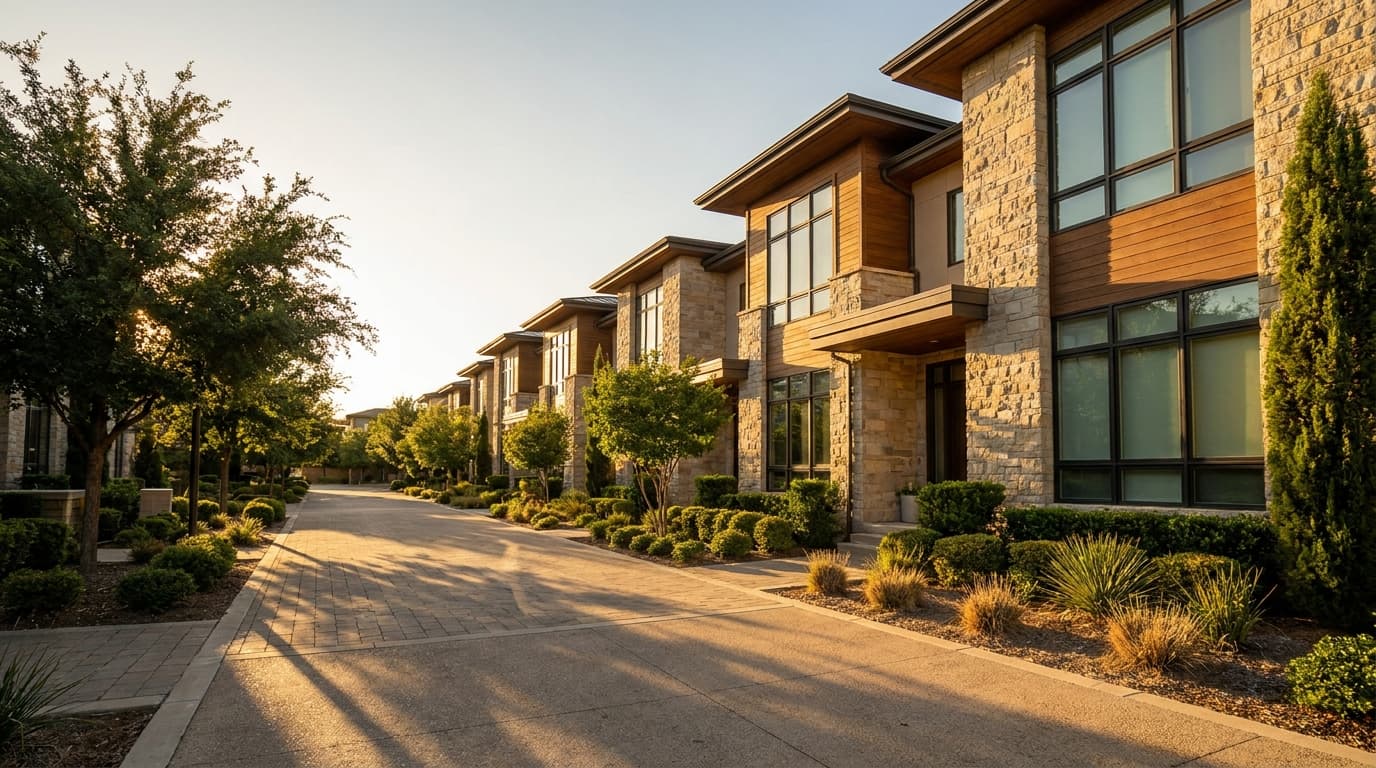
A Reno market where prices keep rising while inventory improves sounds contradictory. It isn't. The clearest proof is this: the median sale price was $576,000 over the three months ending May 2026, up 8.7% year over year, while homes still sold in about 44 days and buyers made 2 offers on average, according to Redfin's Reno market data.
That combination matters more than the headline price alone. It tells landlords that demand is still durable enough to support acquisition discipline, not reckless bidding. It tells renters that the market isn't frozen, but it is competitive enough that preparation changes outcomes. Most coverage stops at “prices are up” or “inventory is rising.” The actual decision point is how those two forces interact on the ground when you're underwriting a rental or trying to win a lease.
Reno Housing Market Snapshot 2026
Reno's median sale price hit $576,000 over the three months ending May 2026, up 8.7% from a year earlier. That is a strong number on its own. Paired with roughly 44 days on market and an average of two offers per home, it points to a market that still favors sellers, but no longer operates at peak frenzy.

Sales volume adds an important layer. Reno recorded 924 home sales in May 2026 versus 809 a year earlier, so transactions increased alongside prices. Markets in real distress usually show the opposite pattern. Buyers may be stretched on affordability, but they are still participating at a meaningful pace.
That distinction matters.
A rising-price market with only moderate bidding pressure creates a different set of choices than a true bidding-war environment. Landlords have more room to run disciplined underwriting, compare block-by-block rent potential, and avoid paying for appreciation that may never materialize. Renters face competition, yet the conditions are more workable than the headline price trend suggests, especially for applicants who can move quickly and present a clean file.
What the headline numbers actually mean
Price growth alone does not explain Reno in 2026. The better read is that demand remains intact, while buyer behavior has become more selective. Homes are still selling, but the market is asking for fewer impulsive decisions and more careful pricing, financing, and negotiation.
For landlords, that shifts the focus from broad appreciation stories to execution. A property bought at the wrong basis can still underperform even in a firm market. The useful question is not whether Reno is active. It is whether a given neighborhood can support the rent needed to produce an acceptable yield after taxes, insurance, maintenance, vacancy, and turnover.
For renters, the same market conditions create a narrower but real opening. In a city where homes are not disappearing overnight, preparation can outperform panic. Strong documentation, flexible move-in timing, and attention to smaller lease terms can improve odds even when rents stay high.
Practical rule: Rising prices combined with higher sales volume usually signal durable demand, not a stalled market. Treat Reno as competitive, but not indiscriminate.
What landlords and renters should do with this snapshot
- Landlords: Buy based on cash flow discipline. Estimate yield at the neighborhood level, not the city average, and assume appreciation is a bonus rather than the full investment thesis.
- Renters: Compete on readiness. Complete applications, verifiable income, and quick response times matter more in a market where many listings still attract interest but not always a feeding frenzy.
- Both sides: Watch the gap between asking terms and closed terms. In Reno, the advantage goes to people who execute well, not to people who rely on broad market narratives.
Reno remains expensive and active. It is also more selective than the raw price growth suggests, which creates opportunity for landlords who underwrite carefully and renters who prepare better than the next applicant.
Decoding Reno's Price and Inventory Dynamics
The most important concept in Reno right now is months of supply. It tells you how long it would take to sell current inventory at the present sales pace. That metric matters because price pressure doesn't disappear the moment inventory rises. It disappears when supply rises enough to change bargaining power.
Reno hasn't reached that point. February through March 2026 data showed roughly 600 active listings and about 2.0 to 3.7 months of supply, still below the roughly 6 months commonly used as a balanced-market benchmark, according to this March 2026 Reno housing market update. Sellers still have an advantage because the market remains undersupplied relative to normal balance.

Rising inventory doesn't mean easy conditions
Many market summaries lose the plot at this point. They say inventory is improving, then imply buyers should feel immediate relief. But if you move from extreme scarcity to plain scarcity, prices can stay firm for a long time.
That's exactly what the Reno housing market is showing. The same March 2026 market update noted rising inventory and a higher share of price cuts, which suggests the market is moving away from the most intense seller conditions of the cycle. Still, “less intense” isn't the same as balanced.
Here's the decision framework that matters:
| Market condition | What it means in practice |
|---|---|
| Low months of supply | Sellers can stay firm unless a property is mispriced or flawed |
| Inventory rising from very low levels | Buyers get more choice, but not enough to force broad price weakness |
| More price cuts appearing | Negotiation opportunities improve selectively, not uniformly |
Why this matters more than median price alone
Median price tells you where transactions are landing. It doesn't tell you how much bargaining power each side has in a negotiation. Months of supply does.
A landlord looking at Reno should read the market this way:
- Acquisition discipline is possible again. You may have more time to compare submarkets, property condition, and rent potential.
- Waiting for distress is a weak strategy. Tight supply still supports pricing.
- Negotiation is asset-specific. Homes with dated interiors, weak layouts, or ambitious pricing are more negotiable than clean, well-positioned inventory.
Inventory can rise and still leave buyers constrained. What changed first in Reno is selection, not bargaining power.
For renters, the logic is similar. More available options can reduce scramble behavior without producing meaningful rent relief. If supply remains structurally tight, landlords can still choose the cleanest application rather than the first one they receive.
The hidden implication for 2026 decisions
The Reno housing market is no longer rewarding broad assumptions. It rewards precision.
- Investors should stop asking, “Is this a buyer's market or seller's market?” and ask, “Is this specific asset exposed to competition or pricing fatigue?”
- Renters should stop searching as if the market is impossible and stop applying as if it's easy. Both mistakes cost time.
That's the nuance. Rising inventory changes strategy before it changes pricing psychology.
Investment Hotspots and Renter Havens in Reno
Micro-markets matter more in Reno than broad metro averages suggest. A landlord buying for cash flow isn't solving the same problem as a renter who wants commute convenience, school access, or walkability. Treating the whole metro as one market usually leads to weak decisions.

How to sort Reno neighborhoods as an investor
Instead of chasing a “best neighborhood,” sort areas by business model.
- Yield-first areas: Look for neighborhoods where purchase prices are relatively approachable compared with achievable rent. These are often better fits for landlords who care about monthly margin, tenant demand consistency, and simpler unit turns.
- Appreciation-first areas: These tend to attract stronger owner-occupant demand, tighter resale competition, and more sensitivity to school reputation, views, or lifestyle appeal. Cash flow may be thinner, but exit value can be stronger.
- Stability plays: Some areas deliver lower drama. Tenant demand is broad, turnover can be easier to manage, and resale liquidity tends to stay reasonable across cycles.
A good cross-check is to compare Reno with other lifestyle-driven markets that have neighborhood-level divergence. hostAI's James Island market analysis is useful here because it shows how local demand drivers can reshape pricing and rental strategy within a relatively compact geography. The lesson applies in Reno too. Block-by-block positioning often matters more than metro averages.
How renters should think about neighborhood fit
Renters usually search by price first and regret it later. Start with friction points instead.
| Renter priority | Better way to evaluate an area |
|---|---|
| Short commute | Test drive the route at the times you'll actually travel |
| Quiet living | Visit in the evening, not just midday |
| Lifestyle access | Check how far daily errands are, not just restaurants or trails |
| Household stability | Look at unit mix and turnover signs in nearby buildings |
A practical neighborhood screening method
Use a simple three-pass filter.
First, identify areas that fit your essential criteria. Investors might rank tenant pool depth, parking, and ease of maintenance. Renters might rank commute patterns, pet rules, and access to everyday services.
Second, walk the immediate surroundings. A solid property on a weak block behaves differently from a mediocre property surrounded by stable demand.
Then use local visual context before committing to tours at scale.
The best Reno decisions usually come from matching the property to the strategy. An investor should know whether the target asset is a cash-flow tool or a long-hold appreciation bet. A renter should know whether the neighborhood supports daily life, not just weekend impressions.
The Landlord Playbook for Maximizing Reno ROI
Reno is a market where bad underwriting gets disguised by strong headline prices. That's dangerous. If you buy based on appreciation hopes alone, you can end up owning a property that looks fine on paper and underperforms as a rental. The fix is straightforward: evaluate each deal like an operator, not like a spectator.

One reason this matters now is that Reno already showed a meaningful inventory turn. A local market report said the metro area posted a 37.6% year-over-year increase in inventory in June 2025, while the median list price was $538,184, down 0.67% year over year, according to this June 2025 Reno market analysis. That combination didn't produce a collapse. It produced a market where selection improved and buyers had to think harder about quality, pricing, and rentability.
Underwrite the property before you fall in love with it
Start with the income side, but don't stop there. For a Reno rental, your real question isn't “Can I rent this?” It's “After ordinary friction, does this property still justify my capital?”
A simple screening sequence works well:
- Estimate realistic rent. Use current comparable listings and closed leasing evidence where available.
- Subtract operating costs. Include taxes, insurance, repairs, maintenance, turnover, vacancy assumptions, utilities you'll carry, and any management layer if you won't self-manage forever.
- Calculate NOI. Net Operating Income is your gross rental income minus operating expenses, before debt service.
- Compare return metrics. Cap rate measures unlevered return. Cash-on-cash measures return on the actual cash you put in.
If you want a clean refresher on cap rate before running Reno deals, this guide to finding capitalization rate is a useful reference.
Underwriting rule: In a market with firm pricing, small expense mistakes matter more than optimistic rent assumptions.
Focus on the expense lines small landlords usually miss
Most DIY owners underestimate boring costs, and boring costs are what sink marginal deals.
- Maintenance drift: Older properties can look profitable until minor recurring repairs stack up.
- Turn costs: Paint, cleaning, lock changes, and vacancy days don't feel large individually. Together they reshape yield.
- Process inefficiency: Missed rent reminders, messy records, and slow maintenance handling subtly reduce returns.
For maintenance intake alone, a standardized system helps. This resource on how to simplify property repairs for landlords is useful because it turns scattered tenant messages into a repeatable workflow.
Build an operating system, not just a spreadsheet
A lot of landlords can analyze a deal once. Fewer can run it cleanly for years. That's where software becomes practical rather than optional.
For example, VerticalRent handles tenant screening, lease generation, online rent collection, maintenance requests, and income-expense tracking in one workflow. That matters in Reno because a tighter market still gives landlords application volume, and application volume is only helpful if you can review, document, and act quickly.
Here's a more durable ROI checklist:
| Decision area | What to verify |
|---|---|
| Rent durability | Is demand broad enough that you won't depend on a perfect tenant profile? |
| Repair profile | Are systems and finishes likely to create frequent small-ticket calls? |
| Exit flexibility | Would an owner-occupant also want this asset later? |
| Admin burden | Can you collect rent, document expenses, and manage maintenance without chaos? |
Landlords who do well in the Reno housing market don't just buy in the right place. They buy properties that remain workable when the tenant changes, the repair list grows, or the resale timeline shifts.
The Renter's Guide to Landing a Reno Rental
In Reno, renters often lose homes before they lose on price. They lose on readiness. When supply is still tight enough to keep landlords selective, the strongest application usually isn't the one with the best story. It's the one that feels easiest to approve.
That means your search should run like a job process. Have documents ready, know your must-haves, and respond fast without looking chaotic.
Build an application package before you tour
Most renters wait until they find the right place, then start gathering pay stubs, IDs, references, and move-in details. That delay is costly. A landlord comparing several applicants will often prefer the person who can complete the process cleanly and immediately.
Use a prebuilt checklist. This rental application process guide is a practical starting point for understanding what landlords typically expect and how to avoid avoidable mistakes.
What makes a renter stand out
Landlords screen for risk, not charm. Your goal is to remove uncertainty.
- Proof of stability: Consistent income documentation and clear employment details help the owner assess reliability.
- Strong references: Former landlords who respond promptly and describe you as low-drama can materially improve your position.
- Clear timing: State your intended move date, household members, pets, and parking needs up front.
- Fast communication: Replying quickly matters, but concise, complete answers matter more.
A polished application signals that you're likely to pay on time, follow instructions, and create less management friction.
Compete without overextending yourself
Some renters panic and agree to terms that don't fit their budget or living needs. That's a mistake in any market. A rushed approval can become a bad tenancy for both sides.
Instead, use a simple decision filter:
| Question | Why it matters |
|---|---|
| Can I comfortably carry this rent and utilities? | Approval is only useful if the lease remains sustainable |
| Does the location reduce daily stress? | Commute and convenience affect retention more than cosmetic upgrades |
| Are the rules workable for my household? | Pet terms, parking, guests, and move-in requirements shape daily life |
If a listing fits, submit quickly. If it doesn't, move on. In a competitive Reno housing market, discipline protects renters just as much as speed does.
Nevada Landlord-Tenant Law Essentials
A Reno rental can produce good returns and still become a management headache if the legal side is sloppy. Compliance isn't a side task. It's part of the asset's operating performance. Small landlords feel this faster than institutional owners because one mistake can consume a disproportionate amount of time and cash.
The practical move is to treat state law as part of your acquisition and operating checklist. Before advertising, screening, lease signing, entry, deposit handling, or termination, confirm the governing rules and document your process.
The areas landlords most often mishandle
Three categories create most of the friction.
- Security deposits: Errors usually happen in collection limits, documentation, deductions, and return timing.
- Notice requirements: Entry notices, nonrenewals, and default notices need to follow state rules precisely.
- Eviction procedure: Self-help shortcuts create legal risk fast. Process discipline matters more than frustration.
For a grounded overview of the rules landlords should review before acting, use this Nevada landlord-tenant law guide.
Why compliance affects returns
The connection is direct. A lease that doesn't align with state requirements is harder to enforce. A deposit dispute can erase months of profit. A mishandled notice can delay turnover and extend nonpayment problems.
That's why experienced landlords don't separate legal compliance from operations. They build it into tenant screening standards, lease templates, inspection habits, maintenance documentation, and move-out procedures.
Landlords who document well usually manage better. The same systems that support compliance also reduce confusion with tenants.
A workable compliance routine for small landlords
Instead of trying to memorize every rule, create a repeatable process.
- Use current lease forms and disclosures.
- Keep written records of notices, requests, inspections, and payments.
- Document property condition at move-in and move-out.
- Handle disputes slowly enough to stay compliant, even when the situation is frustrating.
The Reno housing market may reward ownership, but only if the property is managed like a business. In practice, that means legal basics need as much attention as pricing and rent collection.
Frequently Asked Questions About the Reno Market
Why are prices still high if inventory is rising
Reno's market can add listings and still stay expensive. The reason is simple. Inventory has improved from the extreme shortage of the past few years, but it has not improved enough to change pricing power across the market.
That matters for both buyers and renters. Landlords shopping for acquisitions may see more choice and slightly better negotiating conditions on stale or poorly positioned properties. Renters may see a few more openings and less chaos than during the tightest stretch. Neither group should confuse that with broad affordability relief.
Is Reno still a seller's market
Yes, although the advantage is narrower than it was at the peak.
Sellers still benefit from constrained supply, especially for well-priced homes in popular submarkets. At the same time, buyers have become more selective. Higher financing costs and more active listings mean overpriced properties can sit, require cuts, or attract weaker terms. For investors, that creates a market where discipline matters more than speed.
What does that mean for landlords buying rentals
It means the buying strategy has changed. Chasing appreciation alone is a weak thesis in Reno right now. A stronger approach is to test whether a property works as a rental on day one.
Run the numbers at the neighborhood level. Estimate realistic rent, subtract taxes, insurance, maintenance, vacancy, and management, then compare the result to your purchase price and financing cost. In this phase of the Reno market, landlords who buy well are usually finding margin through property condition, layout, or location specific demand, not through broad market mispricing.
What does it mean for renters looking for a place
Preparation still changes outcomes.
Renters should expect competition for clean, well-located units, but the market is no longer uniformly frantic. Strong applicants tend to win by submitting complete documents quickly, responding fast, and targeting neighborhoods where inventory is a little deeper instead of clustering around the same high-demand pockets. If your budget is tight, flexibility on unit size, finish level, or commute often does more than waiting for rents to drop across the city.
Will rising inventory eventually help both sides
Yes, but not at the same pace.
Landlords benefit first because a wider listing pool gives them more ways to compare cap rates, renovation needs, and rent potential before buying. Renters usually benefit later, once additional supply translates into more real choices at the price points they can afford. That lag is why headlines about more listings do not always match what renters feel on the ground.
What is the key takeaway from the Reno market right now
Reno is shifting from scarcity-driven pressure to a more selective market. That is a meaningful change, but it is not a reset.
For landlords, the playbook is clear. Buy only where rental yield holds up without optimistic assumptions. For renters, the lesson is just as practical. Treat the search like a competitive process, because organized applicants still have an edge.
If you're managing rentals or applying for one in Reno, VerticalRent is built around the practical tasks that decide outcomes: tenant screening, lease creation, rent collection, maintenance coordination, and renter application workflows. In a market where preparation matters, organized systems usually beat rushed decisions.
Put this into practice
VerticalRent tools related to this guide
Legal Disclaimer
VerticalRent and its authors are not attorneys, CPAs, or licensed legal or financial advisors, and nothing on this site constitutes legal, tax, or professional advice. The information in this article is provided for general educational purposes only. Landlord-tenant laws, eviction procedures, security deposit rules, and tax regulations vary significantly by state, county, and municipality — and change frequently. Nothing on this site creates an attorney-client relationship. Always consult a licensed attorney or qualified professional in your jurisdiction before taking any action based on information you read here.
Co-founded VerticalRent in 2011, growing it from nothing to 100k landlords and renters. Sold it in 2019, then re-acquired it in 2026 to make it better than ever.


